How to Save $2000 a Year: Simple Ways to Save $2000 to $5000
Spending money can be fun, but there’s something pretty satisfying about saving for something you really want and then paying for it with money you’ve already set aside!
Maybe it’s a vacation, a new piece of furniture, a family outing, or simply having a little more breathing room in your bank account. Whatever your goal, saving money feels a whole lot better when you know exactly what that money is for.
If you're wondering how to save $2000 a year, you might be surprised by how achievable it can be. You don't necessarily need to make huge changes or give up everything you enjoy.
The key is to look for small expenses you can reduce, eliminate, or rethink. A few dollars here and there can turn into hundreds. Several small changes can add up to thousands over the course of a year.
And once you've figured out how to save $2000 a year, you may find that reaching a $3000, $4000, or even $5000 savings goal isn't as far away as you thought.
So let's look at some realistic ways to save money and keep more of it in your pocket.
Start With a Savings Goal
The first step in figuring out how to save $2000 a year is to break that big number down into smaller, more manageable amounts.
To save $2000 over 12 months, you'd need to put aside about $167 a month, or roughly $38 a week.
Want to save more?
$2,000 a year = about $38 a week
$3,000 a year = about $58 a week
$5,000 a year = about $96 a week
Looking at your goal this way can make it feel much less overwhelming.
And remember, you don't have to save the exact same amount every week or month. You might have a month where you save $250 and another where you save $100. What matters is working toward your overall goal.
Take a Close Look at Takeout
You don't have to give up takeout completely to save money. Instead, try cutting back.
Take a look at how often you're ordering restaurant food, grabbing fast food, or using a delivery app. It's easy to underestimate how much these purchases cost when they're spread throughout the month.
If you spend $40 on takeout once a week, that's about $2,080 a year.
You don't necessarily have to eliminate that spending entirely. Cutting it in half would still free up more than $1000 a year.
You could keep a few inexpensive convenience meals in the freezer for those nights when cooking feels like the last thing you want to do.
Review Your Subscriptions
Take a few minutes to look at your monthly subscriptions.
Streaming services, music subscriptions, apps, memberships, meal kits, gaming subscriptions and other recurring charges can quietly take a pretty big bite out of your budget.
You don't have to cancel everything. Instead, ask yourself:
Would I sign up for this again today if I wasn't already paying for it?
If the answer is no, consider cancelling it.
You could also rotate streaming services rather than paying for several at once. Keep one for a month or two, cancel it, and switch to another when there's something you really want to watch.
Cancelling subscriptions that total $30 a month would save you $360 a year.
Make Coffee at Home More Often
I'm certainly not going to tell you that you can never enjoy a coffee from your favourite coffee shop! But if you're buying coffee several times a week, this can be an easy place to find savings.
Instead of stopping every morning, try making coffee at home most days and saving your coffee shop trips for when you really want one. Like a Friday treat or something.
For example, saving just $5 per coffee shop visit and doing that four times a week would add up to more than $1,000 a year.
You can still enjoy your favourite coffee. You're just being more intentional about when you buy it.
Try a $5 Savings Challenge
Here's a simple savings idea that doesn't require you to completely change your budget.
Whenever you receive a $5 bill, put it aside instead of spending it. You can use a jar, envelope, or separate savings account.
Of course, how much you save will depend on how often you receive $5 bills, but that's part of the fun. You might be surprised by how quickly the money accumulates.
If you don't use much cash, you can create your own version of the challenge. Every time you would normally make an impulse purchase, put $5 into savings instead.
Save Part of Every Raise or Bonus
If you receive a raise, bonus, tax refund, or other unexpected money, consider putting at least some of it toward your savings goal. You don't necessarily have to save every dollar.
If your income increases by $2,000 a year, for example, you could decide to save $1,000 and use the other $1,000 for something else.
The important thing is to avoid automatically increasing your spending every time your income increases. Lifestyle creep can make it surprisingly easy for extra money to disappear.
Look at Your Cell Phone Plan
When was the last time you checked your cell phone plan?
Phone plans change all the time, and the plan that made sense a couple of years ago might no longer be your best option. Take a look at:
How much data you actually use
Whether you still need all the features you're paying for
Whether your current phone is paid off
Whether another carrier has a better deal
Whether you're paying for add-ons you don't use
Even finding a plan that's $20 cheaper each month would save you $240 a year.
Don't assume your current plan is the cheapest option. Shop around.
Become a Better Grocery Shopper
Your grocery bill is another area where small changes can make a big difference.
You don't need to completely overhaul the way your family eats. Instead, try a few simple habits:
Plan meals around what you already have.
Check flyers before shopping.
Compare prices between stores.
Buy sale items you regularly use.
Use loyalty points and rewards.
Shop your freezer and pantry before buying more.
Choose less expensive alternatives when it makes sense.
Reduce food waste.
Keep a list and try to stick to it.
Saving just $50 a week on groceries would put $2,600 back into your budget over a year. You don't have to save that much every week for grocery savings to make a noticeable difference.
Use Loyalty Programs for Purchases You're Already Making
If you shop regularly at stores with loyalty programs, make sure you're taking advantage of the rewards available to you.
For example, PC Optimum can be useful if you regularly shop at participating Loblaw banner stores and Shoppers Drug Mart.
The important thing is to use loyalty programs strategically. Don't buy something you don't need just because you're earning points. The goal is to earn rewards on something you were already going to buy.
Transportation can be one of the biggest expenses in a household, so even small changes can add up.
Instead of trying to completely eliminate driving, look for ways to reduce unnecessary trips. For example:
Combine errands into one trip.
Carpool when possible.
Walk or bike for short trips.
Use public transportation when it's practical.
Keep your vehicle properly maintained.
Compare gas prices before filling up.
Work from home when your job allows it.
Even reducing your driving by a few trips each week can save money on gas and help reduce wear and tear on your vehicle.
Learn to Do a Few Things Yourself
There are plenty of household tasks that you can learn to do yourself rather than paying someone else.
Simple examples include things like basic home maintenance, changing windshield wipers, replacing air filters, sewing a button, doing basic repairs, or tackling small painting projects.
For anything involving safety or specialized equipment, especially vehicle repairs, make sure you know what you're doing and follow the manufacturer's recommendations. Sometimes paying a professional is absolutely worth it.
The goal isn't to DIY everything. It's to recognize that there are some jobs you may be perfectly capable of learning to do yourself.
Reconsider Your Gym Membership
If you have a gym membership that you rarely use, it might be time to rethink it.
Before cancelling, though, consider whether the gym genuinely helps you stay active and whether it's something you enjoy. If it is, the membership may be money well spent.
But if you're paying every month and rarely going, you're essentially paying for something you aren't using.
You could try walking, hiking, cycling, recreational activities, or free workout resources instead.
And remember: frugal living isn't about eliminating every expense. It's about spending your money on the things that are actually worth it to you.
For one week, don't spend money on anything except your regular necessities such as groceries, transportation, bills, and other essentials.
Use what you already have. Make meals from your pantry and freezer. Watch something you already have access to. Borrow books from the library. Find free activities in your community.
You may not save hundreds of dollars in one week, but you might discover just how often you spend money out of habit.
And that awareness can help you save long after the challenge is over.
Find Ways to Earn a Little Extra
Sometimes, the easiest way to reach a savings goal isn't just to spend less, it's to bring in a little extra money.
You could sell things you no longer use, pick up occasional work, babysit, pet sit, take on freelance work, or find another flexible way to earn some extra cash.
You don't need to start a second full-time job.
Even an extra $50 or $100 here and there can make a difference if you put it directly toward your savings goal.
For example, earning an extra $100 a month would give you $1,200 over a year.
Don't Forget About the Little Expenses
One of the biggest lessons I've learned from years of trying to spend less is that the little things really do add up.
It's easy to look at a $5 purchase and think, It's only five dollars. But if you're making that purchase several times a week, it's no longer just $5.
That's why tracking your spending for a month can be so useful. Look for patterns. Where is your money actually going?
You might discover that the biggest savings opportunity isn't something you've been thinking about at all.
How to Save $2000 a Year by Stacking Small Savings
Here's where things get interesting.
You don't have to find one magical way to save $2000. Instead, stack several smaller savings together. Maybe you save:
$25 a week by eating at home more often
$20 a week by shopping more carefully
$15 a month by changing a subscription or bill
$50 a month by reducing grocery waste
$50 to $100 a month from occasional extra income
Individually, these changes might not feel huge, but together, they can make a big difference!
That's one of my favourite things about frugal living: you don't have to make one enormous change to make a meaningful difference.
How Much Could You Save?
Here's an example of what some small changes could look like over a year:
Money-saving change
Potential yearly savings
Cut takeout by $40/week
$2,080
Reduce coffee shop purchases by $20/week
$1,040
Cancel $30/month in subscriptions
$360
Reduce a phone bill by $20/month
$240
Save $50/month on groceries
$600
Earn an extra $100/month
$1,200
You don't need to do all of these. In fact, some of these examples overlap, so don't add them together and assume you'll automatically save that entire amount.
Instead, use them as inspiration to find the changes that make sense for your household.
You Don't Have to Save $5,000 Overnight
If your goal is to learn how to save $2000 a year, start there.
Once you've reached that goal, you can decide whether you'd like to keep going.
Maybe you'll discover that $2,000 is enough to cover a particular goal. Or perhaps you'll find that the changes you've made are easier than you expected and you want to aim for $3,000, $4,000, or even $5,000.
The important thing is to start somewhere.
You don't have to stop enjoying your life or never spend money again. You simply want to become more intentional about where your money goes.
And there's something so satisfying about reaching the end of the year and realizing that all those little choices added up to something meaningful.
What Will You Do With Your Savings?
Don't just tell yourself you're going to "spend less." Give your savings a purpose.
Maybe you're saving for a vacation, Christmas, a home renovation, a new vehicle, debt repayment, an emergency fund, or more financial breathing room.
Knowing why you're saving makes it much easier to stay motivated.
And there's something incredibly satisfying about reaching the end of the year and realizing that all those little choices added up to something meaningful.
If you're trying to figure out how to save $2000 a year, don't feel like you need to completely change your life.
Start with one expense. Find one thing you can reduce. Put that money aside. Then find another.
Those small decisions can add up to much more than you might expect.
What are your favourite ways to save money? I'd love to hear what works for you! Leave a comment below and share your best money saving ideas.
20 Ways to Treat Yourself for Free (Because You Deserve It!)
Being frugal doesn't mean you can never treat yourself.
In fact, I think it's important to build a little fun into your life when you're trying to spend less. If every day is about cutting back, saying no, and sticking to the budget, eventually you're going to get tired of it. That's where frugal fatigue can creep in.
The good news? Treating yourself doesn't have to mean spending $50 at a restaurant, booking a spa treatment, or going on a shopping spree.
There are plenty of ways to give yourself a little pick-me-up without spending any money at all. Sometimes, the best treats are simply about giving yourself permission to slow down, enjoy something you already have, or do something just because you enjoy it.
So the next time you're thinking, "I deserve a little treat," try one of these 20 ways to treat yourself for free.
1. Read somewhere you love
Grab a book or magazine you've been meaning to read and find a nice place to enjoy it.
Head to the backyard, sit on the balcony, visit the park, or take your book to the beach if you're lucky enough to live nearby.
You don't even have to read the whole time. A little people watching can be part of the entertainment! (I could sit for hours people watching!)
2. Take a long, relaxing bath
If you already have bubble bath, bath salts, or other bath products at home, put them to good use.
Turn down the lights, put on some music, grab your favourite book and give yourself permission to soak for a while. It's amazing how luxurious an ordinary bath can feel when you actually slow down and enjoy it.
Sometimes the best way to treat yourself is to do absolutely nothing.
If you're tired, give yourself permission to take a nap. Put your phone away, get comfortable and enjoy some uninterrupted rest. Not every treat has to be productive.
4. Go for a walk
Get outside and take a walk without turning it into an errand.
You could walk around your neighbourhood, explore a nearby trail or simply wander somewhere you've never walked before. Pay attention to the little things around you instead of rushing from one place to another.
Fresh air, movement and a change of scenery can be a pretty great free treat.
5. Give yourself an at home spa night
You don't need an expensive spa appointment to have a little pampering session.
Use what you already have at home. Take a shower, do a face mask, moisturize, paint your nails, wash your hair or put on your comfiest pajamas.
The key is to make it feel like an occasion rather than just another item on your to do list.
6. Have a movie marathon
If you already have access to a streaming service, choose a movie or a few episodes of a favourite show and make an evening of it.
Make some popcorn, grab your favourite blanket and get comfortable.
Bonus points for choosing something you've been wanting to watch but haven't made time for.
7. Visit a free community event
Check your community calendar, library, recreation centre or local social media pages for free events.
You might find free concerts, outdoor movies, festivals, markets, library programs or community celebrations.
You don't have to spend money to get out of the house and do something fun.
8. Have a clothing swap with a friend
Feeling bored with your wardrobe? Instead of shopping, invite a friend or two over and swap a few pieces of clothing you no longer wear.
You'll get the fun of "new" clothes without buying anything.
Just make sure everyone is comfortable with the arrangement and agrees on what they're willing to swap.
9. Grab a notebook and journal
Sometimes treating yourself means giving yourself some quiet time to think.
Grab a notebook and write down whatever comes to mind. You could journal about your day, make a list of things you're looking forward to, write down some goals or simply get some thoughts out of your head. There are no rules. This is your journal!
10. Enjoy that treat you've been saving
You know that chocolate bar, fancy tea, bath product or other little treat you've been saving for "someday"? Today could be the day!
You don't necessarily need to buy something new to treat yourself. Sometimes you just need to actually enjoy the things you already have.
11. Bake something from your pantry
Craving a treat?
Before heading to the store, take a look through your pantry and freezer. You might already have everything you need to make cookies, muffins, brownies, a cake or another favourite dessert.
And if you have enough to share, invite someone over and turn it into a little get together.
12. Have a picnic
You don't need a fancy picnic basket or special picnic food. Take whatever you're already planning to eat and bring it outside.
Have lunch in the backyard, eat dinner at a nearby park or spread a blanket on the grass and enjoy a snack outdoors.
Sometimes simply changing where you eat can make an ordinary meal feel like something special.
13. Do something kind for someone else
This might seem like an unusual way to treat yourself, but doing something kind for someone else can be incredibly rewarding.
You could:
Write a "thinking of you" message to a friend.
Give someone a genuine compliment.
Bring a friend some baking.
Help a family member with a task.
Let someone go ahead of you in line.
Send someone a funny message to make them smile.
Share a skill you have with someone who could use it.
Kindness doesn't have to cost anything.
14. Learn something new
Have you ever wanted to learn how to do something but kept putting it off? Learning something new can be a great way to spend an afternoon without spending a dollar.
Use the free resources you already have available. Check out a book from the library, find a free tutorial, learn a new recipe or finally try that hobby you've been curious about.
Look at your schedule and, if possible, protect a few hours where you don't have anywhere to be. No errands. No unnecessary chores. No rushing around. Read. Watch a movie. Sit outside. Listen to music. Do absolutely nothing.
You don't always have to fill your free time.
16. Rediscover an old favourite
Instead of looking for something new, revisit something you already love.
Pull out an old board game. Listen to a favourite album. Look through old photos. Rewatch a favourite movie. Read a book you've enjoyed before.
There can be something really comforting about returning to things you already know you love.
17. Have a backyard or living room coffee date
Invite a friend over for coffee or tea using what you already have at home.
Sit outside if the weather is nice or make yourselves comfortable inside.
You don't need to go to a coffee shop to catch up with someone. Sometimes an hour around the kitchen table is even better.
18. Declutter one small area
This might not sound like a treat, but hear me out...
Pick one small area that's been bothering you. A junk drawer, bathroom cabinet, kitchen counter or your nightstand. Then spend 15 minutes making it better.
You don't need to declutter your entire house. Sometimes clearing one annoying little area can give you that wonderful "ahhh, that's better" feeling.
19. Say no to something you don't actually need to do
Your time is valuable, too.
Sometimes our calendars become filled with things we feel like we should do because they're good, useful or expected.
If something is genuinely optional and you don't want to do it, give yourself permission to say no. You don't have to earn rest.
20. Give yourself permission to enjoy your frugal life
This might be the most important one.
Frugal living isn't supposed to mean constantly depriving yourself.
If you're working toward a financial goal, it's easy to become so focused on saving that you forget to enjoy the life you're living right now.
So take the walk. Read the book. Bake the cookies. Have the picnic. Take the nap. Watch the movie.
You don't have to spend money to make an ordinary day feel a little more special.
Treating yourself doesn't have to cost money
One of the best things about frugal living is learning that you don't have to spend money every time you want something fun, relaxing or special.
Sometimes the best treat is simply time. Time to rest, time to enjoy something you already have, time with people you love or time to do something just because it makes you happy.
And if you can give yourself that little boost without spending a cent? Even better.
What are your favourite ways to treat yourself for free? I'd love to hear your ideas in the comments!
Have you ever opened the fridge and discovered food you completely forgot you bought?
It happens to all of us. A bag of spinach gets pushed to the back of the fridge, leftovers don't get eaten, or you buy a large package because it's a better deal, only to throw half of it away a few weeks later. Ugh!
And when food goes into the garbage, so does the money you spent on it.
The good news is that trying to reduce food waste at home doesn't have to be complicated. A few simple changes to how you shop, store and use your groceries can help you waste less food and get more value from your grocery budget.
Here are 11 smart ways to reduce food waste and save money.
Meal planning is one of the easiest ways to spend less and waste less.
When you have an idea of what you're going to eat during the week, you can create your grocery list around the meals you actually plan to make. This makes it much easier to avoid buying random ingredients that end up forgotten in the fridge. Every ingredient/item has a purpose!
Your meal plan doesn't have to be complicated, either. Even planning just a few dinners each week can make a difference.
And don't forget to check your fridge, freezer and pantry before you make your grocery list. You may already have many of the ingredients you need.
2. Plan for Leftovers
Leftovers are only helpful if someone actually eats them. If your family isn't particularly happy about eating the exact same meal two nights in a row, get creative with how you use them.
Leftover roasted chicken can become sandwiches, soup or quesadillas. Extra vegetables can be added to eggs, pasta or soup. Leftover taco meat can become nachos or a rice bowl.
You can also designate one night each week as a leftover night and let everyone choose from what's already in the fridge.
The goal is to make leftovers part of your meal plan instead of hoping you'll remember to eat them.
Make leftovers easier to spot:Good food storage containers can make a big difference when you're trying to reduce food waste. I like using clear containers so I can actually see what's hiding in the fridge!
3. Buy Less, Even When the Bigger Package Is Cheaper
A larger package isn't always the better deal.
Sure, buying the bigger package of something may give you a lower price per unit. But if you only use half of it and throw the rest away, you haven't actually saved money.
I've learned this one myself the hard way...many times. If my family doesn't eat much celery, buying a large bunch because it's technically cheaper isn't a bargain if most of it ends up in the compost.
Before buying the larger size, ask yourself: Will we actually use all of this?
Sometimes buying a smaller package, or even buying only the amount you need, is the more frugal choice.
4. Buy Foods Your Family Will Actually Eat
It's easy to buy food because you feel like you should be eating it.
Maybe you decide you're finally going to start eating more quinoa, kale or some other food you've never really enjoyed.
Then it sits in the pantry or fridge.
There's nothing wrong with trying new foods, but don't fill your grocery cart with ingredients simply because you think you should eat them.
Buy foods your family enjoys and look for realistic ways to introduce new foods. You're much more likely to eat what you buy when you actually like it.
5. Shop Your Pantry and Freezer First
Before heading to the grocery store, take a quick look at what you already have.
You might discover:
A package of pasta you've forgotten about
Vegetables hiding in the freezer
Canned goods that need to be used
Leftover meat that could become another meal
Ingredients for a meal you hadn't considered
Making a few meals from what you already have can help prevent food from being forgotten and save you a trip to the grocery store.
It can also be really satisfying to see how much you can make from what you already have on hand.
Tip: If you can easily see what you already have, you're less likely to buy something you don't need. Clear pantry containers can make it easier to keep track of staples and use things before they get forgotten.
6. Store Food Properly
How you store your groceries can make a big difference in how long they last.
Some fruits and vegetables do better in the refrigerator, while others are best stored at room temperature. Herbs can be stored in ways that help them stay fresh longer, and many foods can be portioned and frozen before they have a chance to go bad.
It's also helpful to keep foods that need to be eaten soon where you can easily see them.
A little organization can prevent the dreaded "I forgot I had that" moment.
7. Use Your Freezer
Your freezer can be one of your best tools for reducing food waste.
If you know you're not going to eat something before it goes bad, freeze it instead. Reusable freezer bags and freezer labels are handy for freezing smaller portions of leftovers, fruit, bread and other foods that might otherwise get forgotten.
Depending on the food, you can freeze things like:
Bread and buns
Shredded cheese
Cooked meat
Soups and stews
Leftover sauces
Fruit for smoothies
Some vegetables
Extra portions of cooked meals
Freezing food can also make busy nights easier because you have meals and ingredients ready to go when you need them.
8. Understand Food Date Labels
Food date labels can be confusing, and they're not all telling you the same thing.
In Canada, best before dates generally relate to the freshness and quality of food rather than automatically meaning the food is unsafe to eat after that date. However, certain foods have different safety considerations, and you should always follow proper food storage and food safety guidance.
Instead of automatically throwing something away because you've noticed a date has passed, learn what the label actually means and use your judgment based on the type of food and how it has been stored.
And when in doubt about whether a food is safe to eat, it's better to throw it out.
9. Give Less Than Perfect Produce a Chance
A bruised apple or a slightly imperfect carrot doesn't necessarily belong in the garbage.
If produce is still safe to eat, you may be able to cut away a damaged portion and use the rest.
Overripe bananas are perfect for baking. Soft fruit can often be used in smoothies or become apple sauce. Vegetables that aren't looking their best can be added to soups, sauces or other cooked dishes.
Not everything needs to look perfect to be useful.
Just remember that moldy, spoiled or unsafe food should not be rescued simply to avoid waste. When food has clearly gone bad, it's time to let it go.
10. Serve Smaller Portions
Food waste doesn't only happen in the fridge. A surprising amount can happen at the dinner table when we serve more food than we can eat.
Instead of automatically filling everyone's plate with a large portion, start with a smaller amount. Anyone who is still hungry can always have seconds.
This can help reduce the amount of perfectly good food that ends up being scraped into the garbage.
11. Have a Plan for Food That Needs to Be Used
One smart way to reduce food waste is to create a "use it up" area in the fridge.
Put foods that need to be eaten soon somewhere visible. Then, when you're deciding what to make for lunch or dinner, check that area first.
You can also make a habit of doing a quick fridge clean out meal once a week. Look at the ingredients that are nearing the end of their useful life and figure out how you can combine them into a meal.
It might not be the prettiest meal you've ever made, but it can save you from throwing perfectly good food away.
Reducing Food Waste Can Make a Real Difference to Your Grocery Budget
Trying to reduce food waste isn't about never throwing anything away or making every grocery purchase perfectly.
It's about getting more value from the food you already paid for.
When you plan your meals, shop your pantry, buy realistic quantities, store food properly and find ways to use leftovers, you're not just wasting less, you may also find that your grocery budget stretches a little further.
And that's a win for both your kitchen and your wallet.
What are your favourite ways to reduce food waste at home?
How to Actually Save Money on a Tight Budget: 25 Realistic Ways to Find Extra Savings
When money is tight, being told to “just save more” can feel almost laughable.
If you've already cut back on unnecessary spending, stopped buying things you don't need and are watching your grocery bill, you may be wondering what else you can possibly do.
The good news is that saving money on a tight budget isn't always about making huge sacrifices. Sometimes, it's about finding the small expenses that have quietly crept into your budget, changing a few habits and making better use of what you already have.
I've been living frugally for many years, and I've learned that you don't have to be perfect with your money to make a difference. You just need to find a few realistic ways to spend a little less.
Here are 25 practical ways to save money when your budget is already stretched.
1. Start by figuring out where your money is actually going
Before you start cutting expenses, spend a little time looking at your recent spending.
Go through your bank and credit card statements and look for patterns. Are you spending more on takeout than you realized? Are there several small online purchases adding up? Have your monthly bills increased without you noticing?
You don't need a complicated budgeting system. Sometimes simply seeing where your money is going is enough to spot a few opportunities to save.
Don't use this exercise to beat yourself up over your spending. Use it as information. Once you know where your money is going, you can decide where you'd like it to go instead.
2. Prioritize your spending
When your budget is tight, you probably can't cut everything, and you shouldn't have to.
Instead, think about what matters most to you.
Maybe you really enjoy your weekly coffee with a friend. Maybe you want to keep room in your budget for family activities. Maybe saving for a vacation is important to you.
Look at your spending and decide which things are worth keeping and which things you're willing to reduce.
Frugal living doesn't mean eliminating everything you enjoy. It's about making room for the things that matter by spending less on the things that don't.
3. Look for convenience spending
Convenience can be expensive.
Takeout because you're tired, grocery delivery fees, pre-cut vegetables, last-minute purchases and other little conveniences can quietly add up.
I'm not suggesting you eliminate every convenience from your life. Sometimes paying for convenience is absolutely worth it! But if money is particularly tight, look for the conveniences you could skip occasionally.
Could you make coffee at home a few more mornings? Pack lunch instead of buying it? Prepare a larger batch of food so you have an easy dinner later?
A few small changes can make a difference without making your life a lot harder.
4. Give yourself a no spend weekend
You don't have to commit to a month-long no spend challenge to make an impact. Try a no spend weekend instead.
Use the food you already have, find free things to do and avoid unnecessary shopping. It can be surprisingly helpful to simply break the habit of spending money every time you're bored or need something to do.
You might even discover that you don't miss spending nearly as much as you thought you would.
5. Shop your house before you shop online
This is one of my favourite frugal habits. Before buying something, ask yourself: Do I already own something that could work?
Check your pantry, freezer, bathroom cupboards, storage areas and even your cleaning supplies.
Sometimes we buy replacements simply because we can't immediately find what we already own. A quick search around your house can save you from spending money you didn't need to spend.
6. Use what you already have in the freezer
The freezer can be a goldmine when you're trying to cut your grocery spending.
Instead of planning your meals around what you want to buy, start by looking at what needs to be used.
Have some frozen vegetables? Build a meal around them.
A package of meat hiding at the back? Put it on the meal plan.
A few leftovers? Turn them into lunch.
7. Plan a few meals around what is on sale
Meal planning doesn't have to mean planning seven elaborate dinners.
Look at what's on sale and build a few meals around those ingredients.
If chicken is on sale, plan several meals that use it. If ground beef is discounted, make tacos one night and use the leftovers for another meal.
The goal isn't to create a perfect meal plan. It's to avoid opening the fridge at 5pm and deciding that ordering takeout is easier.
8. Stop buying something just because it's on sale
A sale isn't automatically a saving.
If you spend $20 on something you weren't planning to buy, you haven't saved $10 because it was 50% off. You've still spent $20.
This is one of the biggest lessons I've learned from living frugally: a good deal is only a good deal if you actually need or will use the item.
9. Make a “buy later” list
When you want something that isn't essential, write it down instead of buying it immediately. Give yourself a waiting period.
You may find that you still want the item after a week or two. That's fine. But you'll also discover that some things you thought you needed suddenly don't seem quite as important.
This simple habit can eliminate a surprising amount of impulse spending.
10. Look for recurring expenses you can reduce
Monthly expenses are worth reviewing because even a small reduction can add up over an entire year.
Look at things such as:
Cell phone plans
Internet
Streaming services
Insurance
Banking fees
Memberships
Subscription boxes
Apps and other recurring charges
You don't necessarily need to cancel everything. Sometimes switching plans or eliminating just one unused subscription is enough.
11. Do a subscription cleanout
Speaking of subscriptions, check your statements for anything you may have forgotten about.
It's surprisingly easy to sign up for a free trial, forget about it and then continue paying month after month. Ugh!
If you're not using it, cancel it. If you are using it, ask yourself whether you actually need the paid version.
12. Use the library
Your library card can save you money in ways that go far beyond borrowing books.
Depending on your library system, you may have access to movies, magazines, digital books, audiobooks, newspapers, online learning resources and even special programs or passes.
How often do you buy something you'll use once or twice?
Before purchasing an item for a one-time project, ask a friend or family member if you can borrow one. You could also check whether your local library, community organization or tool-lending program has what you need.
You don't need to own everything you use.
14. Shop secondhand
Before buying something new, see whether you can find it secondhand.
Thrift stores, consignment shops, Facebook Marketplace, local buy-and-sell groups and garage sales can be great places to find everything from furniture and clothing to kitchen items and household goods.
Of course, not everything is worth buying used. But for many things, secondhand can save you a lot of money. It can also be a good way to get something you need without blowing your budget.
15. Sell things you no longer use
Look around your home with fresh eyes.
Are there clothes you don't wear? Small appliances you never use? Furniture you've replaced? Hobby supplies that are collecting dust?
Selling a few unwanted items can give you some extra money while making your home less cluttered. And there's something particularly fun about turning things you no longer need into money for things you actually do need.
16. Make your home work harder for you
Before spending money to solve a problem, consider whether you can solve it with something you already own.
Need storage? Look at the containers you already have. Need something for organizing? Could you repurpose an item you aren't using? Need a new outfit? Try shopping your closet first.
Frugal living often means becoming a little more creative with what you already have.
Pay attention to what your family regularly throws away. If you're constantly throwing out produce, buy smaller amounts. If leftovers disappear into the fridge and are forgotten, plan a leftover night.
You don't have to make every scrap of food last forever. Just becoming more aware of what you're wasting can help lower your grocery bill.
18. Have a “use it up” challenge
Choose one area of your home and challenge yourself to use what you already have before buying more.
You could do this with:
Pantry food
Freezer food
Cleaning supplies
Toiletries
Craft supplies
Beauty products
Office supplies
It's a great way to save money and declutter at the same time. Plus a challenge can be a fun thing to do!
19. Wait before making non-essential purchases
One of the easiest ways to spend less is to stop making purchases immediately.
If you see something you want, put it on your list and wait.
I do this all the time! I often talk myself out of most purchases because I have given myself time to think about it. However, you don't need to talk yourself out of every purchase. You're just giving yourself enough time to decide whether you really want/need it.
Impulse spending thrives on urgency. Frugal spending usually benefits from a little patience.
20. Compare the unit price
When grocery shopping, don't automatically choose the package with the lowest price.
Look at the unit price.
A larger package isn't always cheaper, and a sale price isn't always the best price. Comparing the cost per 100 grams, kilogram, litre or other unit can help you make a better comparison between different sizes and brands.
21. Use loyalty programs strategically
If a store offers a free loyalty program that you already shop at, take advantage of it.
But don't let points or rewards convince you to spend more than you otherwise would.
The goal is to earn rewards on purchases you were already going to make, not to buy things just to earn points.
22. Cook from scratch when it actually saves you money
Making something yourself can be cheaper, but it isn't automatically cheaper.
Look at what makes sense for your household. For example, buying a carton of broth makes more sense for our household than making it from scratch because it saves time and actually isn't that expensive. But maybe making it from scratch is absolutely worth it for your family.
There are some things that are inexpensive and easy to make at home, while other foods may not be worth the time or effort. I don't think frugal living means making absolutely everything from scratch. It means choosing where your time and money are best spent.
23. Take care of what you already own
Replacing things is expensive.
Regularly cleaning, maintaining and repairing the things you already own can help extend their life. This applies to clothing, appliances, furniture, vehicles and just about everything else.
Before assuming something needs to be replaced, see whether it can be cleaned, repaired or otherwise brought back to life.
24. Find free entertainment
Cutting back on spending doesn't mean you have to sit at home staring at the walls.
Look for free things to do in your community. Go for a walk, visit a park, have a game night, explore a local trail, borrow a movie from the library, visit a free museum day or invite friends over instead of meeting somewhere expensive.
Some of the best memories don't require much money.
25. Don't try to cut everything at once
This might be the most important tip on the list.
When you're trying to save money, it can be tempting to overhaul your entire life overnight.
Cancel everything. Stop eating out. Never buy anything fun. Make every meal from scratch. Track every penny.
That approach might work for a short time, but it can also leave you feeling exhausted and deprived.
Instead, choose a few changes that are realistic for you. Maybe you start with a no spend weekend, a freezer cleanout and cancelling two subscriptions.
Once those habits become easier, look for another opportunity to save.
After years of living frugally, I've learned that there are times when you simply need to tighten things up.
Maybe an unexpected expense comes up. Maybe the grocery bill has gotten out of hand. Maybe you have a bigger purchase coming up and want to free up some money.
When that happens, I don't try to completely overhaul my life. I go back to the basics.
I look at what we're spending, prioritize the things that matter most, use what we already have, shop the freezer and pantry, put off non-essential purchases and look for easy ways to reduce our regular expenses.
Sometimes I'll also do a short no spend challenge to reset my spending habits.
The goal isn't to make life miserable. It's simply to create a little breathing room.
Saving Money Doesn't Have to Mean Giving Up Everything
When you're living on a tight budget, every dollar matters. But that doesn't mean you have to eliminate everything that makes life enjoyable.
For me, frugal living has never been about spending absolutely nothing. It's about being intentional with my money so I can spend it on the things that actually matter to me.
Some months, that means cutting back.
Other months, it means using what I already have.
Sometimes it means waiting for a sale, buying secondhand or skipping a purchase altogether.
And sometimes it means deciding that something is worth paying for.
That's the part of frugal living that I think is easy to miss: saving money isn't about never spending. It's about making sure the money you do spend is going where you want it to go.
If your budget is tight right now, don't worry about finding hundreds of dollars in savings overnight.
Start with one thing.
Cancel one subscription. Use up something in your freezer. Have a no spend weekend. Skip one unnecessary purchase.
Then do it again.
Small changes really can add up.
What is one thing you've done to save money on a tight budget?
Canning season is here, which means it’s time to start filling those jars! And if you’re going to put all that effort into preserving your favourite fruits, vegetables, jams and pickles, why not make your jars look pretty too?
I’ve rounded up some of the best free printable canning jar labels I could find, with plenty of beautiful options to choose from. Whether you’re looking for simple blank labels, editable designs or labels that are completely ready to print and use, there’s something here for just about every style.
These labels are a fun and inexpensive way to add a finishing touch to your home canned goodies. They’re also perfect if you’re planning to give your canned goods as gifts!
So, without further ado, here are 20 amazing free printable canning jar labels to help you dress up your jars!
What’s your favourite thing to can? Do you have a go-to jam, pickle, salsa or other recipe that you make every year? I’d love to hear what you’re putting in your jars!
When you're trying to save money, it's easy to start feeling like your budget is putting a giant NO sign on all the fun stuff.
Going out for coffee? Costs money. Shopping? Costs money. Going out for dinner? Definitely costs money. Even a quick “I'm just going to browse” trip to the store somehow turns into $75.
But cutting back on spending doesn't mean you have to be bored.
In fact, some of the best ways to have fun cost absolutely nothing. You just need to get a little creative and resist the urge to treat spending money as your default form of entertainment.
If you're looking for things to do instead of spending money, I've put together 36 ideas to help you stay entertained, productive and connected while keeping your budget in check.
36 Things to Do Instead of Spending Money
1. Learn a new game
Pull out a board game you've forgotten about, learn a card game, or teach yourself a new game online. If you have kids, let them choose the game and make an evening of it.
You probably have something sitting in a closet right now that hasn't been played in ages.
2. Read a book
Instead of browsing online stores when you're bored, pick up a book.
Check your own bookshelf for something you haven't read yet, revisit an old favourite, or borrow something from your local library. Libraries are one of the best free sources of entertainment around!
3. Send an encouraging message
Think of someone you haven't talked to in a while and send them a thoughtful text, email or message.
Tell a friend you're thinking about them. Thank someone who has helped you. Send your family member a funny memory. It costs nothing, and it might make someone's day!
4. Play your own version of a cooking show
Open the cupboards and refrigerator and see what you can make using ingredients you already have. Give yourself a challenge: pick a few random ingredients and see if you can turn them into an actual meal.
Bonus points if you narrate the process like you're hosting your own cooking show.
This is also a great way to use up food before it gets forgotten in the back of the pantry.
5. Make some money
Not spending money doesn't mean you can't make money.
Walk around your house and look for things you no longer use. Clothes, toys, small appliances, home décor and other unwanted items could potentially be sold locally or online.
You might even turn your no spend day into a make money day!
6. Cross something off your to-do list
You know that thing you've been putting off?
Do it.
Clean out the email inbox. Make that appointment. Finally organize the paperwork. Fix the wobbly drawer. Return the library books.
It may not sound exciting, but there is something so satisfying about crossing an annoying task off your list.
7. Look for free community activities
Check your local library, community centre, recreation centre or municipal website for free events.
You may find free concerts, outdoor movies, workshops, festivals, children's activities, walking groups or other community events.
Free doesn't have to mean boring!
8. Try a new hairstyle
Instead of shopping for something new, experiment with what you already have.
Try a different hairstyle, learn a new braid or recreate a look you've saved online. Social media and YouTube are full of inspiration and tutorials.
9. Go for a walk
This is one of the simplest things to do instead of spending money. Take a walk around your neighbourhood, visit a local trail or simply wander somewhere you've never explored before.
Leave your wallet at home so you aren't tempted by an impromptu coffee or shopping stop.
10. Go camping in your backyard
If you have a backyard, pitch a tent and have a backyard camping adventure.
Make it as elaborate or simple as you like. Bring out sleeping bags, tell stories, play games and have dinner outside.
No backyard? Build a blanket fort in the living room instead.
11. Write a bucket list
Make a list of all the things you'd love to do someday.
Your bucket list doesn't have to be made up entirely of expensive vacations and big adventures, either. Include small things you've always wanted to try, places you'd like to visit, skills you'd like to learn and experiences you'd like to have.
You might be surprised by how many of your ideas can actually be done for free or very cheaply.
12. Take a nap
Honestly, sometimes the best thing you can do when you're tempted to spend money is go to bed.
If you're tired, bored and scrolling on your phone, you're probably not going to make your best spending decisions. Put the phone down, get comfortable and take a nap.
13. Rearrange some furniture
Give a room a completely different feel without buying a single thing. Move the furniture around, rearrange your décor or switch things between rooms.
It's amazing how different your home can feel when you look at your existing stuff differently.
14. Go house hunting, for fun
Love looking at beautiful houses? I sure do!
Open up a real estate app and browse homes in your area, across Canada or somewhere you've always dreamed of living. Set yourself a ridiculous budget and see what kind of dream home you can find.
Just remember: looking is free. Buying is not.
15. Invite a friend over for coffee or tea
Instead of meeting at a coffee shop, invite your friend to your home.
Make coffee or tea, put out a few snacks you already have and enjoy an afternoon of conversation.
You get the social experience without the restaurant or coffee shop bill.
16. Pick some wildflowers
If you're somewhere it's permitted, pick a small bouquet of wildflowers and bring them home. Or you could just enjoy the flowers where they grow.
Nature provides plenty of beautiful entertainment for free.
17. Organize a junk drawer or closet
I know. This doesn't exactly scream “fun.”
But if you're someone who loves the feeling of getting organized, tackling a small space can be really satisfying. Pick one drawer, shelf or closet instead of trying to reorganize your entire house.
You'll have a finished project before you know it!
18. Watch something that makes you laugh
Watch funny clips, old family videos or your favourite comedy show. Better yet, send the funniest things you find to a friend and have a virtual laugh together.
Entertainment doesn't always need to involve a shopping trip or a night out.
19. Shop your closet
Instead of shopping for a new outfit, shop your own closet.
Pull out pieces you haven't worn in a while and see what combinations you can create. Try styling something in a completely different way. You may rediscover an outfit you forgot you loved.
20. Bake something
Check your pantry for ingredients you already have and bake something delicious.
If you have enough ingredients, make something to share with a neighbour or friend.
21. Find a free way to earn rewards
If you enjoy earning rewards through surveys, receipt apps or loyalty programs, use some of your downtime to explore legitimate programs that are available in Canada. I actually really like Swagbucks. I've earned quite a few Starbucks gift cards over the years!
Just remember that these shouldn't become an excuse to shop. The goal is to earn rewards or a little extra money without spending money you wouldn't otherwise spend.
22. Listen to a podcast or audiobook
Put on a podcast or audiobook while you walk, clean, organize or relax.
There are podcasts covering practically every interest imaginable, from home organization and personal finance to comedy, history, hobbies and current events. I like to use Libby to listen to free audiobooks through the library.
23. Read the archives of your favourite blogs
Have a few websites you love? Instead of scrolling through shopping sites, go back through their archives. You might discover older articles you missed the first time around.
And if Simply Frugal happens to be one of your favourites, there are plenty of old posts to explore! 😀
24. Finally make something you've saved on Pinterest
We've all done it.
Save recipe. Save craft. Save organizing idea. Save DIY project.
Never actually do it.
Today is the day. Pick one thing you've been saving and actually try it using supplies you already have.
25. Do a “5-minute fix” tour of your house
Walk through your home and look for little things that need attention.
A picture that needs hanging. A button that needs sewing. A drawer that needs adjusting. A pile of paperwork that needs sorting.
Give yourself 5 minutes in each room and see how much you can get done.
26. Mend your clothes
Before tossing something because it's missing a button, has a small tear or needs a little repair, see if you can fix it. Learning a few basic mending skills can save money and help your clothes last longer.
27. Use those gift cards
Maybe you have gift cards sitting around? Check your wallet, purse or junk drawer. You may have forgotten about some of them!
Instead of spending your own money on something, use a gift card for an item or experience you were already planning to buy.
28. Tackle an organizing project
Choose one small organizing project and work with what you already own.
Organize your pantry. Sort the bathroom cabinet. Tackle your paperwork. Clean out the freezer.
And remember: you don't need to buy a bunch of organizing products to get organized. Sometimes the best organizing tool is simply getting rid of the things you don't need.
29. Clean the car
Give your car a good cleaning inside and out.
Vacuum the seats, clean the windows, wipe down the dashboard and get rid of all those random receipts and wrappers.
It'll feel like you've got a freshly detailed car without paying for one.
30. Call someone you love
When was the last time you actually called someone instead of sending a text?
Call a relative or friend you haven't talked to in a while. You don't need an elaborate plan. Just catch up.
31. Make birthday cards
If you have cardstock, paper, markers or craft supplies at home, make a few cards for upcoming birthdays.
You'll have them ready when you need them, and you'll avoid the last-minute store purchase.
32. Bake your favourite cookies
Yes, this one gets its own spot. There's something extra special about making your favourite treat at home instead of going out to buy one. Plus, you'll have a whole batch instead of only one!
33. Return things you've been meaning to return
You know that purchase sitting by the door? The one you've been meaning to return for two weeks?
Go do it.
You'll get your money back and clear something off your mental to-do list at the same time.
34. Take advantage of free local fitness opportunities
Rather than signing up for a membership just because you're bored, look for free fitness options in your community.
Try a walking trail, free outdoor fitness equipment, a community recreation program or a free workout video at home.
You don't need an expensive gym membership to move your body.
35. List more things you no longer need
Turn decluttering into a money making project.
Go through your home and find things you aren't using anymore. Take photos, write descriptions and list them for sale on a local marketplace.
You get a cleaner home and the possibility of making some extra money. That's a pretty good no spend activity.
36. Clean your outdoor spaces
Give your patio, balcony, deck or yard some attention. Sweep, tidy, weed, rearrange your outdoor furniture or clean things that have been neglected.
Then sit outside and enjoy the space you've created.
The best things to do instead of spending money are the ones you already have
The next time you're bored and find yourself reaching for your wallet, pause for a minute.
Ask yourself: “What could I do right now that doesn't require spending money?”
You might be surprised by how many options you have.
Read something. Bake something. Call a friend. Go for a walk. Organize a drawer. Sell something. Learn something. Make something.
You don't need to spend money every time you want to have fun.
And honestly, one of the best parts of embracing a more frugal lifestyle is realizing that a good time doesn't have to come with a price tag.
So save this list for the next time you're tempted to spend money because you're bored. Your wallet will thank you!
What are your favourite things to do instead of spending money? I'd love to hear your ideas in the comments!
Money is meant to be used. Of course, we need to save for the future, but we also need to enjoy the money we work so hard to earn. Learning how to balance saving money and spending it can help you make progress toward your financial goals without feeling like you have to give up all the fun along the way.
Saving every penny can leave you feeling deprived, while spending without a plan can make it difficult to reach your financial goals. The good news? You don't have to choose between saving money and enjoying life. With a little planning, you can make room for both. Here are some tips on how to balance saving money and spending it:
Pay Yourself First
One of the easiest ways to make saving a regular habit is to save before you have a chance to spend the money.
Set up an automatic transfer to a savings account each time you get paid, even if it's a small amount. You can always increase it when your income or circumstances change.
Think of saving as one of your regular expenses rather than something you do only when there's money left over. Because let's be honest: if you wait until the end of the month to see what's left, there probably won't be much!
Give Yourself Some Spending Money
Being frugal doesn't mean you can't have fun.
If every dollar in your budget is earmarked for bills, groceries, savings and other responsibilities, it's easy to start feeling like you're working just to pay for life. That's why I think it's important to leave some room for guilt-free spending.
Set aside an amount that works for your budget and use it for something you enjoy. It could be a coffee with a friend, a book, dinner out, a hobby or something you've had your eye on.
The amount isn't nearly as important as knowing that you've planned for it. When fun money is part of the budget, you can spend it without feeling guilty.
Spend With Intention
There's a big difference between spending money on something you genuinely want and spending money simply because something caught your attention.
Before making an unplanned purchase, give yourself a moment to think about it. Ask yourself:
Do I really want this?
Will I actually use it?
Do I already own something that does the same job?
Would I still want it if it weren't on sale?
Will I be happy I bought it a month from now?
You don't have to say no to every unnecessary purchase. Sometimes the answer will be, "Yes, I really want this and it's worth it to me." That's perfectly okay.
The goal isn't to eliminate spending. It's to make sure your spending reflects what actually matters to you.
Let Your Budget Make Room for Both
A budget shouldn't be a list of everything you're not allowed to buy. A good budget should help you decide where your money needs to go, and make room for the things you enjoy, too.
Start with your necessities, such as housing, utilities, groceries and transportation. Then make room for savings and your financial goals. Finally, give yourself some money for discretionary spending.
The exact amounts will look different for everyone. What matters is creating a plan that works with your income and priorities.
And yes, sometimes this means saying no. If you've already used your entertainment budget for the month, you may need to wait until next month. That's not deprivation. It's simply deciding ahead of time where your money is going.
Save for the Things You Really Want
There's something especially satisfying about buying something you've saved for.
Instead of putting an expensive purchase on credit or buying it impulsively, create a separate savings goal and work toward it. Whether it's a vacation, a new appliance, a special experience or something you've wanted for a long time, watching the money build can make the eventual purchase feel even better.
Plus, when you save first, you get to enjoy your purchase without the stress of wondering how you're going to pay for it afterward.
Remember: Frugal Doesn't Mean Miserable
Being good with money isn't about never spending it. It's about making thoughtful choices with the money you have.
Save for your future. Pay your bills. Spend on the things that genuinely make your life better. Skip the purchases that don't matter to you.
If you're trying to figure out how to balance saving money and spending it, remember that you don't have to choose between being financially responsible and enjoying your life. The goal is to find a balance that allows you to work toward your financial goals while still making room for the things that bring you joy.
I'd love to know: How do you balance saving money with spending money on the things you enjoy?
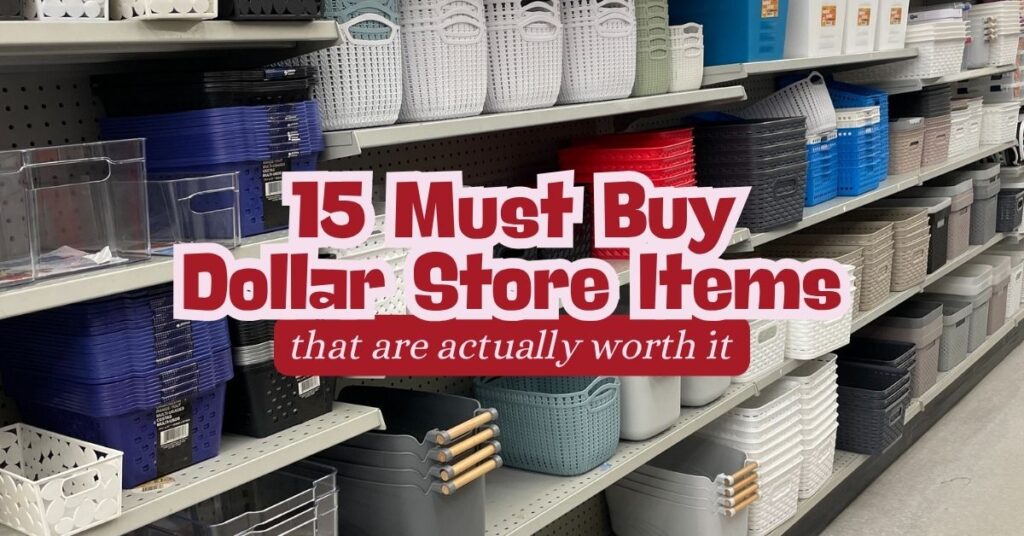
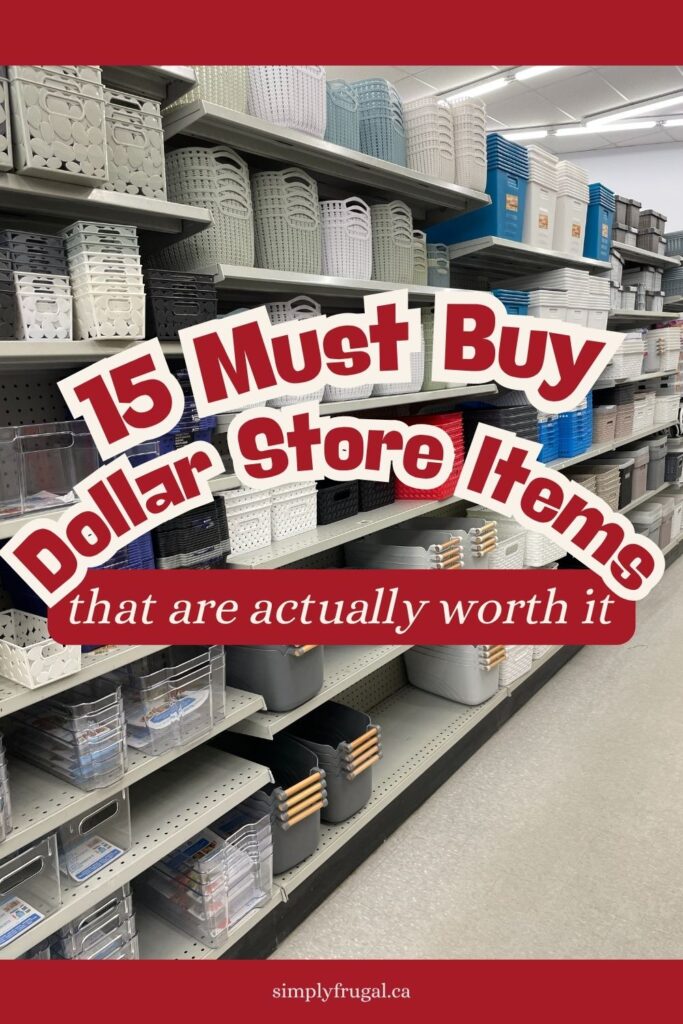
There are definitely some things I wouldn't recommend buying at the dollar store, but that doesn't mean you should write off the whole place! There are tons of items that can save you money, especially when you're shopping for things that don't need to be fancy or last forever.
From party supplies and craft materials to organizing bins and greeting cards, the dollar store can be a great place to stretch your budget.
Here are 15 must buy dollar store items that I think are worth picking up:
Party supplies - Napkins, paper plates, plastic cutlery, tablecloths and party decorations are some of my favourite dollar-store buys. When you're purchasing something that's likely to be used once, there's not much reason to spend a fortune on it.
Mailing supplies - The dollar store is where I usually pick up our mailing envelopes. You can often find a great selection at a much lower price than at an office-supply store, including peel-and-seal envelopes so you can skip the licking!
Pregnancy tests - Pregnancy tests can be expensive at the drugstore, so the dollar store can be a much more budget-friendly option. Just make sure you follow the package instructions carefully and check the expiration date before using one.
Greeting cards - My husband says that if I have to get him a greeting card for a special occasion, he'd appreciate it if I got it from the dollar store. LOL.
Honestly, I agree. There are usually lots of cute and funny options, and I'd much rather spend a couple of dollars on a card that's going to end up in a drawer than several dollars on one that's going in the recycling bin a few days later.
Craft supplies - Craft supplies are must buy dollar store items, in my opinion. Felt, beads, acrylic paint, embellishments, glue, cardstock and double-sided tape are just some of the craft supplies I've picked up at the dollar store.
Some locations have really good craft sections, so it's worth taking a look before heading to a specialty craft store.
Wrapping paper - Why pay a premium for wrapping paper when it's going to be ripped to pieces in approximately 14 seconds?
The dollar store is my go-to for inexpensive wrapping paper, especially when I need a particular colour or theme for a birthday or special occasion. (Though I do get my Christmas wrapping paper on clearance from other stores when it goes on sale after the holidays.)
Gift bags - Gift bags are another item I don't think you need to spend a lot of money on. Dollar stores usually have a huge selection of colours, sizes and designs, and they're perfect for those last-minute gifts.
Organizing products - I've purchased numerous bins, containers and buckets from the dollar store over the years.
My most recent purchase was some simple white plastic bins for organizing our bathroom closet. They hold our stuff just as well as the fancy (and much more expensive) versions, and that's exactly what I'm looking for!
Foil pans - Doing some freezer cooking? Feeding a crowd? Taking food to a potluck?
Pick up your disposable foil pans at the dollar store rather than paying more for them elsewhere. They're especially handy when you don't want to worry about getting your favourite casserole dish back.
Helium balloons - I've always found balloons and party decorations to be worth checking out at the dollar store, especially when you're putting together a birthday celebration.
I've purchased regular balloons and decorations there, and helium balloons can also be a budget-friendly option where available. Just check the current selection and pricing at your local store.
Double sided tape - Double-sided tape is one of those little things that can be surprisingly expensive at an office-supply or craft store.
If you use it for card making, crafts, wrapping or little household projects, check the dollar store first. It's one of those inexpensive supplies that's worth having in your craft drawer.
Kid Activities/Crafts - I like to keep a few colouring books, activity books, craft kits and little projects tucked away for rainy days, long car rides or those inevitable "I'm bored!" moments.
The dollar store is perfect for this because you can put together a little stash without spending a lot of money.
Batteries - I haven't done any scientific testing on dollar-store batteries, but I've had good experiences with the ones I've purchased over the years.
For things like remotes, clocks and other lower-demand household gadgets, they're definitely worth considering. Just compare the price per battery and check the package before assuming the cheapest looking option is actually the best deal.
Reading glasses - My mother-in-law has always purchased her reading glasses from the dollar store. I love the idea because it means you can keep a pair in different rooms of the house instead of constantly wondering where you left them!
They're also handy to keep in a purse, desk or bedside table.
Cooking Utensils - I've found some surprisingly good cooking utensils at the dollar store.
I recently purchased a pair of heavy-duty Betty Crocker tongs for $3 from Dollarama, and they were by far the best price I had found for a sturdy pair.
Of course, quality can vary, so give utensils a quick inspection before buying them. But there are definitely some gems to be found.
A Few More Dollar Store Items Worth Checking Out
And because I can never stop at just 15, here are a few more things I think are worth checking out while you're there:
Reusable food storage containers - Great for lunches, leftovers and organizing small items around the house.
Cleaning supplies - Microfiber cloths, sponges, scrub brushes and cleaning tools can be inexpensive dollar store wins. Even some cleaning products (like Barkeeper's Friend) are cheaper at the dollar store than other stores.
Seasonal decorations - If you're looking for inexpensive holiday or seasonal décor, this is one category where I think the dollar store really shines.
Hair accessories - Hair elastics, clips, headbands and similar accessories are often inexpensive items that don't necessarily need to be a splurge.
School supplies - Not every school supply is a great dollar store deal, but it's worth checking prices on things like folders, notebooks, pencil cases and basic art supplies.
Storage hooks and organizers - Adhesive hooks, small baskets and little organizers can be incredibly useful for creating inexpensive storage solutions. Don't skip the makeup section! I've found some great containers there!
The trick with dollar store shopping is to know what is actually a deal. Just because something is inexpensive doesn't automatically mean it's a good buy. I like to focus on things where the quality is good enough for the job and the lower price genuinely saves me money.
Because the goal isn't to spend $1 or $3 just because you can, it's to spend less on things you were going to buy anyway.
What are your must buy dollar store items? I'd love to hear what you always pick up!
How to Create a Spending Journal to Take Control of Your Money
We journal our thoughts, our meals, our goals and sometimes even our workouts. But how often do we actually write down what we're spending?
A spending journal is one of the simplest ways to get a clearer picture of where your money is going. And you don't need a fancy budgeting app or complicated spreadsheet to get started. All you really need is a notebook, a pen and a few minutes each day.
The goal isn't to make you feel guilty about every coffee or takeout order. It's simply about becoming more aware of your spending habits. Once you can see where your money is going, you can start making more intentional decisions about where you'd like it to go instead.
Here’s how to create and keep a spending journal that can actually help you spend smarter and save more.
1. Choose a simple journal
You don't need anything fancy to get started. In fact, I'd recommend keeping it really simple.
Grab a notebook, spiral-bound journal or even a small notepad you already have at home. There's no reason to spend a lot of money on a spending journal when the whole point is to help you save money!
Choose something that's easy to carry with you and give it a title such as “My Spending Journal” or “Where Does My Money Go?” The important thing is that you'll actually use it.
2. Decide how you want to organize it
There are several ways you can set up your spending journal, so choose whatever feels easiest for you.
You could:
Use one page for each day.
Divide the journal into weeks.
Create separate sections for income, bills and everyday spending.
Keep a running list of every purchase.
Use a simple table with columns for the date, item, amount and category.
Don't overthink this part. The best system is the one that makes it easy for you to record your spending consistently. If you're new to the idea, I'd start with a new page for each day. You can always change your system later.
3. Write down every dollar you spend
This is the most important part of keeping a spending journal: record everything.
That means the big expenses and the little ones. Write down your:
Groceries
Coffee and takeout
Gas
Household purchases
Clothing
Entertainment
Online shopping
Subscriptions
Bills
Miscellaneous purchases
Those small purchases are especially important. A $5 purchase might not seem significant on its own, but several small purchases throughout the week can add up quickly.
The goal isn't perfection. It's awareness.
(You may also want to record income or money coming into your account so you can get a more complete picture of your finances.)
4. Separate needs from wants
Once you're recording your purchases, try adding a simple category to each expense.
For example:
Needs: Groceries, utilities, transportation, medication, housing and other necessary expenses.
Wants: Takeout, entertainment, impulse purchases, unnecessary clothing purchases and other things you could live without.
You can use different coloured pens if you enjoy that, but you certainly don't have to. A simple N for need and W for want works just as well.
This can be incredibly eye-opening.
You might discover that you're spending far more on convenience purchases than you realized. Or that some of the things you thought were “needs” are actually wants. There's no judgment involved. You're just collecting information.
5. Review your spending at the end of each week
This is where your spending journal really starts to become useful.
Once a week, take a few minutes to look back at what you've written down. Ask yourself:
What did I spend the most money on?
Were there any purchases I regretted?
Did I make any impulse purchases?
How much did I spend on convenience?
Are there expenses I could reduce next week?
Did I spend money on things I already had at home?
Were there any purchases I could have planned for better?
You may start noticing patterns that are difficult to see when you're simply tapping your debit or credit card and moving on with your day.
6. Track the money you save, too
Here's a fun addition I'd make to your spending journal: keep track of your wins!
Create a small section for money you've saved. This could include:
Coupons or discounts you used
Sale prices
Cash-back rewards
Money you transferred into savings
Items you chose not to buy
Bills or expenses you successfully reduced
Don't underestimate the value of recording the things you didn't spend money on.
If you planned to spend $50 but found a way to spend $35 instead, that's a $15 win. Write it down!
Watching those savings add up can be surprisingly motivating.
7. Keep your spending journal somewhere convenient
Keep it somewhere you'll remember to use it. That might be in your purse, beside your computer, on your desk or in another spot you visit every day.
You can also use a notes app on your phone if that's more convenient for you. The point isn't to use a particular type of journal. The point is to create a habit of paying attention to your spending.
Try recording purchases as soon as possible. Waiting until the end of the day makes it much easier to forget those little purchases.
8. Use what you learn to make better decisions
After you've kept your spending journal for a few weeks, you should have a much clearer picture of your habits.
Now comes the fun part: do something with that information.
Maybe you discover you're spending $40 a week at the coffee shop. Perhaps you're making small purchases online often. Or maybe you realize that grocery trips are becoming expensive because you're stopping at the store several times a week.
You don't have to overhaul your entire budget overnight. Choose one or two areas where you think you could make a change and start there.
The purpose of a spending journal isn't to make you feel bad about spending money. It's to help you become more intentional about it.
Give a Spending Journal a Try
You don't need a complicated budgeting system to start paying closer attention to your money.
A notebook and a few minutes a day can be enough to show spending patterns you might not have noticed otherwise. Once you know where your money is going, you can make more informed decisions about where you'd rather have it go.
Try keeping a spending journal for the next 30 days and see what you discover. You might be surprised by what you learn. You will probably find a few easy opportunities to spend less along the way.
Have you ever kept a spending journal? What did it teach you about your spending habits?
How to Feed a Family on $50 This Week: A Practical Grocery Budget Plan
One of the things I love most about home cooked meals is how they bring a family together. There is something pretty special about gathering around the kitchen table, eating something delicious and talking about what happened during the day.
Unfortunately, feeding a family can get expensive quickly.
If you're trying to stretch your grocery budget this week, though, there are ways to make $50 go further. It won't necessarily be easy, and prices vary depending on where you live and what is on sale, but with some planning and creativity, you can make a small grocery budget stretch a lot further.
One important note: when I talk about how to feed a family on $50 for a week, I'm assuming you have at least a few pantry, refrigerator or freezer staples already on hand. You don't need to start with an entirely empty kitchen!
Here's how I'd approach a $50 grocery budget.
1. Take Inventory Before You Shop
Before you even think about going to the grocery store, shop your own kitchen.
Check your:
Pantry
Refrigerator
Freezer
Baking supplies
Spices and seasonings
Write down everything you already have that could be used to make meals.
You might have pasta, rice, potatoes, canned tomatoes, frozen vegetables, eggs or a package of meat hiding in the freezer. Maybe you have half a bag of tortillas or a can of beans that you forgot about. There is no need to buy tomato sauce if you already have some in the pantry!
The less you need to purchase, the further your $50 will go.
2. Check the Flyers and Build Your Meal Plan
Once you know what you already have, check your local grocery flyers and look for the best deals. I like to use Flipp to compare prices.
This is where I think a lot of people go wrong with meal planning. They decide what they want to eat first and then go shopping for all the ingredients.
When you're working with a very small budget, I'd do the opposite: Look at what you already have, see what's on sale and then build your meals around those ingredients.
If chicken thighs are on sale while chicken breasts aren't, chicken thighs might be the better choice. If ground beef is expensive but another protein is on sale, adjust your plan. If potatoes are a great price, find several ways to use them throughout the week.
You don't have to stop eating the foods your family enjoys. You just need to be a little flexible about which ingredients you use.
This is also where a meal planner can really help. I like having everything written down so I can see the entire week at a glance and make sure I'm not planning meals that require a bunch of ingredients I don't already have.
If you want to make meal planning easier, I've created a printable meal planner that you can print and use week after week.
Use it to plan your breakfasts, lunches and dinners, then build your grocery list around what you still need. When you're working with a specific budget, having everything planned out before you shop can help prevent those little “I'll just grab this” purchases that add up really quickly!
The goal isn't to plan the fanciest meals. It's to create a meal plan that uses what you already have, takes advantage of what's on sale and keeps your grocery spending under control.
3. Use Budget-Friendly Meal Stretchers
When money is tight, inexpensive staples can be your best friend.
Rice, beans, potatoes, pasta and oats can all help stretch meals without adding a lot to your grocery bill. Beans can be added to tacos, chili and soups. Rice can bulk up a stir-fry or serve as a side dish. Potatoes can turn a small amount of meat into a more filling meal. Pasta can stretch a sauce and feed more people. Dry beans are generally one of the most economical options if you have the time and desire to prepare them, but canned beans can also be convenient when they're on sale.
These are simple ingredients that can help you get more meals out of your grocery budget.
4. Make a List of Cheap Family Meals
I believe that most meals can be frugal meals when you buy the ingredients at the right price.
For example, if chicken thighs are on sale, I'll choose those instead of chicken breasts. If pasta is on sale, I'll work it into the meal plan. If a big bag of carrots are on sale, I'll look for ways to use them throughout the week.
I also have a 20 meal rotation that I've been using lately. I'd consider most of the meals on that list simple, inexpensive family dinners.
Some other budget friendly ideas include:
Spaghetti with tomato sauce
Homemade soup
Chili with beans
Tacos with beans or a small amount of meat
Fried rice
Grilled cheese and soup
Pancakes or French toast
Baked potatoes with toppings
Pasta salad
Egg sandwiches
Rice and vegetable bowls
You don't need fancy recipes to feed your family well.
5. Keep Breakfast and Lunch Simple
In our house, I have a pretty predictable breakfast rotation: oatmeal, pancakes/waffles, French toast, peanut butter toast, scrambled eggs and cereal, always served with fruit.
That might sound boring, but honestly, it makes life easier! I'll also make pancakes/waffles or French toast for dinner sometimes just so I can freeze the leftovers. Then I can pop them into the toaster on a busy morning for a quick and filling breakfast.
I take a similar approach with lunches.
Sandwiches, grilled cheese, soup, leftovers and simple wraps can all make inexpensive lunches.
Save your meal variety for dinner. You don't need to reinvent breakfast and lunch every day of the week.
6. Use Store Rewards and Loyalty Points
If you have grocery store loyalty points, don't forget to check your balance before you shop.
I like collecting PC Optimum points because I can redeem them toward my grocery bill. I recently redeemed $30 worth of points, which made a pretty noticeable difference at checkout!
If you regularly shop at a store with a rewards program, it can be worth learning how the program works and watching for opportunities to earn extra points.
When you're trying to stick to a $50 grocery budget, $10 in rewards can make a big difference!
7. Look for Grocery Rebates
Grocery rebate apps can be another way to squeeze a little more value out of your shopping trip.
I personally like Checkout 51 and Caddle because I can upload my receipt after shopping and claim eligible offers easily.
Ampliis another option if you're comfortable connecting your cards to the service. (I haven't tried this one.)
The important thing is to check the offers before you shop rather than buying something simply because there's a rebate. A rebate isn't a deal if it causes you to spend money on something you didn't need!
8. Be Willing to Shop Somewhere Different
If you're used to doing all of your grocery shopping at one particular store, this might be the week to step outside your usual routine.
Different stores can have very different prices on the exact same products. Depending on where you live, you might find better prices at stores such as Walmart, No Frills, FreshCo, Food Basics, Giant Tiger or a local discount grocer.
You don't need to shop at five different stores, either. If the time and transportation costs aren't worth it, choose the store that gives you the best overall value. I like to use Flipp to compare prices so I can get a general idea of what store will provide the best value each week for what I need.
The goal isn't to spend your entire day driving around town to save $3. It's to be strategic about where you shop so your $50 buys as much as possible.
9. Look at a Sample $50 Grocery Haul
So what could a $50 grocery trip actually look like?
Your exact prices will depend on your location, store and what's on sale, but here's the kind of shopping list I'd build around a tight budget:
Oats
Eggs
Bread
Bananas
Potatoes
Carrots
Onions
Pasta
Rice
Canned tomatoes
Beans
Frozen vegetables
Tortillas
One sale priced protein
Cheese or another inexpensive topping
The key is that these ingredients aren't just for one meal. For example, potatoes can become a side dish, breakfast potatoes or part of a soup. Beans can go into chili, tacos or rice bowls. Eggs can cover breakfast, lunch or even dinner.
Think in ingredients, not individual meals. That's how you make a small grocery budget work harder.
10. Don't Forget the Leftovers!
Who wants leftovers?
Well, maybe not everyone. But leftovers are one of the easiest ways to stretch your grocery budget because you've already paid for the ingredients and done the cooking.
If your family doesn't enjoy eating exactly the same meal two nights in a row, change it up.
Taco Tuesday can become taco salad Wednesday. Leftover chicken can become sandwiches or soup. Roasted vegetables can be added to eggs, rice or pasta.
I also love freezing leftovers whenever possible. For example, I'll freeze leftover spaghetti sauce so that I have an easy meal waiting for us on a busy night.
Don't think of leftovers as yesterday's dinner. Think of them as tomorrow's shortcut!
11. Don't Be Afraid to Repeat Meals
There's something about the idea of eating the same thing twice that makes people feel like they're failing at meal planning.
You're not.
If you make a big pot of chili on Monday and eat it again on Wednesday, that's not boring. That's smart grocery budgeting.
You can also freeze portions so you aren't eating the same meal several days in a row.
When you're trying to feed a family on $50, repetition is your friend.
What Would I Actually Do With $50?
If I had exactly $50 to spend on groceries this week, I'd start by shopping my own kitchen.
Then I'd check the sales and look for inexpensive proteins, produce and staples that could be used in several meals.
I'd use my meal planner to map out the week and build a grocery list around what I actually need.
I'd keep breakfast and lunch predictable, make several inexpensive dinners, use rice, beans, potatoes and pasta to stretch meals, and plan to eat the leftovers.
I'd also check my loyalty points and available grocery rebates before I went shopping.
And most importantly, I'd leave some flexibility in the plan.
If I got to the store and discovered that chicken was expensive but pork was on sale, I'd change the plan. That's one of the biggest advantages of meal planning around sales instead of being stuck to a particular recipe.
Final Thoughts
Feeding your family on $50 for a week isn't necessarily going to be easy, especially if you're starting with an empty pantry. Grocery prices also vary considerably, so your $50 may look very different from someone else's.
But if you have some staples at home and are willing to plan around sales, shop strategically and get creative with your ingredients, you may be surprised by how far a small grocery budget can stretch.
To me, frugal living isn't about making every meal as cheap as possible. It's about using what you have, buying things at the right price and finding ways to make your money work harder.
And sometimes, that means a pot of chili feeding the family twice. 😉
What are your favourite ways to stretch a $50 grocery budget? I'd love to hear them!