A clutter-free home doesn't happen because you spend an entire weekend decluttering every few months. In my experience, it's much easier to keep clutter under control when you develop a few simple habits that prevent it from piling up in the first place.
The goal isn't to have a perfectly organized home where nothing is ever out of place. Life happens! Kids leave things around, mail piles up, and sometimes the kitchen counter becomes the dumping ground for everything you walked through the door carrying.
The trick is to have a few habits that make dealing with clutter almost automatic. Once these habits become part of your everyday routine, keeping your home tidy takes much less effort.
Here are 7 good habits for a clutter-free home that will help you keep clutter under control without constantly feeling like you're decluttering.
One of my favourite decluttering habits is keeping a donation box somewhere convenient. Ours is in our bedroom closet.
Why? Because you are constantly coming across things you no longer need. A shirt that doesn't fit quite right. A kitchen gadget you never use. A book you've finished and know you'll never read again.
Without somewhere to put those things, they often get put back where they came from with the thought, "I'll deal with that later."
Instead, keep a box, basket or reusable bag in an accessible spot. Whenever you find something you no longer want or need, put it in the box immediately.
Once the box is full, take it to your favourite donation centre and start a new one.
You don't have to set aside an entire afternoon to find things to donate because you're making small decisions as you go.
One important rule: Don't let your donation box become a permanent fixture that you keep moving from room to room. Once it's full, get it out of the house.
2. Create Decluttering Routines
A little regular maintenance can prevent a much bigger decluttering job later.
You don't need to spend hours every day tidying your home. Instead, create a few small routines that work with your lifestyle.
For example, you might:
Spend 10 minutes tidying before bed.
Do a quick fridge clean every week.
Go through the mail as soon as it comes into the house.
Do a quick bathroom reset once a week.
Declutter one small area whenever you have a few spare minutes.
Do a seasonal check of clothing, toys and other frequently used items.
The important thing is consistency rather than perfection.
Think of it like brushing your teeth. You don't wait until your teeth are completely covered in plaque before dealing with them. You do a little maintenance regularly.
Your home can work the same way.
Small, frequent resets are much easier than waiting until the clutter has become overwhelming.
3. Create Systems for Problem Areas
Every home has a few places where clutter seems to magically appear.
Maybe it's the kitchen counter. Maybe it's the entryway. Perhaps the dining room table has somehow become the place where backpacks, paperwork, chargers and random household items go to live.
Instead of repeatedly telling yourself to "keep this area tidy," create a system that makes it easier to keep tidy.
If shoes are always scattered around the entrance, add a shoe basket or designated shoe storage.
If paperwork piles up on the counter, create one place for incoming papers.
If everyone's keys end up in different places, designate a spot for keys.
The best organizing systems are usually simple. You shouldn't need a complicated system to maintain a simple space.
Pay attention to where clutter naturally accumulates in your home. Those piles are giving you useful information about where your systems aren't working.
Instead of fighting the clutter, ask yourself: What system would make it easier to put these things away?
4. Stick to the One-In, One-Out Rule
One of the easiest ways to prevent clutter from multiplying is to make a habit of getting rid of something when you bring something new into your home.
Buy a new sweater? Consider whether there's an older one you no longer wear.
Buy a new kitchen gadget? Take a look at your kitchen drawers and see if something else can go.
Get a new pair of shoes? Check whether there's a pair you can donate.
This doesn't have to be a rigid rule for every single purchase, but it's a useful mindset.
Our homes have a limited amount of space. If we continually bring new things in without anything going out, eventually we're going to run out of room.
The one-in, one-out rule encourages you to think about the space you already have before adding something new.
And here's a little bonus: it can make you more thoughtful about shopping. When you know that bringing something new home means you'll need to find a place for it, and possibly part with something else, you may find yourself asking, "Do I really want/need this?"
Sometimes the answer will be yes. And that's perfectly fine.
5. Keep Flat Surfaces Clear
Flat surfaces have a magical ability to collect clutter.
A kitchen counter becomes a place for mail. A dining table becomes a place for homework. A dresser becomes a place for laundry, receipts and random objects that don't seem to have a home.
Keeping your flat surfaces relatively clear can make your entire home feel more peaceful.
You don't have to remove every decorative item. The goal is simply to avoid allowing surfaces to become storage areas.
Try giving yourself a simple evening reset. Before you go to bed, clear the kitchen counters, dining table and other major surfaces and return things to where they belong.
It might only take five or ten minutes, but you'll appreciate it the next morning.
There is something surprisingly satisfying about waking up to a clear kitchen counter instead of yesterday's clutter.
6. Give Everything a Home
One of the best habits you can develop for a clutter-free home is making sure everything has a designated place.
When something doesn't have a home, it usually becomes clutter.
Think about the things that regularly get lost or left lying around. Remote controls. Scissors. Batteries. Chargers. School supplies. Keys. Reusable shopping bags.
Instead of constantly searching for these things, give them a home. Make the home easy to remember and easy to use.
If something is difficult to put away, you're much less likely to put it away. A basket beside the stairs may work better than a perfectly organized cupboard if that's where everyone naturally drops things.
The goal isn't to create beautiful organizing systems for the sake of organizing. The goal is to make it easy for everyone in your home to know where things belong and where to put them back.
If you find yourself constantly asking, "Where should I put this?" that's probably a sign that the item doesn't have a home yet.
7. Don't Buy What You Really Don't Need
Of course, one of the best ways to deal with clutter is to stop bringing unnecessary things into your home in the first place.
This can be difficult! Especially when something is inexpensive or on sale.
As someone who loves a good deal, I've definitely had to learn that a bargain isn't actually a bargain if I don't need it.
Before buying something, especially an impulse purchase, ask yourself a few questions:
Do I actually need this?
Do I already own something that does the same job?
Where will I keep it?
How often will I realistically use it?
Would I still want it if it weren't on sale?
You don't have to stop buying things you enjoy. That's not what frugal living or a clutter-free home is about.
It's about being intentional with what earns a place in your home.
Sometimes the best deal is the thing you decide not to buy.
The Bottom Line
A clutter-free home isn't about constantly cleaning, organizing and getting rid of things. It's about creating habits that make clutter easier to prevent and easier to deal with when it does appear.
Keep a donation box handy. Create simple routines. Give problem areas a system. Be mindful about what comes into your home, and make sure the things you already own have somewhere to go.
You don't need to completely overhaul your home overnight.
Start with one habit. Once it becomes second nature, add another.
Little habits really do add up. Before you know it, keeping clutter under control will become just another part of everyday life.
Trying to organize your home without spending a fortune? You're not alone. Keeping your space tidy and clutter-free doesn't have to mean investing in expensive storage systems or custom organization solutions. In fact, some of the best organizing products are surprisingly affordable.
In a world where clutter seems to multiply overnight, having the right tools can make a huge difference. Whether you're organizing a small apartment, a busy family home, or simply looking for ways to make everyday life a little easier, affordable organizers can help you maximize your space while staying within budget.
From kitchen cabinets and bathroom counters to closets and entryways, budget-friendly organization products offer practical solutions for every room in your home. The best part? You don't have to spend a lot to get organized.
Below, you'll find 12 affordable organizers available on Amazon for $25 or less. These clever storage solutions can help reduce clutter, simplify your daily routine, and make your home feel more functional, all without breaking the bank.
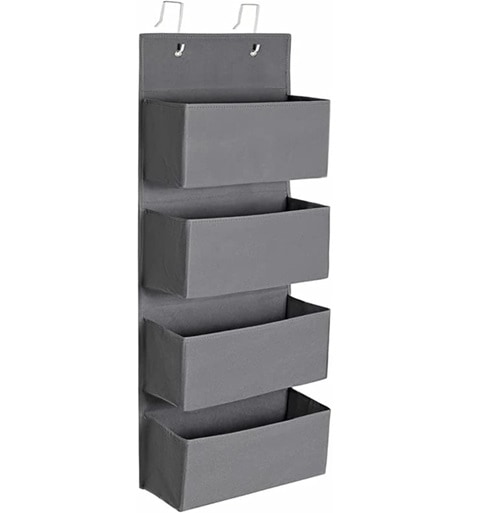
I think one of these over the door organizers would be perfect for those kids who love knick knacks! Or for holding baby supplies. The option are endless, really. See it on Amazon.
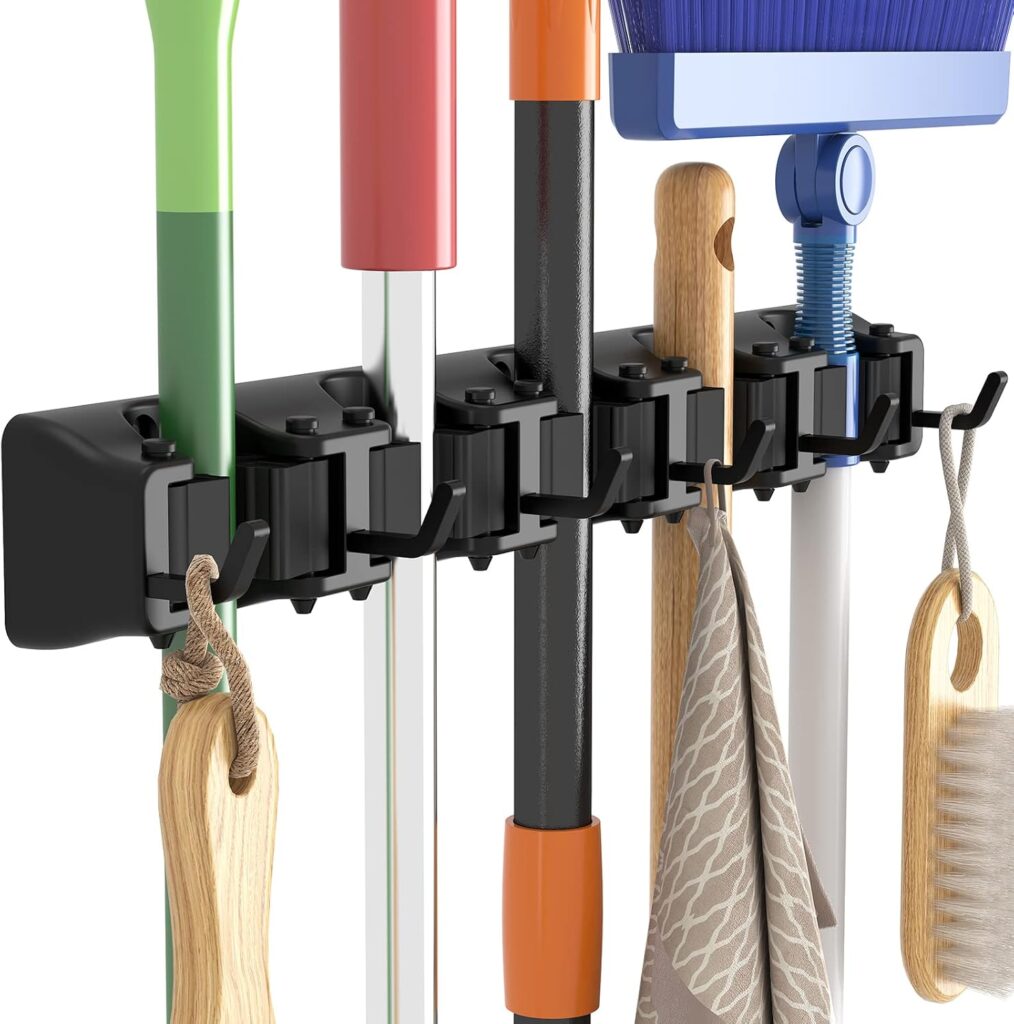
We have something like this in our garage to wrangle the mop and brooms and I love it! This one from Amazon looks even better than what we have. I like that it has small hooks for hanging other small things! See it on Amazon.
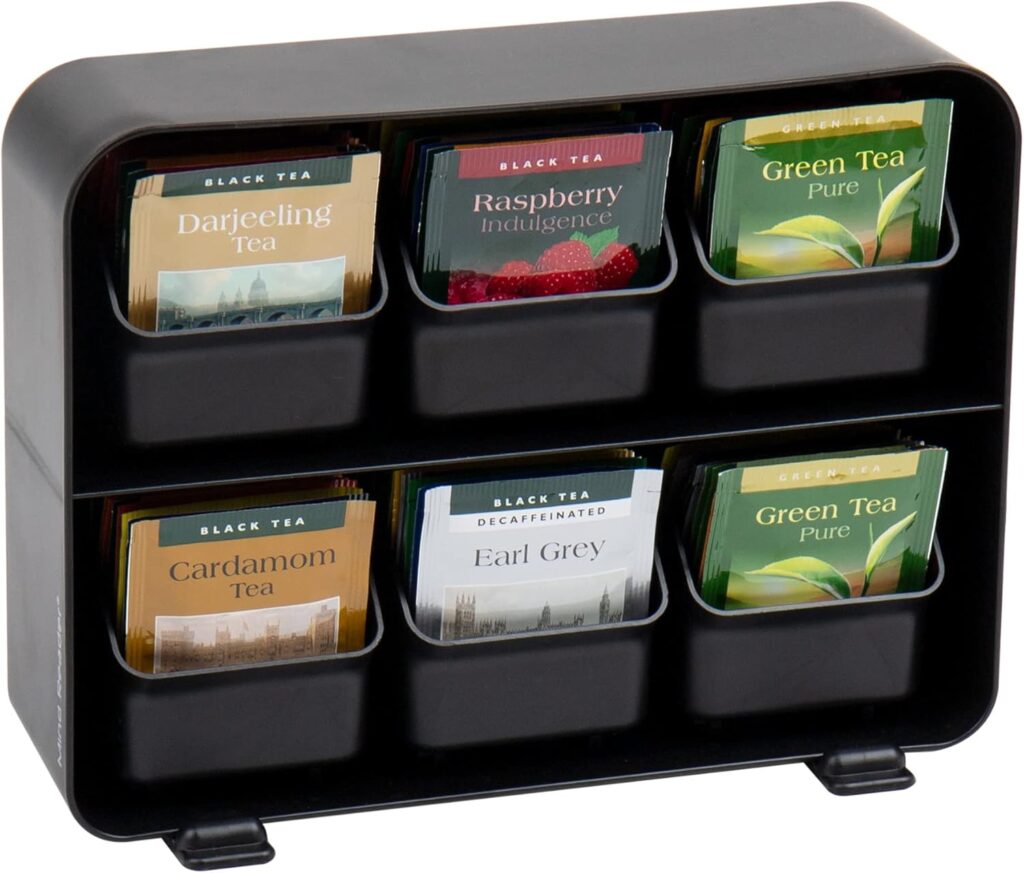
If you have tea drinkers in your home, this tea bag organizer is going to be so nice to have! Say goodbye to stacking boxes that you have to individually move to get to the flavour you really want! See it on Amazon.
If you are short on space in your closets, these pant hangers could free up a lot of space for you! There are ones especially for skirts too. See it on Amazon.
This is advertised as a shoe organizer, but I think this you could store so many different things in one of these! May hair care, toys, gift wrapping supplies, office supplies and so much more! See it on Amazon.
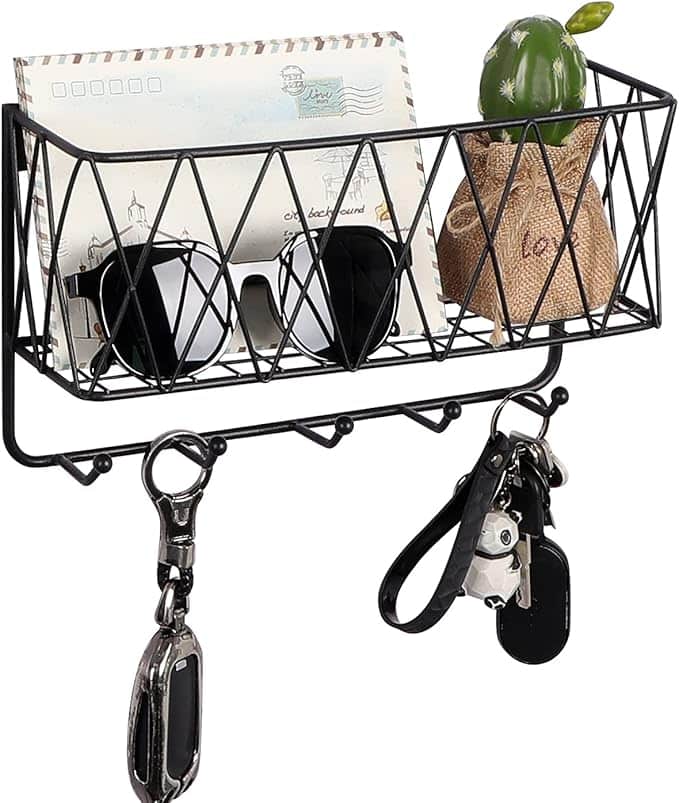
This organizer would make a great addition to any entryway or kitchen. Use the hooks to keep track of car keys, spare keys, and other small items, and use the main compartment to keep track of your mail. See it on Amazon.
I have these all over our house! I've got them in our bathroom drawers, kitchen, the girls' craft desk... they are so good! These are interlocking and I find they slide around less than ones that aren't interlocking. See it on Amazon.
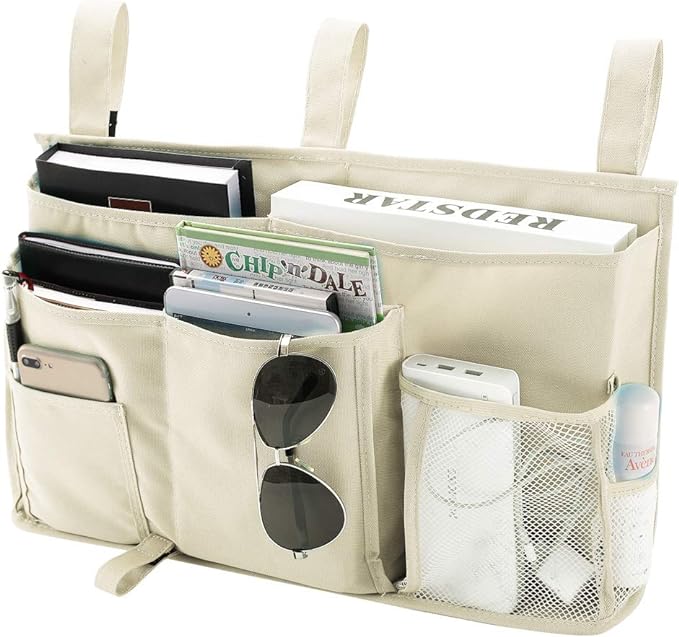
This is the first time I have seen one of these, but instantly I knew it could be very useful! My youngest has a bunk bed in her room and I like that she could have a place to put her water bottle, books and knick knacks. See it on Amazon.
I have a couple of these in our fridge. One holds yogurt cups and the other holds apples/oranges. I love that these ones have removable dividers, making them great for organizing snacks in the pantry. See it on Amazon.
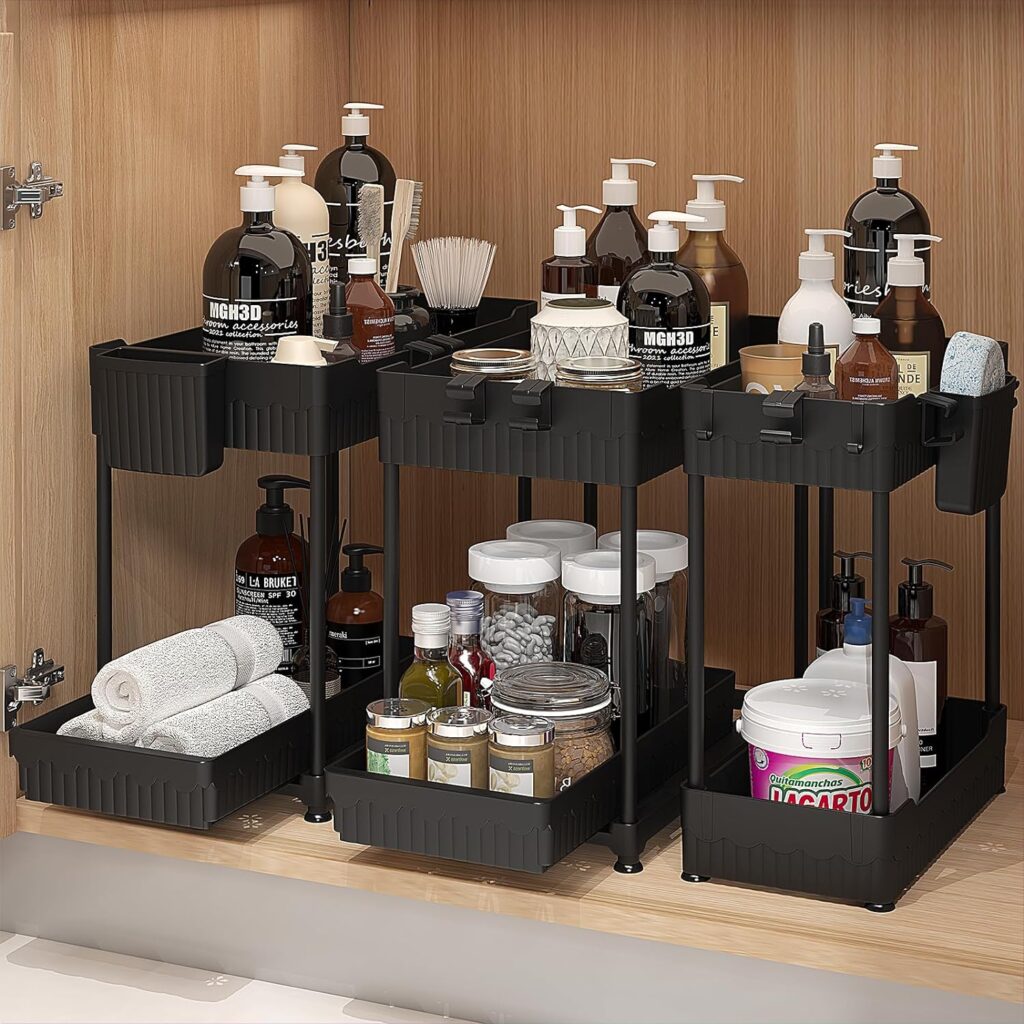
These 2 tier under sink organizers are brilliant! I have one under our kitchen sink and one in each of the bathrooms! Highly recommend! This is a two pack on sale! See it on Amazon.
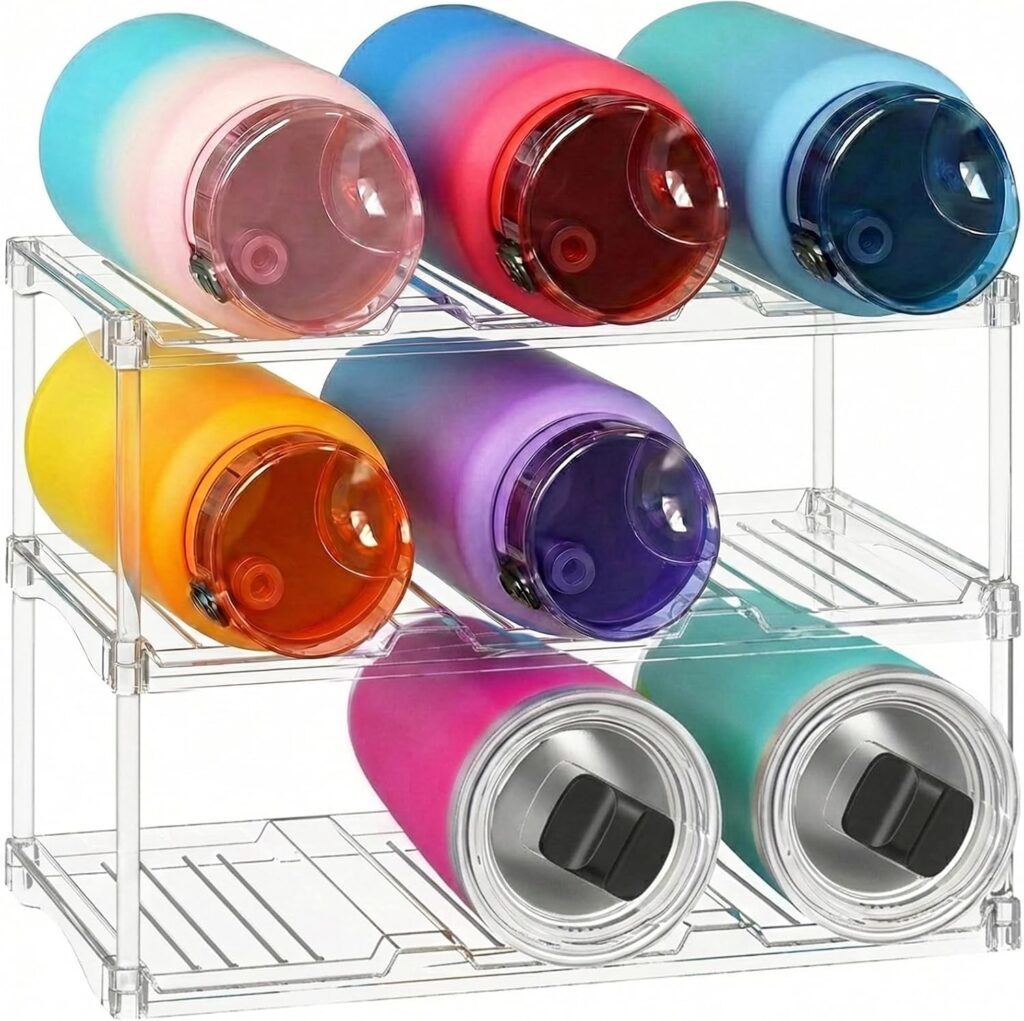
How amazing would these be for easy access of all the water bottles and travel mugs? No need to take everything out just to get the bottle you're wanting. See it on Amazon.
Getting organized doesn't have to come with a big price tag. With the right affordable organizers, you can create a more functional, clutter-free home while sticking to your budget. Whether you're tackling overflowing closets, messy kitchen cabinets, or crowded countertops, these budget-friendly storage solutions can help you make the most of your space. Start with one or two organizers that solve your biggest pain points, and you'll be surprised at how much easier daily life can become when everything has a place.
Want to see more of my affordable organization picks from Amazon? Visit my Amazon storefront to see more than 50 recommendations! (Not every item is under $25 though.)
I find decluttering my clothing one of the hardest decluttering tasks to do. I get this weird attachment to certain pieces. Like the ones I remember wearing on a golf date with my husband 15 years ago. Or the ones I think I'll fit into again one day. Or even the ones that I spent a pretty penny on but hate the way they fit. It's silly really, to hang on to clothing that doesn't fit properly, you don't like, or is outdated. It's easy to replace those things on a budget with items you actually love!
I was talking with my mom the other day about how I was going to be ruthless during my upcoming decluttering session. In a sense, I want to start over. Keep the pieces that I love and that fit me well, but finally say goodbye to the things that make me feel frumpy.
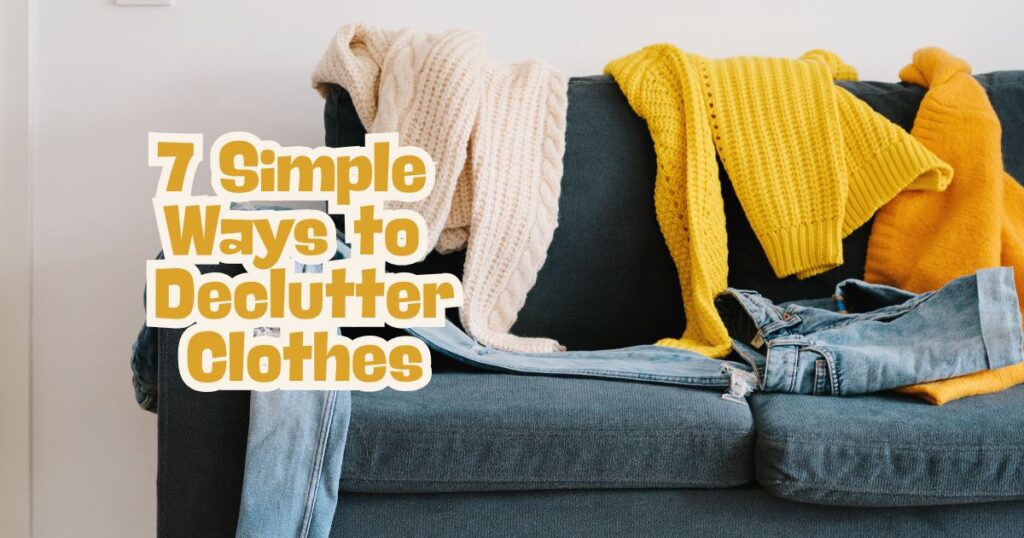
7 Simple Ways to Declutter Clothes
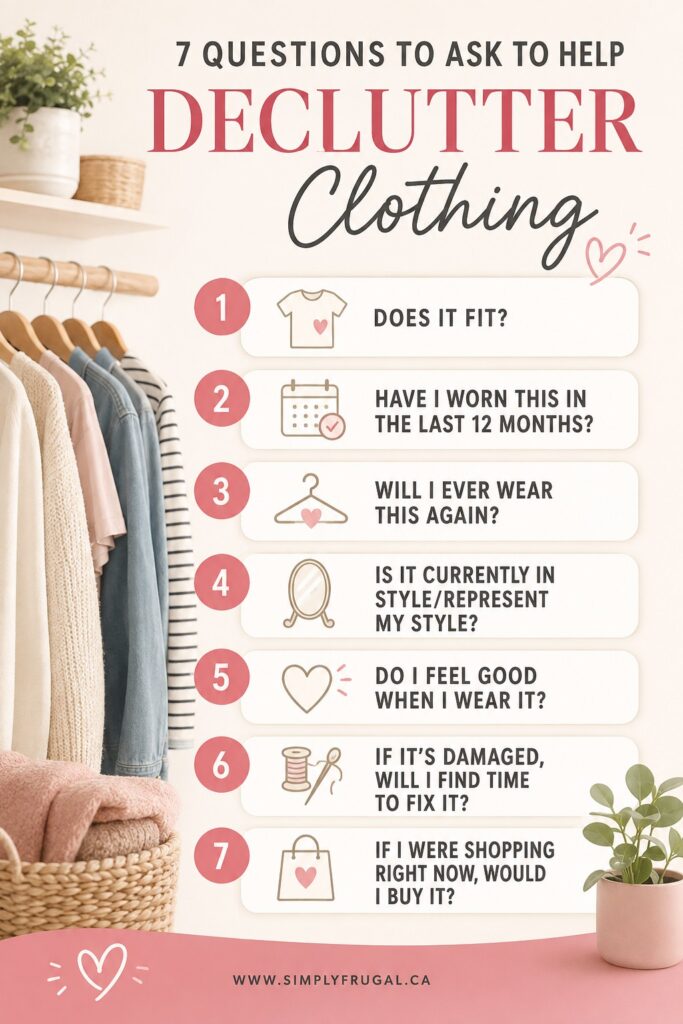
So in a new effort to add only pieces that I LOVE here are 7 questions I ask myself when I declutter clothes:
1. Does it fit?
If the shirt pulls in entirely the wrong areas, it doesn't fit. If I can't do up the zipper on my jeans easily, they don't fit.
2. Have I worn this in the last 12 months?
Chances are, if you haven't worn a piece of clothing in a year or more, you're not going to wear it again.
In order to determine if you've worn something in the last 12 months, you could try the backwards hanger trick. When you're hanging up your clothes, flip the hanger around so it hangs (with the clothing on it) backwards on the rack. Every time you pull something out and wear it, hang it back up with the hangers facing the proper way. That way at the end of 12 months, you can see if there's anything you didn't wear because the hangers are still hanging backwards!
3. Will I ever wear this again?
Maybe you bought something for a special occasion you were attending, but don't have much, or any, opportunities to wear it again. It might be time to consider selling it in a consignment shop or even on Kijiji/Craigslist.
4. Is it currently in style/does it represent my style?
I'm sure we've all got those sentimental pieces in our wardrobe that we wore in the "good 'ol days". Well, new "good 'ol days" are upon us and it's time to get with the times by getting rid of those outdated pieces. If it's just too hard, put them in the dress up box for the kids to enjoy!
5. Do I feel good when I wear it?
This is becoming one of the most important questions I ask myself. If I just don't feel confident when I put something on, it's time to really consider putting it in the purge pile. As I mentioned above, it's doesn't do my postpartum body and ego any favours if I'm just wearing something for the sake of getting dressed. Even the hoodies I purchase have to make me feel "cute"!
6. If it's damaged, will I actually find time to fix it?
Enough said. If you don't have time to fix something, whether you want to fix it yourself or go out of your way to take it to a professional, it's time to part ways. That piece of clothing will just nag on you anyways as it taunts you from the depths of your closet!
7. If I were shopping right now, would I buy it?
Often times, I've looked at a piece of clothing and wondered what I was thinking when I bought it. (Most likely it was cheap! Ugh.) So, if you look at your current clothes and see things you wouldn't buy today, maybe it's time to say goodbye.
I sure hope these questions help you decide what to keep and what to let go as you declutter clothes and simplify your wardrobe. From now on, I’m focusing on buying only the pieces I truly love. The ones that fit well, feel comfortable, and make me feel confident every time I wear them.
Sometimes that may mean spending a little more on quality items that actually work for me, and honestly, I’m okay with that. In the long run, buying fewer random $10 purchases here and there will likely save money, reduce clutter, and leave me feeling like a million bucks every time I open my closet.
Do you have any other ways to declutter clothes that you can share with us in the comments? What sort of outrageous clothing are you storing in your closet?
Do you ever feel like there just aren’t enough hours in the day? Like your to-do list keeps growing while your energy keeps running low? If you’re feeling overwhelmed and stretched thin, it may be time to focus on working smarter instead of harder. The good news is that a few small changes can make a big difference. Take a look at these 7 simple tweaks for a more productive day so you can feel less stressed, more focused, and get more done with less effort. Here’s how to get started:
Before heading to bed, take a few minutes to write out your to-do list for the next day in a notebook or planner. Getting everything out of your head can help you relax at bedtime and avoid that “what am I forgetting?” feeling. It also gives you a clear plan for the morning so you can start your day with focus instead of scrambling to figure out what needs to be done.
2. Use Helpful Apps to Stay Organized
There are so many free apps that can help simplify your day and keep your life organized. From shared calendars and grocery lists to reminders and meal planning, the right app can save both time and mental energy. Our family has been loving the Cozi app because it keeps everyone’s schedules in one place and makes it easier to stay on top of appointments and activities. Try experimenting with different apps to find what works best for your routine.
A newer thing that many families are loving is a Skylight calendar. You can mount it on a wall where everyone will see it. It is a touch screen digital calendar and chore chart!
3. Let Natural Light In First Thing
As soon as you wake up, open the curtains or step outside for a few minutes. Natural light helps wake up your body and signals to your brain that it’s time to start the day. Even this tiny habit can help boost your energy, improve your mood, and make it easier to feel productive.
4. Keep Small Tasks in the Car.
Waiting in the school pickup line or sitting outside activities can add up to a lot of wasted time. Keep a small basket or tote in your vehicle with quick tasks you can tackle while waiting. This could include paperwork, a book you’ve been meaning to read, a journal, coupons to organize, or even your planner. It’s an easy way to make use of spare moments during busy days.
5. Carry a water bottle.
Staying hydrated can help improve focus, energy, and productivity throughout the day. Keeping a reusable water bottle with you also saves time and money since you won’t need to constantly stop for drinks. Using a measured water bottle can help you keep track of how much water you’re drinking each day.
6. Set realistic goals.
One of the quickest ways to feel overwhelmed is by expecting yourself to do too much in one day. Instead of creating an impossible to-do list, focus on setting realistic goals you can actually accomplish. Start with 5–7 important tasks and build from there. Finishing your list feels far more motivating than constantly feeling behind.
7. Finish One Task Before Starting Another
It’s easy to bounce between tasks all day long, but constantly switching gears can leave you feeling frazzled and unproductive. Try focusing on finishing one task before moving on to the next whenever possible. Completing tasks fully helps create a sense of accomplishment and keeps loose ends from piling up.
8. Prep for the Morning the Night Before
Lay out clothes, pack lunches, gather school bags, or prep breakfast ingredients before bed. Even spending just 10–15 minutes preparing for the next day can make mornings feel much calmer and less stressful.
9. Use Timers for Chores
If you struggle to stay motivated while cleaning or tackling projects, set a timer for 10–20 minutes and focus only on that task. You’ll often get more done when you race the clock, and chores feel less overwhelming when they have an end point.
10. Batch Similar Tasks Together
Try grouping similar tasks together to save time and mental energy. For example, make all your phone calls at once, run errands in one trip, or prep several meals at the same time. Batching tasks helps you stay focused and reduces constant switching between activities.
11. Reduce Distractions
Constant notifications and interruptions can make even simple tasks take twice as long. Try silencing unnecessary phone notifications or setting aside focused work time without distractions. Even short periods of uninterrupted focus can make a huge difference in productivity.
12. Create Simple Routines
Having routines for mornings, evenings, cleaning, or meal prep can help your day flow more smoothly. Routines reduce decision fatigue because you already know what comes next, which saves time and mental energy.
13. Keep a Donation Bin Handy
Clutter can quickly make your home and your mind feel chaotic. Keep a basket or bin somewhere convenient so you can easily toss in items you no longer use. Decluttering a little at a time is much easier than waiting until things pile up.
14. Build in Buffer Time
Try not to schedule every minute of your day. Leaving small pockets of extra time between errands, appointments, or tasks can help reduce stress when things don’t go exactly as planned.
15. Give Yourself Permission to Rest
Productivity isn’t about constantly being busy. Rest is important too. Taking breaks, getting enough sleep, and slowing down when needed can actually help you stay more focused and productive in the long run.
What are your favorite simple tweaks for a more productive day?
Isn’t it time to get a little more organized? You keep putting it off, but now is the time to buckle down and really get to it. These 25 organizing tips will help you get organized in no time, on a budget.
#1. Use old snack containers - If you’re strapped for cash, then using old containers is an excellent way to get a little more organized in your junk drawers or in your computer desk.
#2. Use a white board - Do you often forget to use your calendar? Try writing your important to-dos on a chalkboard or a white board instead. Place it somewhere you can see on a daily basis. I like this magnetic white board for the fridge!
#3. Keep like items in one spot - Instead of storing like items in various spots around the house, keep them all in one spot. Finding magazines everywhere? Store them all in a magazine file on a shelf.
#4. Create a charging station - Don’t play the "find your charger" game. Create your very own charging station within your home. I like this DIY Charging Station from Four Generations One Roof. If DIY isn't your thing, or you want something with a smaller footprint, a charging station like this is genius.
#5. Use a Magnetic strip - Place magnetic strips throughout your home to hang items like: knives, spice jars, and even nail clippers.
#6. Use old suitcases for storage - Using old suitcases as home décor will give you a vintage feel, but you can still store items within the suitcase. Double purpose!
#7. Use ice cube trays to store small items - Whether you have smaller toys or office supplies, consider using ice cube trays to store these items in.
#8. Use wine boxes to store your shoes - Maybe this organizational idea isn’t so conventional, but it sure is brilliant. Here's a picture for your reference.
#9. Leave reminders on or in your fridge - One place you know you’re heading today is to the fridge, so leave your most important reminders there.
#10. Use an organizer for the shower - Instead of having items fall everywhere as you use the shower, buy a shower organizer. I recently picked one up for $3.50 from Dollarama!
#11. Start recycling - If you’re trying to clear out some of the trash, you can get a little more organized by recycling some of your items.
#12. Clear out the clutter daily - Some people only clear out clutter once a year, stay organized by getting rid of clutter on a daily basis.
#13. Only keep a couple of your kids papers - School papers can really add up. Keep just a few of your child's papers and put them on display on a cork board or a mini clothesline.
#14. Utilize hidden storage - Put your items into a hidden storage bench in the mud room, living room, and even outside.
#15. Put a grocery bag in your car for garbage - If you are tired of having garbage in your vehicle, then keep a grocery bag in there to collect garbage as you finish with it. Or an empty disinfectant wipe container would also be great!
#16. Organize by color - Make your house a little more fun by organizing everything by color. You might take your family and guests by surprise!
#17. Use mesh bags around your home - Instead of trying to put socks and undergarments in the laundry basket, have your family put them in mesh bags. If they're all together in a mesh bag, there's less chance to losing some.
#18. Use a shoe organizer for multiple purposes in your home - A shoe organizer can be used for bathroom items, little kid’s clothing, or even crafting items. Let your imagination run wild with this one.
#19. Organize your priorities - Everyone says organize your time a little better, but organizing your priorities makes more time for the things that matter.
#20. Ban clutter in your house - If you are tired of seeing clutter all over the house, then make a rule that no one can bring clutter into the house. If you bring something in, you have to get rid of something else.
#21. Sell your unwanted items - As you declutter, put the items of value up for sale so you can earn a bit of cash for your savings account. Donate all the other items if they are in good condition.
#22. Utilize under the bed space - A lot of storage can be found underneath beds. You can buy bed risers to raise your bed if you need more room underneath it.
#23. Donate your magazines - You may have a lot of magazines lying around the house. Instead of throwing them away, keep the pages you want and donate the rest.
#24. Utilize hallway space - If you have a long hallway in your entryway; utilize the wall space as much as you can. Try baskets for mail, slim shoe racks, storage shelf with hooks underneath.
#25. Use one basket per person for laundry - Mixing everyone’s laundry together can make more work for you. Make it easier on yourself using one basket per person.
I hope these brilliant organizing tips help you get a little more organized this year. What organizing tips would you add to this list?
How to Get Started Organizing When You're Overwhelmed
Sometimes, to get started organizing is the hardest part. You want to start, but you feel overwhelmed because you're just not sure where to start!
Today, I want to share some suggestions that may help you to get started organizing!
Make a list
Sit down and make a list of all the areas in your home that you would like to see organized. Seeing everything written down could help you to pick something, whether it be a small task or an area that annoys you! Simply pick one thing, do it, then cross it off!
Start small
For the overwhelmed person, starting with a small project, such as a single drawer, could be just the thing to trigger your resolve to keep going onto the next small project. You'll find yourself moving from one small project to the next, until you've finished each area of your home! Here are some small project ideas to get you started:
A drawer
A shelf
A closet
One surface space
Your spices
One cupboard
Medicine cabinet
Start in the room that requires the least amount of work
It's a possibility, that by starting in an area of your home that requires a lot of organizing hours to complete, could turn you off before you start to see any results. I personally, love to see almost instant results. So, in a continuation of the tip above, when it comes to organizing, starting somewhere that doesn't require a lot of effort will motivate you to carry on.
Start on the area that annoys you the most
Is there an area in your home that annoys you to no end because you can never find what you're looking for? Start there. If tackling an area means it'll make your life more manageable while you're working on organizing other areas, that annoying spot could be a great place to start!
Just start
If you're naturally a planner and you're trying to get things just right in your head before you start, the planning process could actually scare you into doing nothing. Instead, clear your mind and tackle a drawer. Once you see how easy that was then you can move on to another, then another. Take baby steps and don’t overwhelm yourself by looking at the whole room.
Set goals
Set goals that will allow you to look at the big picture. Let's say to want to organize your kitchen. You could leave it at that, but how overwhelming does 'organize kitchen' feel on your to-do list? By imagining how you want your space to feel, setting a timeline and breaking down the areas in your kitchen, you will be way more prepared to succeed! Let's write the kitchen example out:
"I want my kitchen to feel clutter-free with each task area easily accessible so I can get my cooking/baking/cleaning done efficiently.
I will give myself one month to complete my kitchen, by spending 15 minutes a day on one of these areas:
Pantry items
Pots & pans
Cooking utensils
Eating utensils
Cups/mugs
Tupperware
Plates/bowls
Serving ware
Baking ware
Small appliances
Dish towels/cloths
Under sink cabinet
Etc.
I will make time every day between 3pm and 5pm. I will also take before and after photos of each area so I can continue to be inspired."
I hope that example helps you to see how setting goals for each room in your home will help you feel less overwhelmed!
Get motivated
Find yourself some motivation! Here are some ideas:
Read organizing blogs - These blogs are full of useful tips for everyone!
Read décor blogs - Maybe envisioning what your space could look like will motivate you?
Watch an organizing show -Something like The Home Edit could really help light the organizing fire.
Have guests over - Nothing gets your act in gear when you're anticipating company! (or maybe this will only force you to shove things in the closets...)
Lose something - hehe, but seriously, I've gone on organizing rampages when I can't find something of importance!
Set the timer
If you know a project will take you 3 - 4 hours or more, you're likely to put it off. But, if you work at it and organize in small bursts, by setting a timer for 15 - 30 minutes, you're more likely to get your project done! Or how about doing a quick project (sorting the mail) while you're waiting for water to boil or the microwave to finish?
Hopefully these are some ideas to help you get started with organizing your home to make it a place that you love being in!
What I really want to know though, is that I'm not the only person that tries to get as much done as I can while I'm waiting for the microwave to beep? 😉
Where do you start first when you organize? Did these tips help? Share your ideas in the comments below!