Apr 18 | Useful information

Once again, behind the scenes of Simply Frugal, I’ve been doing some thinking and planning. Without going into too much detail (because I simply don’t know anything yet!), you would help me greatly if you could spend a few minutes filling out my newest survey. It’s three questions. That’s it! So it really shouldn’t take you long, unless you have a lot to tell me. Which I don’t mind 😉
Thanks so much guys, I really appreciate it!
Aug 5 | Useful information

I’ve got a ton of ideas going on in my head and really, I could be working so many “good” projects. However, I only want to work on the ones that matter most to you!
In order to do that, I have to ask a few questions. Would you mind taking a super short 7-question survey? You can do that right here.
The 2016 summer survey will be open for the next week (that’s through August 12, 2016).
Thanks so much!
Jun 20 | Useful information, Thoughts on Life
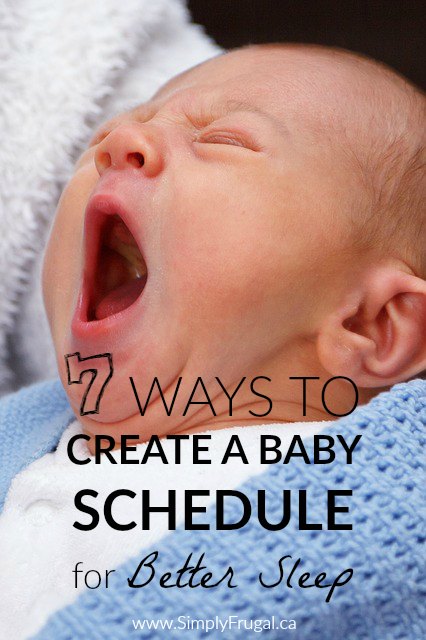
Those early days of with a newborn often mean the baby schedule is out of whack and days and nights are confused. Depending on when your child was born, it can be tough to regulate their sleeping habits. Then mix in the idea of breastfeeding around the clock, siblings, your own need for sleep, work and potential pain post-delivery and you have a frustrating and overwhelming time when you arrive home. These ways to help create a baby schedule for better sleep are meant to encourage you and your child to rest better early on in their life.

7 Ways To Create A Baby Schedule For Better Sleep
Don’t wake your baby to change diapers. This is one thing that many new moms do because they are told to check the baby diaper regularly. A baby schedule works when you stick to it, but moving your soundly sleeping baby around to change a diaper is something that can only interrupt their sleep and make them struggle to settle back down later. If the diaper is truly dirty it will wake them. A slightly damp diaper won’t usually wake them and can be okay to leave on your baby long enough to continue their nap.
Don’t always wake your baby to feed them. There are some times when you should definitely wake your baby to make sure they eat, but in general it will not hurt your baby to go for a 4-6 hour stretch getting quality sleep. When they are newborns you can expect them to wake every 3-4 hours at least for food, but if they happen to sleep a solid 5-6 hours in the first month of life that is okay. Follow your doctors recommendations for a premature or underweight baby since those are times when this rule would not apply. Otherwise, if your baby sleeps 5-6 hours at a time don’t wake them to eat. If they are sleeping 8-10 hours right away however, you will want to talk to your pediatrician and make sure something else isn’t going on. Most babies will sleep in 3-4 hour stretches for at least the first 6-8 weeks of life. After that point, they may begin sleeping longer periods of time.
Co-sleep if breastfeeding. One of the best ways to create a baby schedule for better sleep is simply to co-sleep. While this doesn’t work for everyone, and some believe is a health risk, it can be beneficial especially when breastfeeding. I like having my babies beside me in a playpen or bassinet.
Utilize white noise at nap times. Your baby has been inside your womb for many months and the sounds of your heart are white noise for them. Sometimes the quiet in your home may make it difficult for them to sleep easily. Invest in a womb bear that plays womb sounds, or utilize a sound machine or fan for white noise.
Use blackout curtains. Sometimes even babies require darkness to rest better. Blackout curtains in the nursery or bedroom can keep sunlight out and help them to stay asleep easier and longer.
Feed more prior to nap times. Sometimes it may be hunger that wakes your baby earlier than you would like. Feeding extra prior to nap times may work well. You don’t want to over feed your baby, but you may want to adjust your schedule so their nap time comes right after your regular feedings so they are warm, full and content prior to naps or bedtime.
Be consistent with nap times. A schedule for your baby to nap and go to bed at night is really important. Consistency helps them to learn to not fight sleep. While some things can happen where naps don’t happen right when you want them to, overall you’ll see they sleep better when you are consistent. This means planning errands and events around the baby schedule instead of the baby around them.
These tips to create a baby schedule for better sleep will help your first months with your new child to be much easier to manage since you won’t be as sleep deprived.
May 11 | Useful information
I hope you aren’t getting frustrated with all my recent surveys lately! I just love hearing from you all and I find this is a great way to do it!
Today’s survey is all about grocery shopping! So, if you’re particularly frustrated with the amount of money and time you’re spending getting groceries and even putting them to use, this is for you! I want to help solve some of your biggest frustrations so your answers will be very valuable. (As always, your answers are 100% anonymous.)
Thanks again!
Fill out the Grocery Shopping survey here.
May 4 | Useful information
Hello all! Happy May the 4th (be with you)! 😉
I have a survey I’d love for you to fill out! I’ve been brainstorming a lot these days. Probably because I’m away from the computer a lot holding a fussy, needs mommy a lot, baby so my mind tends to wander.
I’d say that this survey is geared towards those of you that have not so good spending habits and/or debts.
It’s 100% anonymous. 🙂 I appreciate the time you take to fill it out!
Fill out the form here.