Do you find your pantry and freezer overflowing with food, yet you keep buying more food?
Would you like to join me for an impromptu pantry and freezer challenge? You could possibly save hundreds of dollars on your grocery bill by eating out of your pantry and freezer!
We’ve been feeling lately, in the Simply Frugal household, as though we’ve got way too much food just hanging around not leaving the pantry and freezers. (umm, except for the ice cream, that mysteriously disappears ;)!)
Since I’d like to use up what we have in the freezer and pantry to use up many items that are coming up on their prime, I thought a challenge would get me motivated! Maybe it will help you as well?
Here’s the plan:
Starting on Wednesday, April 18, the Eating from the Pantry/Freezer challenge will officially start!
I’ll be sharing my menu plan on Wednesday and would love to hear your plans and goals as well!
What you’ll need to do before April 18:
Do a complete inventory of your pantry, freezer and fridge
Decide what your goals will be for the challenge (how much do you want to save, how long do you think you’ll be doing the challenge for…etc)
Write up a meal plan for at least the first five days of the challenge (Wednesday – Sunday)
Make a list of the items you’ll need to buy to complete your meals. (I’ll still be buying produce, dairy and eggs)
Every Monday following (April 23 and 30) I’ll be sharing my menu plans and progress. (At this point I’m not sure how long I will be doing the pantry challenge, but I will know once I take inventory.) This would be a great time for those of you joining in on the challenge to share or link to your menus and progress in the comment section! I’ll also be tracking how much I’m spending on groceries for the duration of this challenge and sharing my totals.
There’s a Facebook group that I would love to have you join! Click here to join the Simply Frugal Community. I think it will be a great place to share meal ideas, tips and even our struggles during the challenge!
Does this makes sense? Any questions? 🙂
Here are some useful resources to help you out with the challenge:
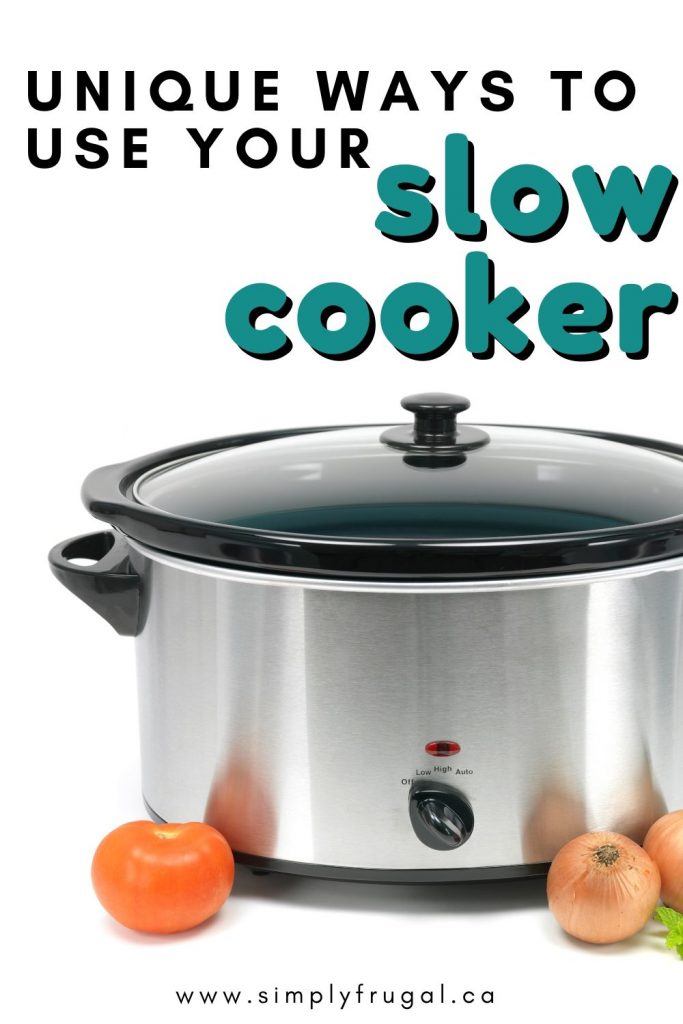
I think it’s safe to say that the slow cooker is one of my favourite kitchen tools. After all, it cooks delicious meals with minimal effort! Not to mention it’s great to use in the summer when you don’t want to heat the house up.
Slow cookers are generally known for their skills at creating delicious stews and tender meats. But your slow cooker can do so much more! Read on to discover five unique ways to use your slow cooker.
Let the gift giving begin! You can easily make candles for gifts (or yourself) in your slow cooker! I think this is a great way to turn those candles that no longer burn because the wick is gone, into new candles. Learn how to make candles in your slow cooker over at A Year of Slow Cooking.
Make Baked Potatoes
I automatically assume that successful slow cooker recipes have to include some sort of liquid. But this slow cooker baked potato recipe proves me wrong!
Make Bread
I think this idea is genius. Make a loaf of bread in your slow cooker! This is great for the summer months when you don’t want to heat up the house! Artisan Bread in Five Minutes a Day shows you how to make a loaf of artisan bread in the slow cooker!
Make Brownies
As seen from the unique slow cooker ideas I posted above, you’re not limited to dinner-type meals in the least. So, of course dessert can be made in a slow cooker! Why not try these Triple Chocolate Brownies from Martha Stewart?
Doesn’t it seem as though everyone has an abundance of egg cartons around the home? The typical family can easily go through a dozen eggs in a week, leaving you with an empty carton to recycle. But before you give that old egg carton the heave ho, take a look below at 7 creative uses for egg cartons that you can try! You may never look at egg cartons the same way again.
7 Creative Uses for Egg Cartons
1. Make seed starters.
Poke a hole in the bottom of each compartment, fill with soil, and add a seed. They are the perfect seed starters! If you use cardboard egg cartons, the cups can be planted directly in the ground when ready.
2. Sort office supplies.
Cut away the bottom half of the egg carton and use it to sort office supplies. The little cups are great for storing safety pins, paper clips, push pins and more.
3. Add them to sensory tables.
Cut the compartment into tiny cups and add them to sensory tables for kids to use as cups and pouring devices. They also work great in kiddie pools and sandboxes.
4. Sort your jewelry.
Cut the compartment half and use it to keep jewelry sorted. It is great for holding small pieces (such as earrings) and keeps them from becoming lost or damaged.
5. Make suet balls.
Mix some birdseed and bacon grease into a mixing bowl and spoon into the compartments. Press it in and freeze until solid. Pop the suet balls out and place outside for birds to dine on. They will love them.
6. Craft a sorting game.
Give children a variety of colored chips, marbles, or scraps of paper and allow them to sort the colors into the various compartments. You can also have them sort according to size or shape if you wish.
7. Save them for packaging cushion.
Foam egg cartons are great for storing breakable items such as holiday ornaments. You can also place the entire cartons in between valuables (for example plates, china, and other breakables) when packing.
Bonus: Use them to make egg carton flowers! This is fun for the kids and you! Take a look at all these great ideas I found on Pinterest!
Did you ever think an old egg carton could be so valuable? Give these tips a try for breathing a new life into your empty egg cartons and see how great they can be. Chances are, you won’t need to go any further than your own recycling bin. 🙂
How do you like to reuse your empty egg cartons? Let me know in the comments below!
How to Turn Ramen Noodles Into a Healthy Meal Idea
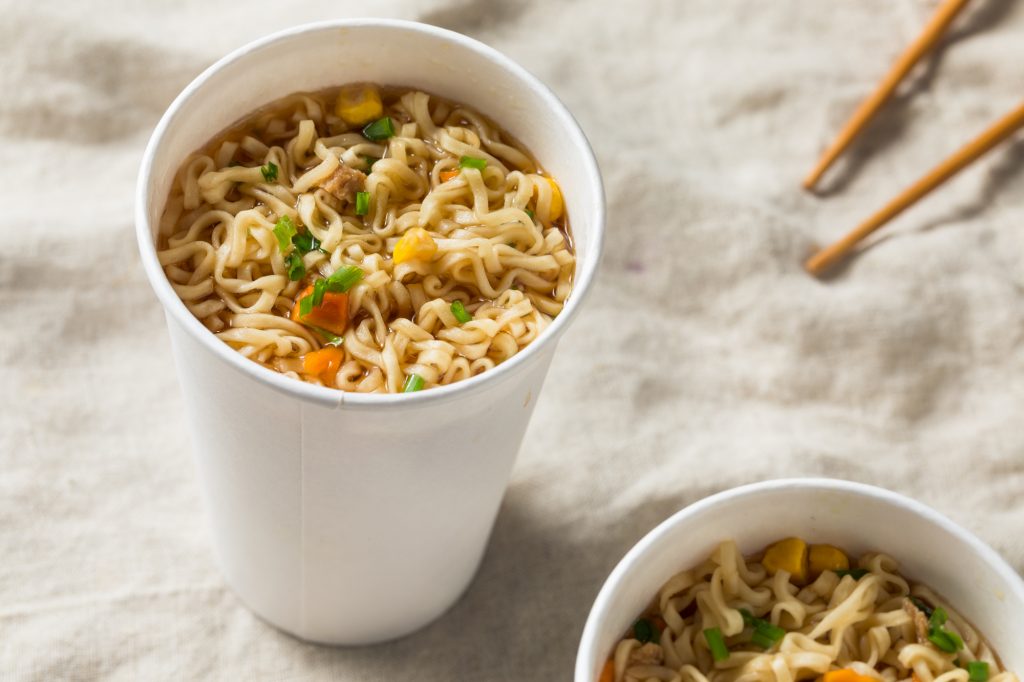
It is no secret that Ramen Noodles are a staple in every college student’s pantry. However, ramen noodles are not just for the college student, bachelor, or preschooler anymore. I have even found some organic brown rice ramen by Lotus Foods at Costco that we love, making it a healthy choice for our family! Even if you buy the budget friendly packs of ramen, there are quite a few healthy ways to spice up a package of the fried noodles.
Ditch the Packet
Some people prefer ramen noodles simply because they are cheap, cheap, cheap. Others prefer them because of the beef, chicken, or oriental flavor that comes in the package. While that packet is full of flavor, it is also packed full of sodium and MSG. Make your meal a bit healthier, by ditching the packet, and adding your own herbs and flavoring. Boil the pasta in low sodium chicken or beef broth, and throw in some pepper and herbs, like thyme, or oregano.
Use Uncooked, as a Topping
That’s right. You can eat Ramen without cooking them first! Dig the recipe for your favorite Asian inspired salad out of your recipe box, and simply swap out the Asian noodles for Ramen Noodles. Just discard the seasoning packet and break the noodles up. Add them to your salad just before serving.
Stir Fry
Instead of opting for burgers and fries, pull out a package of ramen, and some fresh or frozen veggies. Cook up chicken or beef pieces, and throw some in some veggies, with a bit of low sodium soy sauce. Meanwhile, cook the Ramen in either plain water, or low sodium beef or chicken broth. Once it is all done, simply toss it all together, and grab a bowl and a seat.
Make a Hearty Soup
There is nothing like a hot bowl of hearty soup, on a chilly evening. Gather the ingredients for your favorite soup, and toss it all in the slow cooker. When there are just a few minutes left of cooking time, add a packet or two of Ramen, minus the flavor packets, and you have yourself an easy, healthy meal.
Limit the amount you eat
Even if you dish up Ramen Noodles to be healthier, you still need to limit the amount you eat. Many carbs come from ramen noodles, even if it doesn’t seem like it. Which is why adding them to a salad as a topping or using it as a filler, is an excellent idea.
The great thing about Ramen is that it’s so inexpensive. Once you get rid of the packet and figure out how to make it into the perfect healthy dish, you are good to go.
I'd love to hear how you use ramen noodles! Let me know in the comments below!
How to Create an Epic Easter Basket from the Dollar Store
Easter is rapidly approaching, which means you have to put together an awesome Easter basket. On a budget? No worries because the Dollar Store is an awesome place to put together an epic Easter Basket. Here’s how to do it.
#1. Find a “basket”
The cool thing about the dollar store is that they have all sorts of bins, baskets, and totes for $1. You don’t have to settle for a basket, you can pick anything! This step in itself can make the Easter basket epic.
#2. Pick a color theme your kids will love
One thing you can do to create an epic Easter basket for your kids from the Dollar Store is to pick a color theme they’ll love. The dollar store has so many different options that finding items with their favorite colors will be easy.
#3. Grab a few toys for the epic Easter basket
The dollar store is lined up with a full aisle of toys to choose from. Not to mention, they probably have an extra aisle full of toys just for Easter. You can pick out some fun toys like little army guys, a mermaid, or a bow and arrow set. If those don’t work, go the more creative route with stickers, bubbles, and play dough.
#4. Add a few extra “special” things
As you comb through the dollar store, just remember that you get to be creative. If you see something your child will like, throw it in the basket. Setting a budget for yourself is definitely a good idea too. For example, $10 for each child, this helps put a limit on what you put in the Easter basket. Everyone knows that shopping at the dollar store can get out of hand quickly. 😉
#5. Get a little creative
Do you know what your little ones will love most about their Easter basket? Is that the basket is creative and not just something that was bought already put together. They’re going to notice the cute little stuffed bunny you picked up. They are going to notice the gum that has five packs in it.
#6. Make it look pretty
Head down the birthday aisle and pick out some fun things to put in that Easter basket to make it pretty. Bows are plentiful in that aisle! You can pick up wrapping paper to wrap a few of the gifts. Making it pretty will make it epic, without a doubt.
How do you plan on creating an epic Easter basket this year? Let me know your ideas in the comments below.
When some think of the word frugal, words like restriction and limitation come to mind. While I do think that frugality is necessary to many families these days, I also believe it to be a choice. When frugality is a choice it can actually bring true contentment and joy, rather than feelings of restriction and limitation. But even if frugality is not a choice, I have some reasons for you to think about why you can find happiness in the frugal lifestyle:
Delayed gratification is an amazing feeling
Those living the frugal lifestyle usually find joy in setting goals. They'll do whatever it takes to accomplish that goal. When you're doing without in certain areas of your life so you can achieve a financial goal you've set for yourself, and the day comes when you get to reap your reward, the feeling is so satisfying! Knowing that you have no debt in the end and that all the hard work you did really paid off, can bring about an amazing feeling of accomplishment.
Frugal people don't focus on what they don't have
Frugal people don’t tend to spend their time focusing on what they don’t have, but rather on the things they do have. They don’t worry about having a brand new car, they focus on having a car, new or used, that will get them to where they need to be. What's most important to them is that they have the basic resources to get done what they need to get done.
Being frugal forces you to be creative
Rather than going out to buy something brand new, frugal people challenge themselves to think creatively And creativity is fun! Transforming or repurposing a simple object into something useful or fun can bring much joy. Take for example, the 5 best toys of all time, according to children.
More time to enjoy life
Typically, frugality brings along a more simple lifestyle. One that will allow you to enjoy life more with less financial worries and more time to do the things you really want to do.
You start taking pleasure in the basic things
Frugality brings about a sense of pleasure in doing the basic things in life. For example cooking and baking. It can feel so rewarding to make a beautiful loaf of bread with your own two hands. Or creating a delicious soup with some veggies that were a little past their prime. Connecting with the things that used to be a way of life for those in bygone eras can bring much joy.
You feel healthier
Feeling healthy is enough to make anyone feel good. Leading a frugal life often leads to healthier choices. Such as cooking from scratch more often than eating out, or choosing to go for a hike over a night at the movies because it's free.
There's joy in knowing we are helping our environment
Many frugal people opt to purchase anything they need secondhand. Not only is this a cheaper way of purchasing what you need, it also helps keep more things out of the landfills.
Your frugality can bless others
There's very little that makes me happiest than when I am using my skills or abundance to make someone else happy. Maybe it will simply be giving someone fresh tomatoes I grew in my container garden or mending a shirt when they don't have the time or knowledge. Seeing how happy and appreciative the recipient is of the generosity that frugality can afford me, makes me very happy I chose to be frugal.
In what ways would you say frugality brings you joy?