How to Feed a Family on $50 This Week: A Practical Grocery Budget Plan
One of the things I love most about home cooked meals is how they bring a family together. There is something pretty special about gathering around the kitchen table, eating something delicious and talking about what happened during the day.
Unfortunately, feeding a family can get expensive quickly.
If you're trying to stretch your grocery budget this week, though, there are ways to make $50 go further. It won't necessarily be easy, and prices vary depending on where you live and what is on sale, but with some planning and creativity, you can make a small grocery budget stretch a lot further.
One important note: when I talk about how to feed a family on $50 for a week, I'm assuming you have at least a few pantry, refrigerator or freezer staples already on hand. You don't need to start with an entirely empty kitchen!
Here's how I'd approach a $50 grocery budget.
1. Take Inventory Before You Shop
Before you even think about going to the grocery store, shop your own kitchen.
Check your:
Pantry
Refrigerator
Freezer
Baking supplies
Spices and seasonings
Write down everything you already have that could be used to make meals.
You might have pasta, rice, potatoes, canned tomatoes, frozen vegetables, eggs or a package of meat hiding in the freezer. Maybe you have half a bag of tortillas or a can of beans that you forgot about. There is no need to buy tomato sauce if you already have some in the pantry!
The less you need to purchase, the further your $50 will go.
2. Check the Flyers and Build Your Meal Plan
Once you know what you already have, check your local grocery flyers and look for the best deals. I like to use Flipp to compare prices.
This is where I think a lot of people go wrong with meal planning. They decide what they want to eat first and then go shopping for all the ingredients.
When you're working with a very small budget, I'd do the opposite: Look at what you already have, see what's on sale and then build your meals around those ingredients.
If chicken thighs are on sale while chicken breasts aren't, chicken thighs might be the better choice. If ground beef is expensive but another protein is on sale, adjust your plan. If potatoes are a great price, find several ways to use them throughout the week.
You don't have to stop eating the foods your family enjoys. You just need to be a little flexible about which ingredients you use.
This is also where a meal planner can really help. I like having everything written down so I can see the entire week at a glance and make sure I'm not planning meals that require a bunch of ingredients I don't already have.
If you want to make meal planning easier, I've created a printable meal planner that you can print and use week after week.
Use it to plan your breakfasts, lunches and dinners, then build your grocery list around what you still need. When you're working with a specific budget, having everything planned out before you shop can help prevent those little “I'll just grab this” purchases that add up really quickly!
The goal isn't to plan the fanciest meals. It's to create a meal plan that uses what you already have, takes advantage of what's on sale and keeps your grocery spending under control.
3. Use Budget-Friendly Meal Stretchers
When money is tight, inexpensive staples can be your best friend.
Rice, beans, potatoes, pasta and oats can all help stretch meals without adding a lot to your grocery bill. Beans can be added to tacos, chili and soups. Rice can bulk up a stir-fry or serve as a side dish. Potatoes can turn a small amount of meat into a more filling meal. Pasta can stretch a sauce and feed more people. Dry beans are generally one of the most economical options if you have the time and desire to prepare them, but canned beans can also be convenient when they're on sale.
These are simple ingredients that can help you get more meals out of your grocery budget.
4. Make a List of Cheap Family Meals
I believe that most meals can be frugal meals when you buy the ingredients at the right price.
For example, if chicken thighs are on sale, I'll choose those instead of chicken breasts. If pasta is on sale, I'll work it into the meal plan. If a big bag of carrots are on sale, I'll look for ways to use them throughout the week.
I also have a 20 meal rotation that I've been using lately. I'd consider most of the meals on that list simple, inexpensive family dinners.
Some other budget friendly ideas include:
Spaghetti with tomato sauce
Homemade soup
Chili with beans
Tacos with beans or a small amount of meat
Fried rice
Grilled cheese and soup
Pancakes or French toast
Baked potatoes with toppings
Pasta salad
Egg sandwiches
Rice and vegetable bowls
You don't need fancy recipes to feed your family well.
5. Keep Breakfast and Lunch Simple
In our house, I have a pretty predictable breakfast rotation: oatmeal, pancakes/waffles, French toast, peanut butter toast, scrambled eggs and cereal, always served with fruit.
That might sound boring, but honestly, it makes life easier! I'll also make pancakes/waffles or French toast for dinner sometimes just so I can freeze the leftovers. Then I can pop them into the toaster on a busy morning for a quick and filling breakfast.
I take a similar approach with lunches.
Sandwiches, grilled cheese, soup, leftovers and simple wraps can all make inexpensive lunches.
Save your meal variety for dinner. You don't need to reinvent breakfast and lunch every day of the week.
6. Use Store Rewards and Loyalty Points
If you have grocery store loyalty points, don't forget to check your balance before you shop.
I like collecting PC Optimum points because I can redeem them toward my grocery bill. I recently redeemed $30 worth of points, which made a pretty noticeable difference at checkout!
If you regularly shop at a store with a rewards program, it can be worth learning how the program works and watching for opportunities to earn extra points.
When you're trying to stick to a $50 grocery budget, $10 in rewards can make a big difference!
7. Look for Grocery Rebates
Grocery rebate apps can be another way to squeeze a little more value out of your shopping trip.
I personally like Checkout 51 and Caddle because I can upload my receipt after shopping and claim eligible offers easily.
Ampliis another option if you're comfortable connecting your cards to the service. (I haven't tried this one.)
The important thing is to check the offers before you shop rather than buying something simply because there's a rebate. A rebate isn't a deal if it causes you to spend money on something you didn't need!
8. Be Willing to Shop Somewhere Different
If you're used to doing all of your grocery shopping at one particular store, this might be the week to step outside your usual routine.
Different stores can have very different prices on the exact same products. Depending on where you live, you might find better prices at stores such as Walmart, No Frills, FreshCo, Food Basics, Giant Tiger or a local discount grocer.
You don't need to shop at five different stores, either. If the time and transportation costs aren't worth it, choose the store that gives you the best overall value. I like to use Flipp to compare prices so I can get a general idea of what store will provide the best value each week for what I need.
The goal isn't to spend your entire day driving around town to save $3. It's to be strategic about where you shop so your $50 buys as much as possible.
9. Look at a Sample $50 Grocery Haul
So what could a $50 grocery trip actually look like?
Your exact prices will depend on your location, store and what's on sale, but here's the kind of shopping list I'd build around a tight budget:
Oats
Eggs
Bread
Bananas
Potatoes
Carrots
Onions
Pasta
Rice
Canned tomatoes
Beans
Frozen vegetables
Tortillas
One sale priced protein
Cheese or another inexpensive topping
The key is that these ingredients aren't just for one meal. For example, potatoes can become a side dish, breakfast potatoes or part of a soup. Beans can go into chili, tacos or rice bowls. Eggs can cover breakfast, lunch or even dinner.
Think in ingredients, not individual meals. That's how you make a small grocery budget work harder.
10. Don't Forget the Leftovers!
Who wants leftovers?
Well, maybe not everyone. But leftovers are one of the easiest ways to stretch your grocery budget because you've already paid for the ingredients and done the cooking.
If your family doesn't enjoy eating exactly the same meal two nights in a row, change it up.
Taco Tuesday can become taco salad Wednesday. Leftover chicken can become sandwiches or soup. Roasted vegetables can be added to eggs, rice or pasta.
I also love freezing leftovers whenever possible. For example, I'll freeze leftover spaghetti sauce so that I have an easy meal waiting for us on a busy night.
Don't think of leftovers as yesterday's dinner. Think of them as tomorrow's shortcut!
11. Don't Be Afraid to Repeat Meals
There's something about the idea of eating the same thing twice that makes people feel like they're failing at meal planning.
You're not.
If you make a big pot of chili on Monday and eat it again on Wednesday, that's not boring. That's smart grocery budgeting.
You can also freeze portions so you aren't eating the same meal several days in a row.
When you're trying to feed a family on $50, repetition is your friend.
What Would I Actually Do With $50?
If I had exactly $50 to spend on groceries this week, I'd start by shopping my own kitchen.
Then I'd check the sales and look for inexpensive proteins, produce and staples that could be used in several meals.
I'd use my meal planner to map out the week and build a grocery list around what I actually need.
I'd keep breakfast and lunch predictable, make several inexpensive dinners, use rice, beans, potatoes and pasta to stretch meals, and plan to eat the leftovers.
I'd also check my loyalty points and available grocery rebates before I went shopping.
And most importantly, I'd leave some flexibility in the plan.
If I got to the store and discovered that chicken was expensive but pork was on sale, I'd change the plan. That's one of the biggest advantages of meal planning around sales instead of being stuck to a particular recipe.
Final Thoughts
Feeding your family on $50 for a week isn't necessarily going to be easy, especially if you're starting with an empty pantry. Grocery prices also vary considerably, so your $50 may look very different from someone else's.
But if you have some staples at home and are willing to plan around sales, shop strategically and get creative with your ingredients, you may be surprised by how far a small grocery budget can stretch.
To me, frugal living isn't about making every meal as cheap as possible. It's about using what you have, buying things at the right price and finding ways to make your money work harder.
And sometimes, that means a pot of chili feeding the family twice. 😉
What are your favourite ways to stretch a $50 grocery budget? I'd love to hear them!
How to Meal Prep for the Week: A Simple Guide for Busy Families
Meal prepping can be a simple way to save both time and money. By planning your meals ahead of time, you can shop for only the ingredients you actually need, reduce food waste, and avoid the temptation of grabbing takeout when you're too tired to figure out what's for dinner.
Cooking every breakfast, lunch, and dinner for an entire week in one day might sound overwhelming, but you don't have to do it all at once! Meal prepping can be as simple as chopping a few vegetables, cooking a batch of chicken, or preparing a big pot of soup that you can enjoy throughout the week.
With a little planning, you'll make busy weekdays easier, stretch your grocery budget further, and hopefully hear a lot less of the dreaded "What's for dinner?"
1. Start by Planning Your Meals
Before you head to the grocery store, take a few minutes to decide what you'll eat for the week.
Look at your schedule first. If you have a busy evening filled with activities, choose something quick and easy. If you have more time on another night, that's a good opportunity to make a meal that requires a little more cooking.
You don't need to plan seven completely different dinners. In fact, keeping things simple is one of the best ways to make meal prepping manageable.
Try planning:
2–3 breakfast options
2–3 lunch options
4–5 dinners
A few easy snacks
Then plan to eat leftovers for lunch or repurpose ingredients in different meals.
For example, a batch of roasted chicken can become:
Chicken and rice bowls
Chicken wraps
Chicken salad
Chicken quesadillas
A topping for a big salad
One ingredient can do a lot of work!
2. Check Your Fridge, Freezer, and Pantry
Before making your grocery list, take a quick inventory of what you already have.
You may already have pasta in the pantry, frozen vegetables in the freezer, or ingredients that need to be used up soon. Building your meal plan around what you already have is an easy way to save money and reduce food waste.
Think of it as a "shop your kitchen first" challenge.
3. Make a Grocery List
Once you've planned your meals, write down everything you'll need. Group your list by section of the grocery store, such as:
Produce
Meat and protein
Dairy
Pantry
Frozen foods
Snacks
This makes shopping faster and can help you avoid wandering through the aisles and adding things to your cart that weren't a part of the plan.
It can also help to check your grocery store's weekly flyer before shopping. If chicken is on sale, for example, you might build several meals around it and freeze anything you won't use right away.
4. Choose a Meal Prep Day
Pick one day each week when you have some time to prepare food.
For many people, Sunday works well, but there's no rule that says meal prep has to happen on a particular day.
You could also split your prep into two shorter sessions. For example, prepare your breakfasts and lunches on Sunday, then do a quick dinner prep on Wednesday.
The goal isn't to spend your entire day in the kitchen. It's to make the rest of your week easier.
5. Prep Ingredients Instead of Complete Meals
You don't have to cook seven complete meals in advance. Sometimes, the easiest approach is to prepare individual ingredients that can be mixed and matched throughout the week.
Try:
Washing and chopping vegetables
Cooking a batch of rice or quinoa
Hard-boiling eggs
Roasting vegetables
Cooking chicken or ground meat
Washing fruit
Making a simple salad dressing
Portioning snacks into containers
Preparing overnight oats
Then you can quickly assemble different meals throughout the week. This approach also gives you more flexibility if you suddenly don't feel like eating the meal you planned for Tuesday.
6. Keep Breakfast Simple
Breakfast doesn't need to be complicated. Choose one or two easy options that can be prepared ahead of time.
Some ideas include:
Overnight oats
Hard-boiled eggs and toast
Yogurt and fruit
Breakfast sandwiches
Smoothie freezer packs
Muffins and fruit
Egg bites
Peanut butter toast with a banana
If mornings are particularly hectic, preparing breakfast ahead of time can make a huge difference.
7. Prep Easy Lunches
Lunch is a great place to use leftovers.
Instead of making an entirely separate lunch every day, cook extra portions at dinner and pack the leftovers for the next day's lunch.
Other easy lunch ideas include:
Chicken and rice bowls
Pasta salad
Wraps
Soup
Chili
Grain bowls
Big salads with protein
Quesadillas
Keep a few easy lunch staples on hand so you're never tempted to buy lunch simply because there's nothing ready to eat.
8. Make Dinner Work Smarter
When planning dinners, think about how you can use ingredients more than once.
For example, roast a large batch of vegetables on Sunday. Serve them as a side dish one night, add them to grain bowls another night, and toss them into wraps later in the week.
You can also cook extra protein and use it in several different ways.
The key is to cook once and eat twice, or even three times!
9. Don't Forget Snacks
Prepping snacks can help prevent those mid-afternoon trips to the pantry to grab something easy and not so healthy.
Try portioning snacks into grab-and-go containers at the beginning of the week. Keep snacks where they're easy to grab when you're heading out the door.
Glass containers are great for reheating meals, while lightweight plastic containers can be convenient for lunches and snacks.
You don't need to buy an entire new collection of containers to get started. Use what you already have and add to your collection over time if needed. If you do need containers, I've rounded up some good meal prep container options here.
11. Label Your Meals
If you're preparing several meals at once, it can be helpful to label containers with the meal and date. This makes it easier to see what's available and helps ensure that older food gets eaten first. A simple piece of masking tape and a Sharpie works perfectly.
12. Don't Prep More Than You'll Eat
One of the biggest meal prep mistakes is preparing too much food.
If your family doesn't enjoy eating the same meal several days in a row, don't make five servings of the same dinner. Instead, prepare smaller batches or freeze extra portions for another week.
Meal prepping should help reduce food waste not create more of it.
13. Freeze What You Won't Eat
If you know you won't eat something before it goes bad, freeze it! Soups, chili, cooked meat, casseroles, pasta sauce, muffins, and many other foods freeze well.
Freezing leftovers can give you a collection of easy homemade "ready meals" for those nights when cooking is the last thing you want to do.
Just remember to label everything with the name and date so you know what you're pulling out of the freezer.
Simple Weekly Meal Prep Schedule
Here's an example of how you could organize your meal prep day:
Sunday
Breakfast
Prepare overnight oats
Hard-boil eggs
Wash and portion fruit
Lunch
Cook chicken
Prepare rice
Chop vegetables
Make a simple dressing
Dinner
Make a large batch of chili
Portion leftovers for lunches or freeze extras
Snacks
Portion crackers and cheese
Wash fruit
Prepare vegetables and hummus
This might take a little time upfront, but you'll have several meal components ready to go for the week.
Sample Weekly Meal Plan
Here's a simple meal plan designed to minimize cooking and maximize leftovers.
Monday
Breakfast: Overnight oats with berries Lunch: Chicken and rice bowl with roasted vegetables Dinner: Turkey chili with cornbread Snack: Apple with peanut butter
Tuesday
Breakfast: Scrambled eggs and toast Lunch: Leftover turkey chili Dinner: Sheet-pan chicken, potatoes, and vegetables Snack: Yogurt and berries
Wednesday
Breakfast: Overnight oats with banana Lunch: Chicken and vegetable wrap Dinner: Spaghetti with meat sauce and a side salad Snack: Cheese and crackers
Thursday
Breakfast: Eggs and toast with fruit Lunch: Leftover spaghetti and salad Dinner: Chicken quesadillas with vegetables and salsa Snack: Hummus and carrots
Friday
Breakfast: Yogurt, granola, and fruit Lunch: Chicken and rice bowl Dinner: Homemade pizza using naan or flatbread Snack: Popcorn
Saturday
Breakfast: Pancakes with fruit Lunch: Leftovers or sandwiches Dinner: Easy burgers with oven fries and salad Snack: Fruit and yogurt
Sunday
Breakfast: Eggs, toast, and fruit Lunch: Leftover burgers or wraps Dinner: Slow-cooker soup or chili Snack: Popcorn or fresh fruit
Don't feel like you need to follow this meal plan exactly. Swap meals based on what your family likes, what's on sale, and what you already have at home. This is just to give you ideas of what you could do.
Sample Meal Prep Grocery List
Use this as a starting point and adjust it based on your family's preferences and what you already have in your pantry.
Produce
☐ Bananas ☐ Apples ☐ Berries ☐ Grapes ☐ Potatoes ☐ Carrots ☐ Bell peppers ☐ Broccoli ☐ Lettuce or salad greens ☐ Cucumbers ☐ Onions ☐ Garlic ☐ Avocados
Meat & Protein
☐ Chicken breasts or thighs ☐ Ground turkey or ground beef ☐ Eggs ☐ Hummus ☐ Peanut butter
☐ Oats ☐ Rice ☐ Pasta ☐ Pasta sauce ☐ Canned beans ☐ Canned tomatoes ☐ Chicken or vegetable broth ☐ Tortillas or wraps ☐ Bread ☐ Crackers ☐ Granola ☐ Popcorn ☐ Salsa ☐ Olive oil ☐ Salad dressing ☐ Your favourite seasonings and spices
Frozen
☐ Frozen berries ☐ Frozen mixed vegetables ☐ Frozen fruit for smoothies ☐ Frozen pizza or naan, if desired
A Simple Meal Prep Routine to Try
If the thought of spending hours cooking every Sunday makes you want to skip meal prep altogether, start small. Try this simple routine:
1. Pick your meals. Choose a few breakfasts, lunches, and dinners for the week.
2. Check what you already have. Shop your fridge, freezer, and pantry before making your grocery list.
3. Make your grocery list. Only buy what you need for the meals you've planned.
4. Prep a few basics. Cook one protein, one grain, and a tray of vegetables.
5. Prepare a few breakfasts and snacks. Make overnight oats, wash fruit, or portion grab-and-go snacks.
6. Use leftovers strategically. Plan to turn dinner leftovers into the next day's lunch.
7. Freeze extras. If you won't eat something in time, freeze it for a future meal.
Remember, meal prepping doesn't have to mean spending your entire Sunday cooking. Even 30 minutes of preparation can make your week easier.
The goal isn't to create a picture-perfect fridge filled with identical meal prep containers. It's simply to make your future self's life a little easier.
Because sometimes the best meal prep win is opening the fridge at 5 p.m. and realizing that dinner is already halfway done. That is the best feeling!
Summer is almost here! Can you feel the sunshine, the excitement, and the busy days ahead?
Summer is the season for beach days, backyard BBQs, road trips, swimming, and making memories with the people you love most. It’s the perfect time to slow down a little, soak up the longer days, and enjoy more quality time with family and friends.
And let’s be honest. Every great summer moment usually revolves around good food!
The good news? Feeding your family healthy, homemade meals during the summer doesn’t have to mean spending hours in the kitchen. (Because who wants to do that when the weather is beautiful?) The secret is simple: meal prepping. With a little planning ahead, you can put together quick, delicious meals for any time of day while saving both time and money on takeout.
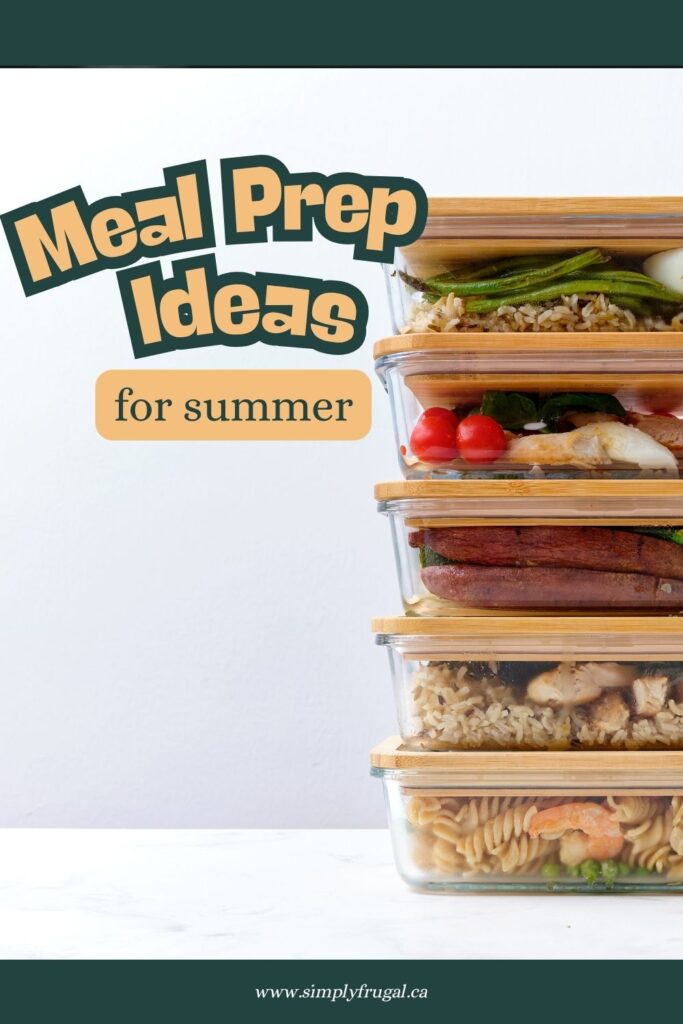
If you’re looking to simplify meals this summer, here are 10 quick and easy meal prep ideas the whole family will love.
Start by deciding what meals and snacks you want to prepare for the week ahead. Write down the recipes you plan to make, then create a shopping list with all the ingredients you’ll need. Having a plan in place makes grocery shopping easier and helps you avoid those last-minute takeout runs.
Start Multitasking
Save yourself time by cooking multiple things at once. Roast a tray of summer vegetables while baking chicken, or prep fresh ingredients while something cooks on the stove. A little multitasking can make meal prep feel much quicker and more manageable.
Don’t Overdo the Meal Prep
Try not to prep more than three or four days’ worth of meals at a time. Fresh summer produce doesn’t always last long in the fridge, and over-prepping can lead to spoiled food and unnecessary waste. Smaller batches help keep meals tasting fresh and delicious.
Use Your Grill
One of the best parts of summer is grilling season! Instead of heating up the kitchen with the oven, cook outdoors whenever possible. Grill chicken, burgers, fresh vegetables, or even fruit for easy summer meals the whole family will love.
Bonus tip: make extra meat while the grill is hot so you’ll have leftovers ready for lunches, salads, wraps, or quick dinners later in the week.
Prepare Raw Food
Summer is the perfect time to enjoy lighter, refreshing meals. Fresh vegetables like cucumber and zucchini pair well with so many dishes and are especially refreshing during hot weather.
Buy yourself this vegetable chopper and spiralizer to make quick work of produce prep. The spiralizer attachment is great for zucchini or cucumber to be tossed with pesto for a quick veggie noodle dish.
No-cook meal ideas like salads, canned beans, corn, fresh fruit, and snack plates are also great additions to your weekly meal plan.
Utilize Your Slow Cooker
Slow cookers aren’t just for chilly winter meals. They’re incredibly useful during the summer too! They allow you to cook without heating up the whole house.
Use your slow cooker to prepare shredded chicken, taco meat, beans, potatoes, carrots, or corn in large batches. Freeze leftovers in smaller portions for easy meals later on. And of course, the Instant Pot or an air fryer are other great options for quick summer cooking!
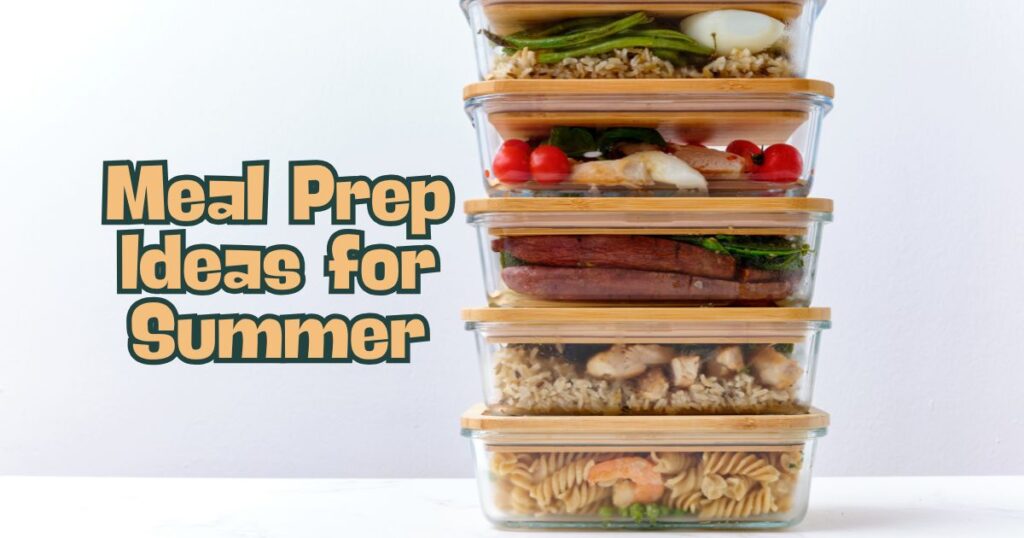
Choose Glass Containers Over Plastic
While plastic containers may be cheaper, glass containers are often the better long-term option for meal prep. Here are a few reasons why:
It’s easier to see what’s inside
Glass containers can safely go in the microwave
Food tastes fresher and doesn’t absorb odors
Glass won’t release chemicals when heated
They’re durable and reusable for years
Use Your Leftovers
Cook extra portions at dinner and use the leftovers for lunches or quick breakfasts the next day. Leftovers are a huge time-saver and help reduce food waste. Plus, having ready-made meals in the fridge makes busy days so much easier.
My husband loves taking leftovers to work because it saves both time and money!
Buy Better Bread
All those summer activities can definitely work up an appetite! If sandwiches are part of your meal plan, try choosing hearty whole grain breads that are filling and nutritious.
Look for bread made with 100% whole grains and plenty of texture. A good quality bread can make even a simple sandwich feel much more satisfying.
Cook Once, Eat all Day
Set aside one block of time each day to prep meals, chop produce, or cook proteins for later. Having meals ready to go makes busy summer days so much easier and helps you avoid spending tons of time in the kitchen.
With just a little planning and preparation, you can enjoy healthy, delicious meals all summer long without spending a fortune or cooking nonstop.
What are your favourite summer meal prep ideas and tips? Share them in the comments below!
Here are 7 Meal Planning Tips For Tight Budgets that you will appreciate:
When it comes to meal planning, these tips are going to transform how you view your grocery budget. There are so many simple tricks to help you create amazing meals for your family when you are on a tight budget. This post has some of the best! Armed with a few simple tricks up your sleeve, you can provide your family with delicious meals without breaking the bank.
Create your menu with what you have on hand first.
One of the best meal planning tips is to start not with what you want to buy, but what you already have on hand. Look at your pantry, freezer and refrigerator for great starts to a meal. Utilize your on-hand items and limit your week to week expenses as much as possible focusing on fresh fruits and vegetables.
Ask your butcher for budget cuts of meat.
Not only can you watch for sales on meat at your market or grocery store, but you can talk directly to the butcher. Sometimes they will have meat that isn't bad, but can be sold at a fraction of the regular price for some reason. End pieces of whole rib eyes can be found at low prices because they aren't enough to be a “steak”. Ask for these bits and then cube for stews or braised beef dishes.
Sometimes meat isn't past the 'best by' date, but close to it and the butcher has to mark it down. Grab those mark downs and cook in advance to freeze for a later date or simply freeze the meat uncooked as soon as you bring it home.
Check out The Meal Planner! I created the printable Meal planner to help make meal planning and saving money easy! The PDF includes:
18 pages
Monthly, Weekly + Daily meal planning worksheets
Meal brainstorming worksheets
Food inventory worksheets
Grocery lists
Price matching worksheet
Party Planning worksheet
Use your slow cooker.
Slow cooker or Instant Pot recipes are one of the best ways to stick to your meal plan as well as stay on budget. One of the best meal planning tips is to use those budget cuts of meat and tenderize them for amazing meals in your slow cooker or Instant Pot. A beef roast or whole chicken can feed your family several meals for half the price, but may not be as convenient or easy to cook in the oven. Use a slow cooker or Instant Pot and let them do the work for you.
Start your own garden if possible.
If you have time and space to have your own garden, this can be a huge savings for your menu plan each week. Learn to can or freeze your excess produce for future use, and use your surplus year round in your weekly menu plans.
Build around low cost staple items.
For most, this means picking up things like dry beans, rice and potatoes that are low cost but can stretch a meal further. While many would find this unhealthy, if you combine this with nutrient-dense vegetables and limit your high-fat proteins you truly can eat healthy. Focus on whole grains when possible and limit the regular potatoes and white rice.
Buy what is on sale and combine with coupons.
For sales at your market or grocery store, take the time to check your coupons and shop using those coupons on sale items. You'll get twice as much value toward your menu plan!
Utilize one item multiple ways.
One of my favorite ways to save money is to cook dry beans in my slow cooker or Instant Pot. Dry beans can be seasoned and eaten by themselves, added to soups or chili, refried to make dips or put into burritos. This simple item can be used multiple ways for very cheap.
Take advantage of my favorite meal planning tips that will stretch your budget even further! I'd love to hear your tips that make your grocery budget stretch further in the comments below!
You know planning a menu is a good thing, but sometimes it only feels like another chore to cross off the to-do list. Well, end that once and for all by creating a rotating menu plan!Put your menu plan on autopilot!
How to put menu planning on autopilot:
I have not been feeling the love for menu planning for quite some time now. That makes me sad because without a menu plan, our meal time is definitely not what it should be. I've been resorting to quick prep meals (think frozen pizza, pasta with a jar of sauce poured over top and grilled cheese & tomato soup...) Not good! Between picky palates and no desire to cook, menu planning took a real nosedive in the last year or so. On the other hand, the grocery stores were probably quite happy, because I was spending more since I had no plan. 🙂
That brings me to today. I'm pleased to say, I've found a system that works for me! Actually, I've put menu planning on autopilot! It initially took a little bit of work upfront (still only 4 steps!), but now we're smooth sailing and enjoying meals we love.
Step 1: Brainstorm
This part took me the longest. I sat down one afternoon and wrote down all the meals we like to eat. Our family favourites. My goal was 60 meals, but I quickly realized that was a lofty goal. In the end, I came up with 40 meals. Enough for 8 weeks of eating when I allot 5 meals a week. I like to leave 2 days free for last minute events, trying out a new recipe and Sunday dinner at my parent's house.
Here are the meals that made the rotation. Keep in mind that they must be simple, enjoyed by all family members and not require any weird ingredients:
Most of these meals can be made with pantry staples, which are easy to stock up on when they're on sale.
Step 2: Write all recipes on index cards
Now, once I picked all 40 meals, I wrote each meal down on an index card. Sometimes I wrote the entire recipe (if it was not found online or in a cookbook). Other times I wrote the name of the meal and where the recipe could be found (Pinterest, page 3 in a cookbook...etc.) I also wrote down side suggestions and any adjustments I like to make to the recipe.
Step 3: Place them all in a recipe box/binder
Next, I placed all of the index cards in an empty recipe box that I had, in no particular order. You could place the index cards in a binder with protective sheets instead, but I liked the idea of a recipe box.
Step 4: Pull out a week's worth of meals and place in front
Here's where the autopilot comes into play. Since I'm only choosing 5 meals a week, I pulled out 5 random index cards and placed them in the front of the box. I put a divider card behind the five recipes so I know when I'm done for the week. Once all 5 meals are made, I rotate those index cards to the very back of the recipe box.
Step 5: Repeat Step 4 over and over!
On Sunday, when I pull out the 5 meals for the week, I also create my grocery list. I write down everything I don't already have in the pantry/fridge/freezer.
Now, you could take this a step further and look at your store flyers first to determine which index cards you should pull out for the week according to what's on sale. For example, I may not want to make the Balsamic Beef Roast this week because I don't have one in the freezer and I don't see a sale at any of my local stores. However, pork chops are on sale so I'll make the slow cooker BBQ Sauce pork chops instead.
Does that all make sense? This system has been life changing for me! I hope it might work for you as well if you've been struggling with menu planning.
Have you found a menu planning system that works for you?
Meal planning is something I highly recommend. Not only does it save money, lessens the unnecessary stops to the grocery store, but it also makes our life much easier!
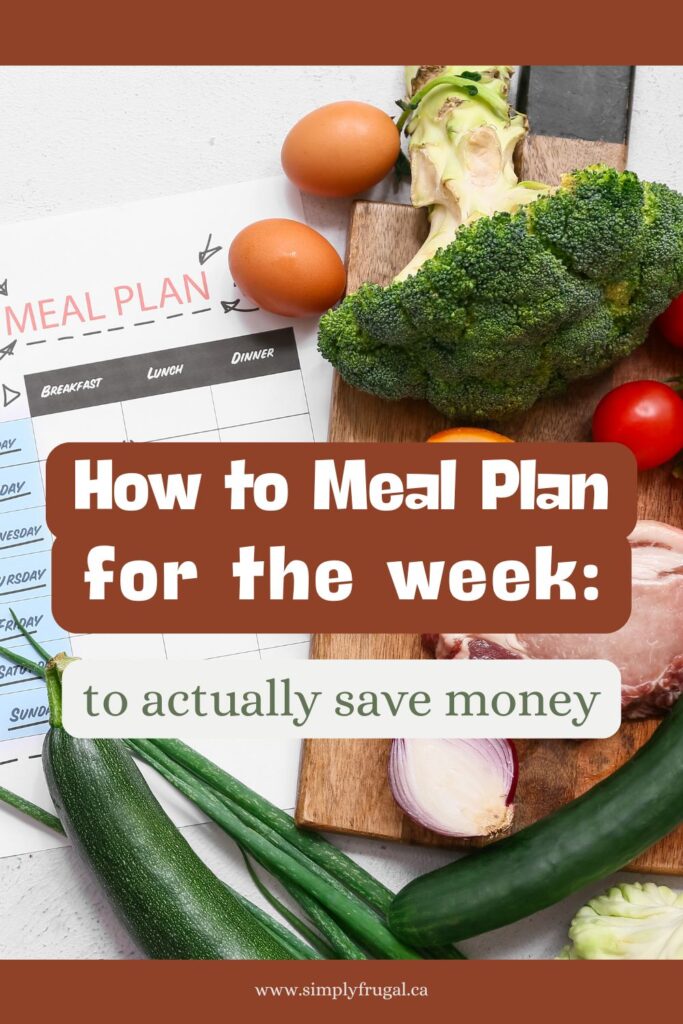
Today, I'd love to share with you how to meal plan for the week.
I'm going to give you a system that will ensure you are saving money AND eating well.
While there are various ways to meal plan, what I'm showing you today, has been my tried and true system for the last 18 years.
Regardless of how you may tweak my system to work for your family, the bottom line is, you have to have a plan. Whether rigid or loose, a plan will save you hours of time and hundreds of dollars each year!
Here are the steps on how to meal plan for the week:
Step 1: Take Inventory
Scour the cupboards, the fridge, and the freezer for food items you already have. Use the items that you find as a starting point for your menu. Make a list of meal possibilities from what you find.
Maybe you have some pork chops that you picked up on sale, and you have some vegetables from last weeks shopping trip, and perhaps you always have rice on hand. Right there you could have a meal of BBQ pork chops, rice and vegetables!
By using what you already have, you will instantly start seeing savings on your weekly grocery bill!
As you are going through your pantry, fridge and freezer, mark down any staple items you need to buy more of. If you find you are low on milk, eggs or flour, for example, add these to your grocery list.
I like to jot down all my ideas on a small piece of paper titled 'meals' and on the other side I title it 'grocery list' to put down everything I need to buy. (I like to have my meal ideas with me when I shop because sometimes I'll forget why I'm buying something or it helps me remember to buy an item that I may have forgotten to write on my grocery list.)
Check out The Meal Planner! I created the printable Meal planner to help make meal planning and saving money easy! The PDF includes:
18 pages
Monthly, Weekly + Daily meal planning worksheets
Meal brainstorming worksheets
Food inventory worksheets
Grocery lists
Price matching worksheet
Party Planning worksheet
Step 2: Look through the sale flyers
Quickly look through your flyers with the Flipp app to see what deals your local stores have. Jot down on your shopping list, the things that are a great deal and you know your family will eat or use.
If you coupon, now is the time to pull out your coupons to see which coupons will make the sales a great deal. For example, maybe this week No Frills has toilet paper on sale and you also have a coupon. This makes it a no brainer purchase!
I do most of my shopping at Real Canadian Superstore as I find they usually have the best overall prices. Occasionally, I'll pop over to a different grocery store if I see they have great deals on some things we will use. I don't like to shop at a lot of stores each week because I find that I will end up spending more than I intended. 😉
When I find a great deal on something we use regularly, I'll stock up as much as I can. This saves tons of money.
I try to build up a small stockpile of ingredients to work with when planning our meals so that some weeks I only have to buy the basics like milk and fresh vegetables!
Step 3: Finish planning your menu
Once you have taken inventory at home and determined which sales you want to take advantage of, write out your meals with your findings.
At this time in my life I do not plan our breakfasts and lunches.
I only plan for five dinners including side dishes, leaving one night open for leftovers and another for dinner out or a quick bowl of soup.
I also don't give each meal a specific night to be made since I like to cook for what I'm in the mood for that particular day. I try to have at least one chicken dish, a beef dish, and a pasta dish.
For breakfast, I like to have fruit, cereals, eggs, bread and the ingredients for basic pancakes or French toast on hand. I'll occasionally buy bacon but that's usually only if it's in a dinner recipe I'm using.
Lunches are almost always dinner leftovers from the night before. We rarely let food go to waste!
When you're first starting out with meal planning, you may want to plan all three daily meals, as you don't want to forget anything at the store. The less trips to the grocery store, the more money and time you'll save!
Step 4: Make a final grocery list.
Now is the time when I go over my list to see if I've forgotten any pantry staples, milk or items needed for a recipe. I'll also put all the items into categories according to the store layout. Produce, meats, dairy, canned goods, personal supplies...etc.
Make a list and check it twice!
Step 5: Go shopping!
I recommend going at a time of day when the store is not very crowded and you can take a time to compare prices or mark-downs. I try my best to get to the grocery store before 10:00am on Monday mornings. This is what works for me and I also find the shelves are well stocked on a Monday.
I've found that when the store is busy I'm more likely to hurry, therefore, I spend more money or forget something I've written down on my list.
You may also want to have a grocery budget and bring cash only. Using cash only forces you to stay within your chosen budget. We tend to get a lot of the same stuff each week so I know that I usually spend $125 each week, give or take.
Other useful meal planning tips:
I like to create simple meals that do not call for a lot of ingredients as this saves on time as well as cash since I'll most likely always have those ingredients on hand. (soy sauce, spices, etc...)
As you are preparing a meal, you may want to double it to put one in the freezer. It's always nice to have meals in the freezer you can pull out when you don't feel like cooking! I do this all the time with Spaghetti sauce and taco meat.
There you have it! That is how to meal plan for the week.
Do you meal plan? If so, what kind of meal planning system works for you? (monthly meal plans, weekly plans, loose plans, etc.)