I've been starting to use more beans around here because not only does a certain little person love them, they help stretch the grocery budget! I also love the fact that they're filling and nutritious. Buying canned beans can be economical, but if you purchase dry beans in bulk, that's even more economical.
While beans can be boring, they can also be super tasty to more creative you can be. I've rounded up 10 tasty ways to use beans that you're sure to enjoy!
In Smoothies
Sounds weird right? But you've got to check out this recipe for Cocoa Bean smoothie from Tasting Table.
Make Bean Dip
One of our favourite ways to enjoy beans is to make bean dip by layering refried beans, cream cheese, salsa and cheddar cheese in a baking dish. We then bake it at 350 until the cheese is all melted and bubbly. Here's a recipe for refried beans. You could also try this Black bean dip, looks tasty!
In Chili and Soups
Beans are a great addition to chili and soups. Try out my recipe for Turkey Chili. You could omit the turkey and add another bean variety to make it really cost effective. This minestrone soup looks delicious!
In Taco Meat
Add beans to your taco meat to help it go further. Black beans are a great addition.
In Dessert
I'm sure you must know about Black Bean brownies? While I have yet to try them myself, I've heard others rave about black bean brownies!
Make Baked Beans
We've been thoroughly enjoying the recipe for slow cooker baked beans found over at 100 Days of Real Food. It makes a big batch so I always freeze the leftovers.
In Bean Salad
Confession: growing up, I would always pass over the bean salad. It was just not appealing to me (aka: gross). But now that I'm much older and wiser ;), I think I could get on board with eating some bean salad! I'm going to try this recipe first.
In Burritos
One of our favorite ways to use beans is in these Black Bean and Salsa Burritos. That reminds me, we haven't made these in a while! Time to add them to the menu.
In Pasta Sauce
Did you know you can create a delicious alfredo sauce using white beans? You can! Just follow this recipe: White bean alfredo sauce.
Black Bean Burgers
Celebrate Meatless Monday and BBQ season with this recipe for Black Bean Veggie Burgers. They sound mighty tasty.
In Hummus
I was on the hunt for a delicious homemade hummus, so I created this one! Though, I'm not entirely sure chickpeas are considered a bean. They're a legume and so are beans so I'm going with it.
Do you have any tasty ways to use beans? Recipe links in the comments are always welcome!
We have a small grocery store within walking distance of our home. Honestly, I didn't shop there very often because I thought the prices were a bit high. Especially compared to Superstore, where I did the majority of my shopping. But, once Sienna came along I found myself there more often because it was a nice walk and really convenient.
While I still do some shopping at larger grocery stores (and the Farmer's market and little bulk food stores) I've grown quite fond of picking up some essentials at this small grocery store.
Here are three reasons why I like shopping at my small grocery store:
Good sales
Regular priced items can be more expensive then their counterparts bought at a larger store, but when there's a sale, it's a really good sale! I've gotten fantastic deals on chicken, salsa, produce, cereal and more. On occasion, the sale prices have been so low, I haven't seen them priced like that at any other store. Plus, they accept coupons!
Quick to shop
I love, love the fact that the size of the store is much smaller than larger chain stores. I can be in and out within 15 minutes simply because I'm not navigating the crowds or hiking the 5 mile trek from one end of the store to the other.
Friendly staff
When I walk in, it's like they know me personally by asking how I am and if they can help me find something. Even, if I was there the day before getting milk. They even laugh at my terrible jokes and grab a different package of meat from the back if I had something else in mind. They make it feel as though they have time for their customers. I love that.
Do you shop at smaller grocery stores? What do you love most about shopping there?
Are your herbs growing faster than you can use them? A flourishing herb plant is a good thing, however having so many that waste occurs, is not. The good news is, there are plenty of ways to preserve your herbs and get a longer life out of them. This is especially helpful if you live in an area where you can’t grow herbs year round. Take a look below at some helpful ways to preserve your herbs and have them available to you all year long.
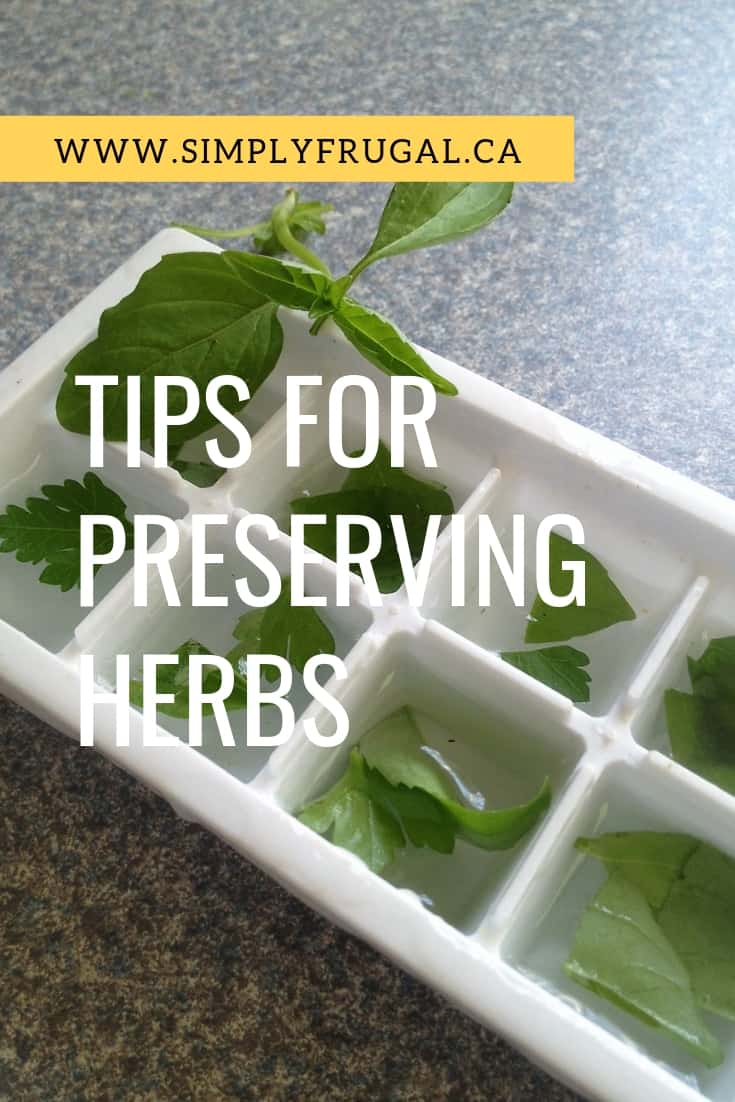
Tips for Preserving Herbs
Freeze them.
To freeze your herbs all you need to do is break them apart while fresh and place them in ice cube trays. Add a little water, filling the tray about half way full. Freeze the tray and when you need some herbs in your cooking, all you need to do is pop a cube out and toss it in. Cool!
Press them.
You can press herbs between pieces of wax paper and store them in a cool place if you wish. While they don’t last as long this way as they would if you froze them, it will still help extend their life. This way is especially helpful if you want to use the herb in its original leafy form, such as in a salad or dip.
Dry them.
You can always take the old fashioned route and dry your herbs. Gather them into a small bouquet and tie them with string at the end. Hang them upside down in a cool and dark place until dry. This can take anywhere from 10 days to 2 weeks. To use, just crumble and toss in your favorite dish.
Add them to oil.
You can take fresh herb sprigs and toss them directly into your bottle of olive oil to create infused oil. This works especially well with basil. In no time the flavor will spread throughout the oil giving it a gourmet taste!
Infuse your beverages.
If your herbs are about to go bad and you need to use them quickly, you can infuse your beverages with them. Just clean the herbs and toss them into your teas, lemonades, and fruit drinks. They will infuse the beverage and even stay good for several days this way. See this post for 7 Infused Water Recipes.
Don’t let those herbs go to waste. Give these tips a try and prolong their life easily!
It's garage sale season once again! They're a great way to get together with some friends and make a few extra bucks on the things you no longer need. In case you've been wanting to tread the waters of holding your own garage sale, I have a list of 10 tips for a great garage sale that was compiled by reader tips from an old blog I once had. (which is no longer in existence.) The following tips are what they had to say:
10 Tips for a Great Garage Sale:
Craigslist and Kijiji are great ways to sell the bigger ticket items and to advertise for your yard sale.
Get a pack of those dot stickers (available from the dollar store), and assign every color a price. Post the list of prices on your garage, along with "will negotiate."
Price things low and offer deals on matching sets of things. I also agree to put up signs that say "will negotiate". Start early... people who are big into garage sales start early, around 8 am.
I would say make sure that the prices are low enough to make people want to buy things. Also, rather than pricing things individually, put out tables where everything is $0.50 or $1.00 etc. It makes your job preparing the yard sale a lot easier.
I would use Craigslist or Kijiji for the big items. If you are having a yard sale borrow tables so that everything is up high so people can see it easily. Hang all clothes. Price everything and remember that it is a yard sale, people aren't willing to pay close to full price even if things are like new. Use big bright signs and have lots of small change.
You might want to consider asking friends to bring their stuff to the sale. It has been my experience that everyone does better if there is more to sell. We have just put our initials on the price tag and kept a running list when people are paying and just write CC $1.00 or DD $0.50 then divide it up at the end of the day. Also, we never do anything less than $0.25. Makes giving change easier.
Depends on your aim...do you want to get good money, or do you just want the stuff gone? If you want to make good money, stick to your pricing and don't be too easy to negotiate with. If you want it gone, being willing to negotiate, be willing to group things, price a bit lower. Start as early as possible. Around here, people start coming at 7am. Best sales I find are between 7-10 a.m. My general rule of thumb is to put things that are similar together. Put a price tag of half to a third more than what you think you can get for it and if someone looks interested, but unsure say "hey, want to make a deal on that?" Stuff that you are less willing to just "get rid of", put a reasonable price on it and stick to that price until at least 10 am then negotiate.
Keep a smiling face on all day - and negotiate, but don't let yourself be pressured into giving up stuff for less than you want. although any money for it is good when it's just been taking up your space. Have a money apron on so that you have change right with you so that if you're not at your central table, you can still make that deal right there. Hoard grocery bags for a little while so that you have some to give away, just a little thing that makes people like your sale, and maybe tell someone else. We always sell food as well - krispy kreme doughnuts for a quarter, or free with any purchase over $5.00. Go in with friends. I never have a sale just by myself - at least three friends. That way, there's more stuff and more variety. If it's just a baby clothes sale, it's not going to generate as much traffic as baby clothes, furniture, books, tools, knick knacks, etc...
Advertise! Even simple things like brightly colored signs on your main roads can make a huge difference. I tend to price things fairly low and keep the prices until mid morning. Yes, I will allow bargaining, but not too much right away, because the sale is just getting started. You really do not need to have a long sale either, 4 hours or so from 8-12 should do it. Unless you can get in on a neighborhood sale, then stay open longer. It can help to say that everything will be half price the last hour too, if you really want to move things. I have to keep telling myself that I do not want these things anymore and the point is to get rid of them and so therefore, be willing to take lower prices than you had originally intended. I love to find a great deal at yard sales, and like to see others walk away from mine feeling like they scored a treasure too!
Try to have one of the first garage sales in your city. All the bargain hunters will be raring to go after having the winter off!
Allan has a question he’s hoping some of you can help answer! Specifically those of you in the Maritime provinces:
I read your “about me” page and saw you mention Dave Ramsey… I am not sure how much you are “in” to Dave Ramsey’s program, but I have a question for you. I am wondering if you know of any personal finance investors in the Maritime Provinces who follow Dave’s model of investment in mutual funds? On the Dave Ramsey website, one can find “Endorsed Local Providers” (ELPs) who have taken Dave’s course and who Dave has vetted and trusts; however, he does not have any relationships with Canadian personal finance people and, therefore, has no ELPs in Canada. Just wondering if you are aware of any?
Have you ever wondered how much money you can save when you grow your own herbs? The truth is, you can save a significant amount by growing your own as opposed to buying them at your local grocery store. And just think, with all of that money you save, you can buy that new patio chair you wanted, or perhaps some more flowers to beautify the yard. Take a look below at how the savings can break down for you and how much you can pocket after just one growing season.
First, let’s look at the cost of fresh herbs via your grocery store:
At my local grocery store, a small package of fresh basil is about $3. The cost of a basil plant at my local farmer’s market or greenhouse is $2. As it grows throughout the season, I can easily pick off three times that amount of leaves. So to buy 30 leaves fresh at my grocer it would be $9. Growing it on my own it costs $2.
Now, let’s look at the costs associated with growing your herbs:
To grow your herbs you will need some pots or land, soil, and fertilizer if you desire. You will also need to water regularly. While these supplies do cost money, they are not necessarily expensive and a little goes a long way. You can rest assured that growing your own herbs is inexpensive and does not take any real chunk of money out of your budget.
And remember, you only pick what you need:
When you grow your own herbs, you don’t pick them until you need them and you only pick what you need. This way, you avoid waste. If you bought a package of fresh herbs at your grocery store, you may not get to them all at once and some will certainly end up in the garbage. That’s like throwing money away! When you grow your own, you avoid this and only pick and use what you need for a particular recipe.
Over the course of a growing season, suppose you planted five herb plants at $2 each. For about $10, those five plants can easily grow $30 or more of fresh herbs. That is a wonderful investment and return on your money.
Try growing your own herbs and you will not only eat fresher, you will save money in the process.