How to Turn Ramen Noodles Into a Healthy Meal Idea
It is no secret that Ramen Noodles are a staple in every college student’s pantry. However, ramen noodles are not just for the college student, bachelor, or preschooler anymore. I have even found some organic brown rice ramen by Lotus Foods at Costco that we love, making it a healthy choice for our family! Even if you buy the budget friendly packs of ramen, there are quite a few healthy ways to spice up a package of the fried noodles.
Ditch the Packet
Some people prefer ramen noodles simply because they are cheap, cheap, cheap. Others prefer them because of the beef, chicken, or oriental flavor that comes in the package. While that packet is full of flavor, it is also packed full of sodium and MSG. Make your meal a bit healthier, by ditching the packet, and adding your own herbs and flavoring. Boil the pasta in low sodium chicken or beef broth, and throw in some pepper and herbs, like thyme, or oregano.
Use Uncooked, as a Topping
That’s right. You can eat Ramen without cooking them first! Dig the recipe for your favorite Asian inspired salad out of your recipe box, and simply swap out the Asian noodles for Ramen Noodles. Just discard the seasoning packet and break the noodles up. Add them to your salad just before serving.
Stir Fry
Instead of opting for burgers and fries, pull out a package of ramen, and some fresh or frozen veggies. Cook up chicken or beef pieces, and throw some in some veggies, with a bit of low sodium soy sauce. Meanwhile, cook the Ramen in either plain water, or low sodium beef or chicken broth. Once it is all done, simply toss it all together, and grab a bowl and a seat.
Make a Hearty Soup
There is nothing like a hot bowl of hearty soup, on a chilly evening. Gather the ingredients for your favorite soup, and toss it all in the slow cooker. When there are just a few minutes left of cooking time, add a packet or two of Ramen, minus the flavor packets, and you have yourself an easy, healthy meal.
Limit the amount you eat
Even if you dish up Ramen Noodles to be healthier, you still need to limit the amount you eat. Many carbs come from ramen noodles, even if it doesn’t seem like it. Which is why adding them to a salad as a topping or using it as a filler, is an excellent idea.
The great thing about Ramen is that it’s so inexpensive. Once you get rid of the packet and figure out how to make it into the perfect healthy dish, you are good to go.
I'd love to hear how you use ramen noodles! Let me know in the comments below!
We've all been there: pay day is still a week away and you only have $20 to your name. This might feel like a reason to panic, but the truth is, you have options. There are certain tips and tricks you can implement so you can make that $20 go its very farthest and get the most grocery bang for your buck.
Take a look at these tips on how to get the most groceries for your dollar. So you can be sure to stretch your food budget the best you can until pay day arrives.
Purchase rice in bulk.
A 2 kilogram bag of rice will cost you about $5, especially if you buy generic. Rice is perfect for stuffing in tortillas, adding to casseroles, or serving as a side dish. You can even add some milk and sugar to it for rice pudding, an inexpensive dessert idea. ($5)
Purchase beans in bulk.
Consider a 2 pound bag of beans, perfect for using as a side dish, in soups or stews, or add them to wraps. They are full of protein, taste great, and cost pennies per serving. Just soak them to soften them and then cook to your liking. ($3)
If you're wanting to get the most groceries for your dollar, try out the 14-day free trial of $5 Meal Plan! If you decide to continue after your trial period, for just $5 a month, they will send you a delicious meal plan where every meal will cost about $2 per person, and in most cases less.
Frozen vegetables may cost less than fresh.
It can be hard to find fresh produce at a great price. If you can grab cucumbers or peppers for under $1 each grab them. If not, you may be better off buying frozen or canned. Head to a store such as Walmart or Superstore where you can grab canned tomatoes, frozen green beans, corn and peas for less than fresh vegetables ($3)
Apples and bananas are your cheapest fruit option.
If you thought fresh vegetables were expensive, fresh fruit can be even worse! When you're on a budget, fresh bananas and apples are your best options. Lately, buying a big bag of apples can cost about $6 - $7, while bananas are around .70 cents per pound. This is a great way to get the fruit your body needs while staying on budget. ($7)
Yogurt for calcium.
Keeping in mind you're close to pay day, a jug of milk might not be in the budget right now, but you could grab a tub of yogurt to get the calcium you need. ($3)
Chicken will be your most budget friendly choice of meat.
You can often find chicken wings, drumsticks or thighs for a low price so this is your most budget friendly option. Dress them up with salad dressing or simple olive oil and salt and pepper. Some other cheap "meat" 😉 options include deli meat and of course, hot dogs. ($5)
Opt for day old bread choices.
Visit the day old bread store or raid the clearance bin at your local grocer for bread items under $1. Bread is perfect for sandwiches, making garlic bread, making croutons, etc. Plus if you find a great deal on it, you can freeze it. ($3)
Don’t let pay day being days away keep you from eating well. Keep these tips in mind for how to make the most of your grocery budget between pay days and see how much they can help!
How do you make your grocery budget stretch in between pay days?
I'm always looking for great dollar stretcher tips for our grocery budget and thought I'd share some of my favorites with you. These are great ways to make simple grocery items go further, therefore saving you money on your grocery budget. I love being able to feed my family great meals they love, but still stay on budget and meet our financial goals. 🙂
Dollar Stretcher Tips For Grocery Budgets
Add powdered milk to your milk.
If you're feeling more adventurous this idea may be for you! (However, you may find you get used to the taste pretty quickly.) Split your 4L jug of milk into two cartons. Prepare a gallon of powdered milk and divide between the two now half gallons of milk. Mix together and use as normal. Powdered milk is much less expensive and mixing like this will still taste the same while saving you money on one of the most often purchased and used items for a family budget.
Add beans to more than just soups and chili.
Dry beans are always super cheap and easy to cook in a slow cooker or Instant Pot. I love making large batches of pinto beans, kidney beans, black beans and garbanzo beans then putting them in 2-cup portion bags to use in everything from soups and chili, to mashing into my ground meat for spaghetti, tacos or casseroles. They take on most flavors they are seasoned with, and their texture is great for all kinds of dishes. This can make one pound of ground meat go twice as far in a casserole or soup!
Don't fear using carbohydrates.
Starches and carbohydrates tend to have a bad reputation, but as long as you are including a lot of great nutrient-dense vegetables into your diet as well it's not a bad thing to include things like rice and potatoes as a base for casseroles. Rice and potatoes are a great dollar stretcher for almost any meal. In fact, roasted potatoes, green beans, and roasted chicken is one of the easiest and cheapest meals you can make for your family. It's healthy, satisfying and easy to manage. The potatoes add bulk to the meal without being high fat or unhealthy, and they are so cheap it makes your meal very affordable.
Batch cook your meals.
You may wonder how or why this can be considered a dollar stretcher for your grocery budget, but it really is a great way to save. When you buy larger quantities of meats and produce, you often save a significant amount of money. Next time you find chicken, pork or beef on sale in large “family sized” packages don't hesitate to grab them, then cook in simple ways and portion to freeze. Chicken can be roasted and cubed for everything from salads and soups to casseroles or fajitas. Pork shoulders can be roasted and pulled for use in BBQ, casseroles or tacos. Batch cooking meats, produce and even whole meals and freezing for future use saves you time, money and tons of frustration each evening when you need to throw a simple meal together fast.
These are great dollar stretcher ideas for your grocery budget. Just a few simple changes can save you hundreds of dollars in grocery expenses over the course of a year.
How do you make ordinary grocery items stretch further? Let us know in the comments below!
As the saying goes, ‘Breakfast is the most important meal of the day’. So while this is true, it can also be the least expensive and easiest meal to make of the day. With using items like sausage, veggies, eggs, and other ingredients that are easily accessible, you can easily make breakfast for the whole family for under $5.
Here are my favourite Healthy Breakfast Ideas for under $5:
Greek Yogurt and Fruit – You can usually pick up a tub of Greek Yogurt for under $4. Use some frozen fruit and maple syrup for a topping and you have a delicious breakfast.
French Toast – One of my family’s favorite meals is French toast… for breakfast or dinner ;). For some reason, we can’t get enough of it. I don’t mind because using whole wheat, I can make the French toast semi-healthy! We add fruit topping or peanut butter instead of real maple syrup sometimes.
Banana with Peanut Butter – Is there anything more delicious than bananas and peanut butter? I think not! It also makes for a very filling breakfast for little ones. If your child doesn’t like bananas, try cutting up an apple for them. Delicious, healthy, and simple!
Breakfast burritos – Using low carb or whole wheat tortillas, mix up eggs, salsa, and cheese to make a yummy breakfast concoction.
Fruit salad – One of my favorite healthy meals for under $5 is taking all the leftover fruit in the fridge and mixing it together to create a fruit salad. Sometimes I add a bit of yogurt on top. Yum!
Veggie omelet – A dozen eggs can be bought for a little over $2. Make a yummy veggie omelet to feed your family a healthy meal for under $5.
Sausage and Eggs – Keep breakfast simple by making sausage and eggs for your breakfast of choice. My family never complains about this meal.
Homemade banana muffins – If you have old bananas in your possession, make some muffins out of them. A simple breakfast that will save you money! These are my most favourite Banana Chocolate Chip muffins.
These 9 healthy breakfast ideas for under $5 will help you stay on budget and keep you feeling great all day long. It’s easy to swing through the drive thru and get caught up in a $20 breakfast for the family. But instead, it’s just as easy to make your own breakfast at home for $5 (and stay in your pajamas!).
What healthy breakfast ideas do you have for under $5?
Not only is owning an Instant Pot going to save you money, you should know that some well-loved dinner classics are perfect for whipping up in a jiffy in the appliance. Not all Instant Pot recipes need to be fancy, in fact some of the best Instant Pot recipes are comfort food classics that will soon become family favorites. Look at these 6 dinner classics perfect for preparing in an Instant Pot, and be prepared to wow your family and their taste buds!
6 Dinner Classics Perfect For Preparing in an Instant Pot
1. Instant Pot Beef Stew.
What is more comforting than beef stew? Your Instant Pot is perfect for beef stew with all the fixings, including tender beef and fresh vegetables. You can even freeze your beef stew for later or keep it for several days worth of meals. No matter what time of year it is, Instant Pot beef stew can fit the bill when you need some savory and filling comfort food.
2. Instant Pot Spaghetti
Kids love spaghetti, and your Instant Pot can whip it up in no time. Consider using an assortment of fresh herbs, various pastas, and even fresh meat. With your Instant Pot you can experiment with ingredients to create your own unique spaghetti dish. Spaghetti will never be boring again, and you might just create a famous family recipe!
3. Instant Pot Swedish Meatballs
Swedish meatballs make the perfect side dish or appetizer. Having a party? Consider making Swedish Meatballs in your Instant Pot! You can whip up this comfort food classic fast, and in no time have an appetizer or side dish everyone will love. Just grab the toothpicks!
4. Instant Pot Orange Chicken
Ready for some Asian flare? Then Instant Pot Orange Chicken it is! Forget paying big bucks to get this dish via carry out. Instead, make your own in your Instant Pot. Orange Chicken can be whipped up quickly, and all you need to do is add a side of rice. Delish!
5. Instant Pot BBQ Ribs
Do you think you need to spend all afternoon at the grill to get yummy BBQ ribs? Not with an Instant Pot! You can make your own BBQ ribs in your Instant Pot in no time, using a savory, spicy, or sweet sauce of your choice to get the perfect rib flavor.
6. Instant Pot Mac and Cheese
What kid doesn’t like mac and cheese? There are hundreds of Instant Pot Mac and Cheese recipes out there perfect for your evening meal. You can experiment with various kinds of pasta, and even use an assortment of cheeses for a rich, cheesy flavor.
Are you ready to get dinner on the table fast? Then consider these 6 dinner classics perfect for preparing in an Instant Pot and get a tasty dinner classic on the table fast. You will find that the internet is full of tried and true recipes (especially Pinterest!), perfect for a newbie or even the most experienced Instant Pot user to explore. So go ahead and grab an Instant Potand give these classics a try!
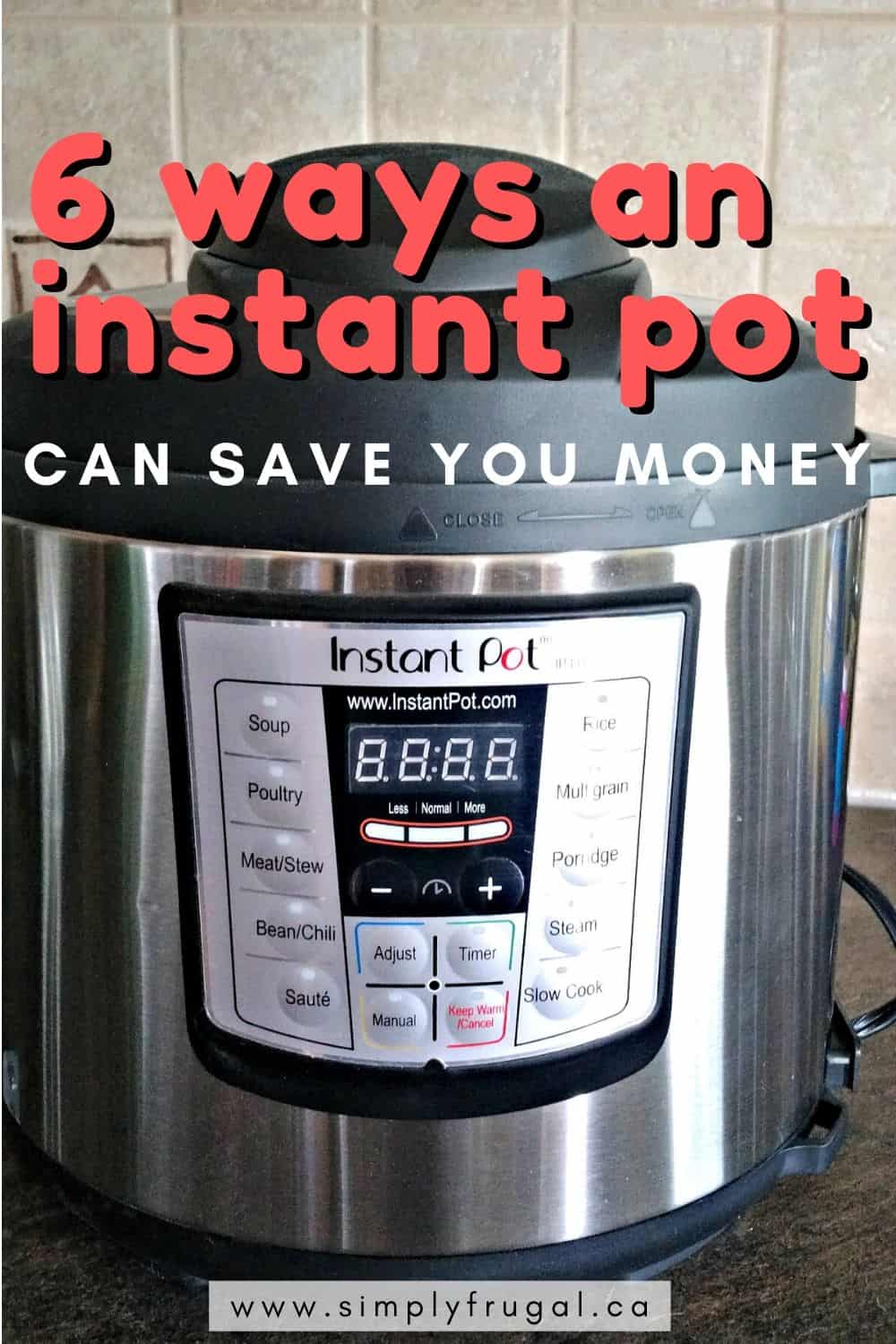
If you are considering purchasing an Instant Pot, or even if you already own one, you should know that your purchase can help save you money in the long run. Owning an Instant Pot doesn’t just save you time, but you will find that it can also help you keep a little more cash in your pocket. How? Look below at 6 ways owning an Instant Pot can save you money, and see if investing in one is for you!
6 Ways Owning an Instant Pot Can Save You Money
1. You avoid grabbing take out.
Since an Instant Pot can cook your meal so quickly, you might be less inclined to grab take out or go out to eat, which can be quite expensive! The convenience of the Instant Pot can be helpful after a long day, and prepare your meal just as quick if not quicker than ordering take out would.
2. You can try thrifty new recipes.
There are thousands of recipes on the internet for you to try out in your Instant Pot. You will find $5 dinners, thrifty dinners, and many other frugal living recipes. These recipes allow you to try out new meals even on the tightest of budgets.
3. You may be more inclined to menu plan.
Menu planning can save you some serious cash. When using an Instant Pot, you may be more inclined to menu plan. Find some recipes you wish to try in your Instant Pot and add them to your menu for the week. Preparing a plan ahead of time can help you avoid impulse purchases and takeout later.
4. An Instant Pot can help with freezer/batch cooking.
Do you love to freezer or batch cook? Then an Instant Pot can help. Create stews and pasta dishes in your Instant Pot then freeze them for enjoying later. Instant Pot can help you create these dishes quickly so you can create a stockpile of meals for later. In fact, in just one afternoon you can whip up as many as half a dozen meals, perfect for freezing and reheating later.
5. An Instant Pot doesn’t use a lot of electricity.
An Instant Pot is quick, easy, and doesn’t use a lot of electricity! This means you are free to pull the Instant Pot out whenever you wish without having to worry about those utility bills going up. It is a budget friendly appliance you can afford to use again and again.
6. Most recipes use ingredients you can buy in bulk.
Many Instant Pot recipes use ingredients you can buy in bulk such as noodles, rice, and beans. This means you can create meals for less, buy many of your ingredients in bulk, and create meals even on the tightest of budgets! How is that for frugal eating?
Did you ever think that owning an Instant Pot could help you save money? Consider these 6 ways owning an Instant Pot can save you money and help stretch your family budget while still enjoying wholesome and filling meals everyone will love.







 doesn’t like bananas, try cutting up an apple for them. Delicious, healthy, and simple!