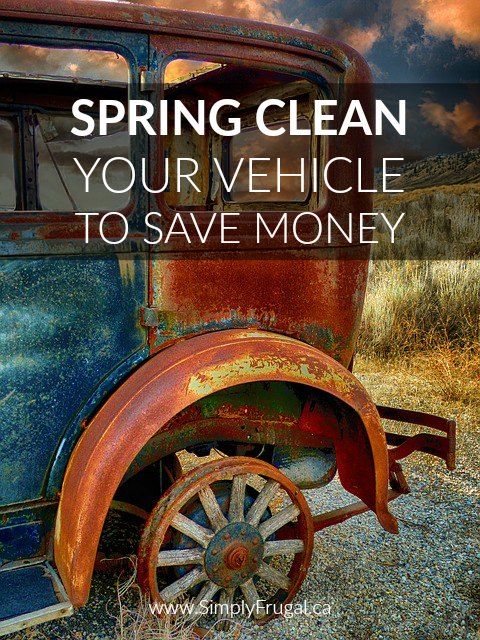
Now that spring has sprung, the annual spring cleaning of your home is inevitable. But do you ever think about spring cleaning your car? Today you can’t help but notice the signs announcing the high price of gas. It's almost enough to make you feel guilty about using your car.
If you want to run a car efficiently it needs to be properly serviced and you need to be aware of what you can do to help reduce the cost of running your vehicle.
Spring is a good time to take control of your car expenses. Using cars more efficiently and even leaving it at home sometimes will help to reduce your gas consumption and wear and tear on your vehicle.
Here are some road-worthy tips on how to Spring Clean Your Vehicle to Save Money. Therefore taking control of your gas consumption.
Maintain your vehicle
Keep the tires properly inflated and if you need a tune-up then pay the money if you can afford it. We have found a reliable "backyard" mechanic to do any tune-ups that we may need for our vehicles. I also keep my eyes open for coupons for oil change places. With regular maintenance, your vehicle will run at its optimum performance, thus saving gas.
Remove your snow tires
These tires are designed to work best during the cold weather months. Once the warmer temperatures hit switch to your regular tires, this will help with reducing your gas consumption.
Fill up the tank
Don’t buy ten dollars at one station and then ten dollars at another a few days later. Locate the cheapest gas and fill the tank and then don’t go back until the tank is a quarter full. If you keep topping off the tank then your car is burdened by the extra weight and not as fuel efficient.
Stop driving
Okay, not literally but maybe you can take public transportation or ride your bike to the grocery store once in a while. Think of ways you can keep your car in the drive way. Another option may be to select a day during the week that everyone carpools together to work and rotate the driver each week.
Slow down
If you can’t stop driving then slow down. Many people speed off at a green light and operate their vehicles at high rates of speed. There is no reason; do the speed limit. Also, when you see a stop sign or red light coast to a stop; don’t keep your foot on the accelerator.
What are some of the ways you try to save money on vehicle gas costs?
A new baby often means you are in need of some quality tips to make ends meet. Whether you are struggling to make sure you get everything needed for the new arrival, or have decided to not go back to work and now need to focus on being a one-income family, these frugal tips for new baby expenses are going to help you easily make your dollars stretch.
Buy second hand.
I think this first tip has saved me the most money overall! Gently used baby clothes and baby gear are a great investment when you can buy second hand. You'll be paying at least half the price. Most of these items are in excellent condition since they aren't used for long. Clothing, bassinets, cribs, strollers and toys are great items to find second hand. Car seats should never be purchased second hand as you don't know their history and they can be a safety hazard. Things like breast pumps can easily be cleaned and most second-hand options are high quality and safe to use. Double check any toy or piece of nursery furniture or equipment ahead of time to make sure no recalls have been placed before purchasing.
Cloth diaper.
Many will debate about whether this is one of the best frugal tips for new babies, but I do believe that cloth diapering can save a lot of money, depending on the child and individual family. If you will be a stay at home mom, it is much more practical and financially feasible to cloth diaper. If your child will be in a daycare situation, it may be best to stick with disposable diapers. Weigh the pros and cons for your family and decide what is best.
A new baby can be exciting and make you really want more fun and cute items, but the reality is, you need very little for the first few months. Sleepers, onesies and warm blankets are about all you need for a newborn. A few (5-6) nicer outfits for going out and about in are great, but really, a simple sleeper is going to be the standard until they are a bit older. Don't invest in hundreds of outfits in small sizes. Wait to see how fast they grow to see what works best for you.
Breastfeed.
I'm a firm believer of the saying "a fed baby is a happy baby", but if possible, breastfeeding is one of the best frugal tips for a new baby. If you can't for any reason, then consult with your pediatrician about a healthy formula alternative. Remember, you are an excellent mama no matter how you feed your baby!
Buy or borrow a breast pump.
Quality breasts pumps can cost upwards of $200. Many hospitals, pediatrician offices and Le Leche League affiliations will allow you to "check out" or "borrow" a breast pump for a small fee each month, or no charge at all. However, technology has come a long way since I've had babies and there are many great affordable options available that make purchasing one way more cost effective!
Utilize free classes.
Many areas offer free Le Leche League as well as Lamaze classes for pregnant or postpartum moms. Don't pay out of pocket when you can find assistance for free through your local hospital or physician's office.
Ask for coupons.
Many companies from all over the world will mail you coupons of some sample items for your baby. Everything from formula to diapers and even lotions or snacks can be found for free using coupons or special forms on various company websites.
Buy all-in-one items.
Things like a convertible playpen that has a bassinet included can work great for next to your bed when the baby is small, then work as a fun area for them to safely play as they get older. Stroller and car seat combination sets are also often much less expensive than buying each piece separately.
Make your own baby food.
Instead of buying brand name baby foods, choose organic produce and create your own purees to feed your baby when the time is right. Carrot, sweet potato, peas, apple sauce and even prunes are all so easy to whip up! I loved these Baby Cubes for freezing the purees.
Buy unisex items.
Unisex items are easier to use down the road for a future sibling should the need arise. This is savings for now and later!
These frugal tips for your new baby expenses are easy to follow and work for any situation. A new baby is such a joy! Don't let finances trouble you. Use these practical tips to save money for your future and their future.
I'd love to know how you save money on new baby expenses?
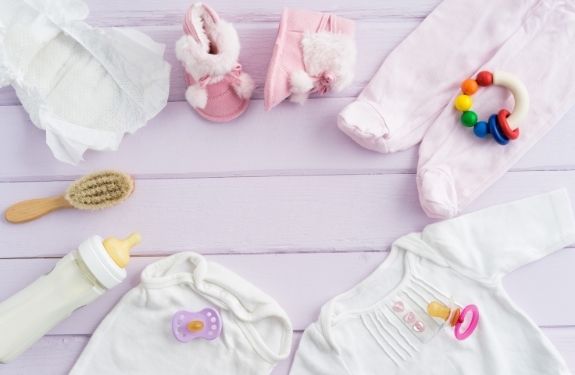
Whether you are preparing for your first baby or additional babies, this ultimate new baby checklist is a must have! Every mom and dad need a few reminders of those items to have on hand with a new baby. From the classic things like diapers and wipes to the often forgotten first aid kit items, this list is a great place to begin with your new baby shopping.
The Ultimate New Baby Checklist
Diapers – At least one or two packages of the first three sizes. Babies grow fast so you will need more of larger sizes than small.
Wipes – There is no limit to how many to get, but try to avoid fragrances as they can irritate some sensitive skin.
Baby Wash & Baby Lotion – Stick with a sensitive skin formula at first then move on to others as you run out. I really like this Aleva Naturals Sleep Easy wash.
Diaper Cream – There are a number of quality brands but Penaten, Boudreaux's Butt Paste and Coconut Oil are the most popular.
Nasal Aspirator – This Hydrasense nasal aspirator came in handy quite a few times when my daughter was little.
Thermometer – A rectal, forehead or ear thermometer are the best choices for infants. This Etekcity one on Amazon seems to be highly rated!
Cotton Balls or Q-Tips – For the first week or two you will need these to help clean the umbilical cord area between diaper changes and baths with water.
Infant fever reducer – While you hope your baby doesn't run a fever, it's best to have an infant ibuprofen or acetaminophen on hand.
Bassinet or Playpen – A crib is great for when they are a bit older, but a bassinet or playpen with a built in bassinet is ideal for beside your bed in the first few months.
Receiving blankets – Thin and soft receiving blankets are the best for layering your baby to keep them warm. Heavier blankets can be a bit too much. You'll want a few of these on hand in case they get dirty. Muslin blankets seem to be the go-to these days.
Sleepers – The classic baby apparel. Get at least a few in the first two sizes available for the early days.
Onesies - Boys and girls alike are going to be comfortable wearing these. Perfect for layering underneath sleepers if your baby is born in the winter or for wearing alone in the hot summer months! I happen to love this style of onesie when they're tiny.
Pants – Depending on the season, pants or shorts are needed to cover little legs when getting in and out of cars, etc. for appointments. A few pairs will be enough to get them through the first few weeks.
Socks – Several pairs of baby socks are needed to keep their feet warm, but don't fear if they kick them off. Many babies don't like their feet being covered. Just cover with a blanket instead.
Hats – These are great only if you are going to be out in the cool air or hot summer sun and want to protect their head. Otherwise, most babies don't like wearing them.
Car Seat – This is a must-have for every new parent. A quality highly-rated car seat like a Britax is recommended.
Stroller – While not everyone will be taking their baby out and about, a stroller is almost always must on the new baby checklist.
Bouncy Seat – These are great for helping soothe a fussy baby. There are many versions out there. Just make sure you put them on the floor and not on a high surface where they can bounce off.
Bottles – Even if you intend to breastfeed, there will be an occasion when pumping and letting someone else feed with a bottle will come in handy. Try a few of different styles until you find one you like.
Breast Pump – For those who plan to breastfeed this is a must have. The Medela and Ameda pumps are typically the best brands for pumps.
New Mama Bottom Spray - Not much needs to be said about this, but new mamas will be so thankful for this perineal spray
This new baby checklist is the ultimate list to give you everything you need to prepare for your new addition to your family.
Did you know that Amazon offers a Baby registry? It’s free to sign up and you get to choose items from the earth’s biggest selection. They have over 270,000 baby items! Plus, they offer easy 45 day returns.
If you have a baby shower to attend, you might be wondering what to gift the mom to be or new mom. You have so many options when shopping for an expectant mother and it would be so great if you grab her a gift that she will actually want and love! While there are so many cute and adorable gifts out there, choosing something that is also practical and purposeful for everyday care is important as well. Take a look below at some helpful ideas for gifts new moms actually want from baby showers, so you can be sure you choose a gift that she is sure to use for months, if not years to come.
Stuff for when Baby is Older.
One of my favourite gifts I received when my daughter was born was a gift from a group of friends that pooled together all sorts of things that my daughter could grow into. Such as a high chair, plastic bowls/plates/cups, clothes for 18 months and up. It was great because I found that I had to start buying clothes when she was about 18 months because I was gifted so many smaller things. Plus, it was really nice not having to buy those necessities once she was ready to start eating solids!
Diaper cream.
A new mom can never have enough diaper rash cream. My personal favourites were Penaten and this Sweet Pea Herbal Balm. There is nothing worse than a bad rash, a screaming baby, and realizing you are out of cream. Keep her well stocked with several quality tubes of diaper rash cream to make life more comfortable.
Gas drops.
Most moms know that in the early months, gas drops such as gripe waterand Ovol are used regularly to help with feedings. Those bottles can be a life saver, so why not include one in your gift? They will help baby feel at ease and it eliminates the need to run out for some when baby is screaming.
Diapers.
This is a no brainer, and surely to be appreciated! The average baby will go through dozens upon dozens of diapers each week. Gift the new mom a package of diapers to help ease the burden. You can even opt to gift a few sizes bigger than what she may need right away, so there are plenty in the months to come.
A Humidifier.
Humidifiers are usually what the doctor orders when the baby is congested or has a cold. Gift the new mom a humidifier so she can help baby and herself sleep a little easier. There are many quality brands to choose from with various settings and even night lights. This one from Amazon has great reviews.
Baby Wipes.
Whether she is cleaning her hands, change table, or the baby's bottom, the new mom can no doubt get plenty of use out of baby wipes. Heck, I'm still using baby wipes even though my daughters have been potty trained for quite some time now! Give her a giant box of wipes that will keep the stock going for a while, or even a small travel pack to keep in the diaper bag.
Sleepers.
Experienced moms will tell you that one piece sleepers are a must-have item. Give the new mom plenty of these so she has them after accidents, spills, spit ups, and everything in between. Fancy and super cute outfits are fun to have, but guaranteed, the baby will spend most of their time in sleepers. Mom will love having plenty on hand so she won’t feel like she is doing laundry all of the time. When my daughters were really young, I liked having sleepers with buttons, but as they got older, zipper sleepers were my favourite.
A Bouncy Seat.
Babies typically love their bouncy seats. Some especially love ones with a vibrating feature. They allow them to stretch, be active, and keep an eye on mom at the same time while mom is getting things done. A nice bouncy seat is sure to get used. Don’t worry if mom gets two, one is always perfect for travel (or Grandma's house).
Baby Wash Cloths
These are another item that mom will go through by the dozen, especially if she has a baby that spits up a lot. Baby wash cloths make a great gift. Gift the new mom a collection of easy to clean baby wash cloths so she is always stocked. I thought the ones from the dollar store were just fine!
Wet Bags.
I still use the wet bags I was gifted! When my daughter was small, they were perfect for containing messy/wet clothing and cloth diapers while we were out and about. Now, I use them for wet bathing suits!
Travel size toiletries.
Travel sized toiletries are perfect for the mom on the go. Travel lotion, wipes, baby wash, Tylenol, baby wipes, etc. can all come in handy. Better yet, make her a quick to-go bag that can be kept in the car or at home so if she is ever in a hurry she can just grab and go.
A sound machine.
A sound machine is a must have in our house! We travel with ours too because they are so small. Gift the new mom something she will come to love in the days to come.
Restaurant gift cards.
At the end of the day, the last thing a new mom feels like doing is making dinner. Give the new mom gift cards to her favorite restaurants, so she can enjoy take out and not worry about cooking or doing the dirty dishes. It's a splurge just for her that she is sure to love and get plenty of use out of.
While these gifts do seem simple, they are some of the gifts that I found most useful as a new mom. Keep them in mind when you're shopping for the mom to be or new mom. She is sure to appreciate them!
Do you love looking your best but find yourself with limited time and resources? If so, you could benefit from some creative beauty hacks! Beauty hacks are a great way to get glam without spending a lot of time or cash. Take a look at these 7 creative beauty hacks that you can start implementing into your daily beauty routine today!
7 Creative Beauty Hacks
1. Use your lipstick as blush.
Many blushes are of the creamy variety these days, much like lipstick. When you're in a bind you can use lipstick as blush just as easily! Start small as it is easier to add then to take away. Just dap a little lipstick on your fingertips and blend into the apples of your cheeks. Perfect!
2. Use Dawn dish soap to clean brushes.
Dawn dish soap is gentle on your brushes yet still cleans away make up, grease, and bacteria. Create a dish of warm soapy water, let your brushes soak for a few minutes, then rinse clean and allow to air dry.
3. Dry nails with ice.
A quick way to set nail polish is to dip your fingers in a bowl of ice water. The nail polish will quickly harden, reducing your drying time drastically. The polish may still be soft to the touch, so take caution. It will however be dry to the touch and won’t transfer.
4. Make faux eyelashes last longer by cutting them.
Chances are, faux eyelashes are too long for your eyelids. Instead, snip them in half and just use the segments on the outer corners of your eyes. Not only will you get two pairs out of one, but you might find this method looks more natural.
5. Behold the power of coconut oil.
Coconut oil is fantastic for removing eye make up, moisturizing skin, soothing rough feet and elbows, and it can even be added to your hair conditioner. Keep a jar of coconut oil on hand for these beauty uses and many others!
6. Reduce eye puffiness with hemorrhoid cream.
This is an old beauty pageant trick that works great! Add a few dabs under puffy eyes in order to soothe swelling and reduce redness. You will notice results quite quickly. Just take care to avoid getting any of the product in your eyes.
7. Use lemon juice.
Lemon juice can help lighten and brighten skin, lighten and brighten nails, and even lighten hair. Add a few drops to your moisturizer or hair products to achieve these results over time.
Keep these creative beauty hacks in mind when performing your daily beauty routine. You should find that they can come in handy often!
Do you have any creative beauty hacks you can share in the comments?
We’ve got a big one we’ve been saving for for quite some time now. A house! We’re hoping to put a large down payment on a house that’s a bit bigger than what we have now. 🙂 (more than two bedrooms…ha!)
I’m Wondering: What are you saving for in 2016? What are some steps you plan on taking to achieve your goal(s)?