Jan 22 | Frugal Living, Household Tips, Money Saving Tips, Organization
Ah yes, the weekend is nearly upon us! How did your week go with the decluttering tasks and the No Spend? I managed to find a small pile of clothing to donate yesterday. Even that makes me happy though because some of the items I have been holding onto for a while thinking that I could make them work.
Let's get on with today's tasks shall we?
Day 13 Declutter Task:
Today, we’re going to tackle our outerwear and footwear. That means we’re finally going to let go of jackets, snow pants and footwear that no longer fit or we just don’t care for any more. Donate or sell the items you no longer need to keep. Outerwear also includes winter gloves, hats, scarves, etc.
This shouldn’t be too hard around here, especially in the footwear department. I don’t have many shoes and my husband has even less! I think my struggle is going to be convincing my husband that he needs to finally throw away his old broken soccer cleats. (He thinks he might use them one day as backup shoes??) I think if it’s been a year and he hasn’t needed them, they’re gone.
As for my daughters’ outerwear and footwear, the too small items and out of season ones will go into storage or get donated.
Day 13 No Spend Task:
Today we're going to take a look again at our No Spend Weekend Ideas for some fun, free things we can do this weekend!
I'd like to do some baking with my oldest. I've got a nice big stash of bananas in the freezer that need to be turned into banana bread!
I will be posting each task in the Simply Frugal No Spend Declutter Challenge Facebook Group. This is where most of the discussion will be happening.
I will also be posting random progress reports throughout the challenge over at Instagram! Follow me on Instagram @simplyfrugal and use the hashtag #nospenddeclutter to get updates and see what others are up to during the challenge!
If you do not use social media, I would love to read your comments on each task, right here, below each challenge post on SimplyFrugal.ca!
Jan 21 | Frugal Living, Household Tips, Money Saving Tips, Organization
So, here we are at Day 12, and I realized I made a mistake. For some reason, I added too many tasks to the list! Somewhere along the line I counted the number of days wrong. LOL. While that doesn't make much of a difference for you, I'm now choosing the tasks from my list that I think are most important. At the very end of the challenge, I'll leave the list of tasks that we never got to, so you can continue on if you'd like!
Day 12 Declutter Task:
Today, we're still in the bedroom and tackling something that may seem overwhelming to many of us. I'm talking about clothes. I always find the task of decluttering clothes somewhat daunting. That's why I loved this video from The Minimal Mom about the easiest way to declutter clothes. You should watch it!
Also, here’s a post I wrote about 7 Ways to Pare Down Your Closet that may help you today.
While I don’t think my declutter pile will be huge this time, I know I’ll have something to donate or sell! I always do!
If you have children, you could also take the opportunity to go through their clothes, if you'd like. I recently went through my daughters’ closets and put away too small clothes and donated stuff they don’t wear, so I'll skip this today!
Day 12 No Spend Task:
While we're still not spending on unnecessary things, I thought today would be a good day to make use of our local libraries.
Take the time today to request a few books from your library on a subject that you have been wanting to read about. Perhaps some financial books, cook books or even crafting books. Even a fiction book or two would be great with the weekend coming up! Whatever it is, the library is a fantastic free resource!
I will be posting each task in the Simply Frugal No Spend Declutter Challenge Facebook Group. This is where most of the discussion will be happening.
I will also be posting random progress reports throughout the challenge over at Instagram! Follow me on Instagram @simplyfrugal and use the hashtag #nospenddeclutter to get updates and see what others are up to during the challenge!
If you do not use social media, I would love to read your comments on each task, right here, below each challenge post on SimplyFrugal.ca!
Jan 20 | Frugal Living, Household Tips, Money Saving Tips, Organization
We've reached the middle of the week! Yay! We're also moving out of the bathrooms and into the bedrooms. Yesterday I managed to rid my linen closet of a couple of things, but not much because it wasn't that long ago that I went through it. I guess it was just maintenance for me!
Day 11 Declutter Task:
We don’t have enough room in our kitchen for a junk drawer so I’d have to say that my nightstand does the honours well. But it’s all useful junk! You know, chocolate (when I need to escape the kids), flashlight, chapstick, notebooks…
Honestly I’m not sure how good I can make the nightstand look, but I’m going to try! I’m sure I can find a proper home for some items. The bottom drawer was full of books, but I actually moved most of them to the bookshelf the other day.
I think as long as I have the top nicely cleared off, I’ll be happy. Now I hope my husband will get on board with his side!
How’s the state of your nightstand?
Day 11 No Spend Task:
Once again, we’re going to keep it simple. No spending on unnecessary things!
I would also love to hear about one thing that is really tempting for you? What are you missing the most? Or are you missing it anymore? I am missing our occasional stops at Tim Hortons after school! But my daughters have been enjoying homemade hot chocolate instead!
I will be posting each task in the Simply Frugal No Spend Declutter Challenge Facebook Group. This is where most of the discussion will be happening.
I will also be posting random progress reports throughout the challenge over at Instagram! Follow me on Instagram @simplyfrugal and use the hashtag #nospenddeclutter to get updates and see what others are up to during the challenge!
If you do not use social media, I would love to read your comments on each task, right here, below each challenge post on SimplyFrugal.ca!
Jan 19 | Frugal Living, Household Tips, Money Saving Tips, Organization
Here we are. At the 10th task in the No Spend Declutter Challenge! How is your house feeling so far? Are you seeing some progress? For yesterday's declutter challenge, I managed to throw away a shopping bag full of stuff from our three bathrooms! Yay!
Day 10 Declutter Task:
Today, we're going to work on our linen closet/storage. Take some time to organize and declutter any extras or never used items. Turn any worn items into rags for cleaning or spills!
I’m happy to report that our linen closet is actually in pretty good shape! I think I may have a few extras that I could donate, but other than that I’ll just do some reorganizing. Oh and once Spring is closer, I have to purchase another set of sheets for our bed because I tossed our last set because they were getting really worn! (Currently we have flannel sheets, but those won't do once the weather warms up!)
Day 10 No Spend Task:
Today, we're going to keep it simple. No spending on unnecessary things! I would also love to hear how you are doing with the No Spend Challenge. Are you struggling? Is it starting to get easier? Tell me all about it in the comments!
I will be posting each task in the Simply Frugal No Spend Declutter Challenge Facebook Group. This is where most of the discussion will be happening.
I will also be posting random progress reports throughout the challenge over at Instagram! Follow me on Instagram @simplyfrugal and use the hashtag #nospenddeclutter to get updates and see what others are up to during the challenge!
If you do not use social media, I would love to read your comments on each task, right here, below each challenge post on SimplyFrugal.ca!
Jan 18 | Frugal Living, Household Tips, Money Saving Tips, Organization
I hope you all had a great weekend? Did you work on decluttering projects or did you find time for fun and relaxation? Also, I'd love to know what you did to reward yourself according to Friday's task!
Day 9 Declutter Task:
It’s time today to see what kind of scary things are lurking in your bathroom cupboards! I’m sure I’ll find a few long forgotten items because bathroom stuff just sort of gets shoved in the cupboards! One thing I know for sure is that the cupboards and drawers in our bathrooms are in need of some organization. I’m also looking forward to tossing quite a few things!
Here are a few links to inspiring bathroom organization ideas:
What is your bathroom cupboard situation like? Will this be an all day task or a short one?
Day 9 No Spend Task:
While we have been spending a lot of time ridding our home of excess, I wouldn't be surprised if you have actually found yourself wanting a few items. Perhaps it's baskets that would make your organized spaces look more beautiful, or a small appliance that caught your eye while you were getting groceries. Or maybe you found yourself browsing Amazon and found a book you would like to read.
Whatever those 'wants' may be, I want you to start an ongoing list. Every time you see or think of something you would like to buy, write it down.
At the end of the No Spend Challenge, you're going to revisit your list of 'wants'.
I'm going to bet that there will be items on your list that you realize you no longer want or need. Why? Because on a day to day basis, outside of a No Spend Challenge, most of our wants are impulse purchases. We see something we like, we add it to the cart. We get a dose of dopamine that instantly makes us feel happier. But that dopamine can wear off quickly. So learning to walk away from something you want, can help you feel happier with the state of your (decluttered) home and with all the money you're saving for the things you really want!
So far, what have you found yourself wanting?
I will be posting each task in the Simply Frugal No Spend Declutter Challenge Facebook Group. This is where most of the discussion will be happening.
I will also be posting random progress reports throughout the challenge over at Instagram! Follow me on Instagram @simplyfrugal and use the hashtag #nospenddeclutter to get updates and see what others are up to during the challenge!
If you do not use social media, I would love to read your comments on each task, right here, below each challenge post on SimplyFrugal.ca!
Jan 15 | Frugal Living, Household Tips, Money Saving Tips, Organization
Woo hoo! we're at the end of week two! I'm enjoying the extra space I have cleared up in the areas we have worked on! On Fridays, I like to end the week with an easier task. Something that won't loom over you all weekend. 🙂
Download and print the No Spend Declutter Checklist here. Check off your completed decluttering tasks and color in a square each time you successfully have a No Spend Day.
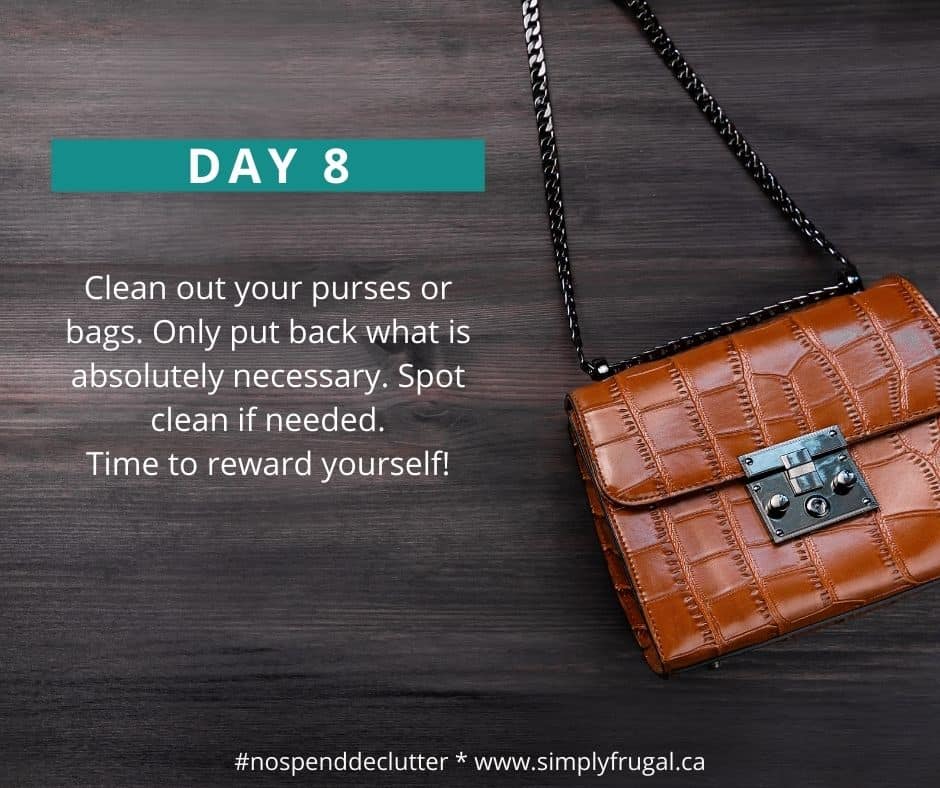
Day 8 Declutter Task:
I am a one purse only kind of gal and a backpack every now and then when I have to tote my laptop along.
However, life with kids means my purse is currently a catch-all for snacks, toys, my wallet, appointment cards, shopping bags, receipts, garbage and so much more. Sometimes I have no idea I have so much in there!
Despite the mess that is in my purse, I think today’s task should be quite easy to get finished. I actually just purchased a new backpack from Mountain Equipment Co-op on clearance so I actually have to add a few things to it! (Pens, notebook, ear buds…etc.)
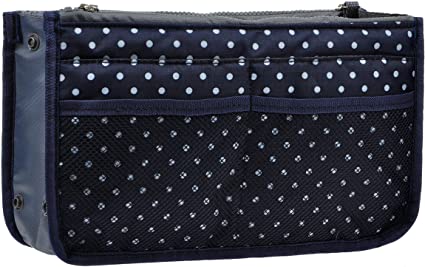
While I don’t have many tips for purse organization, I think a purse organizer from Amazon like this would be wonderful:
So, how messy is your purse or bag? How do you keep it organized?
Day 8 No Spend Task:
You know what? I think it's time for a reward. But don't worry, we're still not going to spend money. 😉
Since we just cleaned out our purses/bags, you may have come across a forgotten gift card. Today, you're going to use it on something to treat yourself! I recently came across a gift card for Blenz coffee shop, so I'm going to stop there today!
If you didn't come across any gift cards, I have a post I wrote with 16 Ways you Can Treat Yourself for Free!
What are you doing to reward yourself?
I will be posting each task in the Simply Frugal No Spend Declutter Challenge Facebook Group. This is where most of the discussion will be happening.
I will also be posting random progress reports throughout the challenge over at Instagram! Follow me on Instagram @simplyfrugal and use the hashtag #nospenddeclutter to get updates and see what others are up to during the challenge!
If you do not use social media, I would love to read your comments on each task, right here, below each challenge post on SimplyFrugal.ca!