As I've previously mentioned, I'm not a huge coupon user for various reasons. (Mainly time. I don't make enough time to use them.) But one thing that I can really get on board with is all these cash-back apps that are available!
Here is how I make these cash back apps work for our lifestyle:
I don't make a shopping list based on the rebates they have available
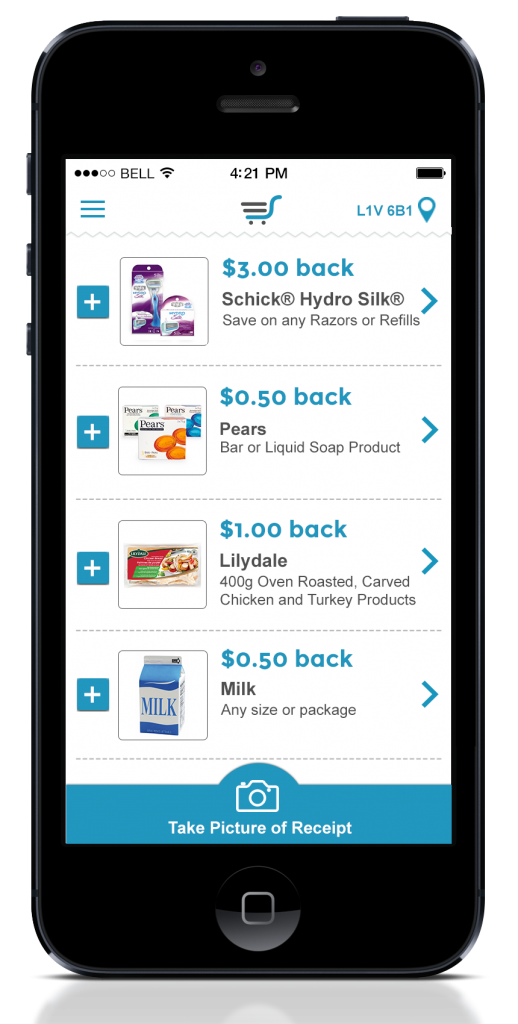
After I'm finished shopping I peruse the list of rebates and if there are items I have purchased on the lists, I go ahead with filing my receipt.
This way, I'm not buying (or getting really cheap) stuff that we won't use or eat. Every nickel adds up when I'm buying things that will just get wasted in the end!
What I especially love is the rebates for fresh produce! It's not often you see a coupon for that! I've also taken advantage of the rebates for wine in the past, which we've bought for gifts.
For this this post, I wanted to create an Ultimate Guide to the Cash Back Apps we have available to us in Canada. Sound good? Lets get started!
Honey
In a nutshell:
Honey is here to help. We give everyone the tools it takes to find the best savings, perks, and all around value. And we make them free and easy-to-use. So you can always spend with confidence.
How Honey works:
Honey is a browser extension that automatically finds and applies coupon codes at checkout with a single click.
Join Honey for Free: It only takes two clicks to add Honey to Chrome, Safari, Firefox, or Opera.
Find Savings in Seconds: While you shop, Honey will find working promo codes on the internet
Save Instantly: With one click, Honey will apply some of the best deals to your cart. It's that easy!
Checkout 51
In a nutshell:
Every Thursday morning, Checkout 51 updates with a new list of offers. All you have to do is pick the ones you like, purchase them at any store, and upload a photo of your receipt through our mobile app or website. When your account reaches $20, we send you a check.
How Checkout 51 works
Browse your offers and buy products at any store in Canada. (excluding Quebec)
Upload your receipt using Checkout 51. Photos must be clear and readable. You must send a photo of the entire receipt. If you have a long receipt, you can add “sections”.
They'll confirm your purchase and credit your account.
When your account balance reaches $20, you can choose to cash out and they'll mail you a check.
Other Key Guidelines
Anyone can use Checkout 51. They have an app for smartphones and you can even use it on your computer.
Offers go live on Thursdays at 12:00 AM in each time zone. They expire the following Wednesday at 11:59 PM in each time zone. You must upload your receipts while the offers are live.
Offers are available in limited quantities. Be sure to check your offer list before you go shopping to ensure that the offer is still available. Make sure to upload your receipt immediately after purchase to avoid disappointment!
A quantity of one of each rebate offer is eligible for Cash Back per member.
Each receipt can only be used once.
You can only earn Cash Back for the exact product listed, so please read carefully.
Products must be purchased in your country of registration. We currently support the United States (the 50 states of the United States, the District of Columbia, and Overseas US Military Bases) and Canada (excluding Quebec).
Receipts uploaded must be in English.
Items purchased from online retailers are eligible for Cash Back. Itemized packing slips are accepted as proof of purchase. Online purchases are subject to the same upload timelines as receipts.
Can I use a Coupon with my Rebate offer?
Yes! You can earn Checkout 51 Cash Back in combination with any other coupon or discount unless otherwise stated. This is a great way to get free or nearly free items each week!
When Will I get my Cash Back?
You are able to cash out and receive a cheque once your account reaches $20 or more. Cheques are sent out via snail mail within 7 business days.
Ampli
In a Nutshell:
Link – Shop – Earn – Cash Out
Canada, it’s about time you got paid to shop! Ampli is the newest Canadian cash back app, getting you cash back on your everyday online and in-store purchases!
Securely link your debit and credit cards from over 130 Canadian banks and other financial institutions
Automatically earn cash back every time you shop online or in-store at participating brands
Cash out by sending yourself a free Interac e-Transfer
How do I get paid?
You can cash out your balance by sending yourself a free Interac e-Transfer to any Canadian bank account when you reach a minimum balance of $15.
Save.ca Cash Back
In a Nutshell:
Save.ca is excited to introduce our new Mobile Cash-Back feature! Download the app and start getting cash back by purchasing the brands and products you already love – it’s like you’re getting paid to do your shopping!
How Does it Work?
Browse offers on the list - Our app will be updated regularly with new offers, so check back often!
Buy products at any store - Select the offers you like, and make sure you buy the right item and size in store.
Upload Your Receipt - Take a legible photo of your receipt and submit through the app.
Earn $ and cash out to your PayPal account - When your receipt is processed, your account will be credited within a few days. Once you have $5, you can instantly cash out to your PayPal account.
I don’t have a PayPal account, can I still get cash back?
Save.ca has the only cash-back app that uses PayPal to get you money back. It’s the easiest, quickest and most reliable method to get you spending less and saving more!
How do I connect my PayPal account to the Save app?
Connect your PayPal account by selecting the burger menu on the top left corner of the app and choosing ‘My Account’. From here, go to ‘Profile’ and then ‘View PayPal’ where you can connect the app to your PayPal account.
When will I get reimbursed?
Once your total savings equal $5, you can opt to cash out and the funds will be deposited to your PayPal account will within minutes. Don’t want to cash out right away? No problem. Keep saving and cash out whenever you would like!
How do I cash out?
Once you’ve reached $5 in savings, you can cash out in the ‘My Account’ section of the app under the ‘Balance’ tab. Simply select ‘Cash Out’ located at the bottom of this screen and verify your PayPal email address before confirming your submission.
How will I be notified that my purchase(s) was validated?
You will be notified via email.
How long do I have to submit a receipt?
You can submit a receipt for as long as the coupon is available on the Save.ca app or until it is sold out. After it is no longer available, you will not be able to submit your purchase so act quick!
How long do I have to wait for my receipt to be validated?
Please allow 3-5 business days for your purchase to be validated.
Caddle
In a Nutshell:
Caddle is a free app that pays users with real cash back for everyday purchases, completing surveys, and engaging with brands and products. Download now from your phones app store!
Download the App on any Apple or Android device or sign up on their website.
Following login, browse our weekly offers. Once you find an offer you like, simply tap the offer, follow the on screen instructions to redeem the offer and get cash.
New Caddle offers launch weekly. Check Caddle every Thursday for more ways to make money. You can earn from watching ads, answering surveys and engaging with brands.
Once you reach $20 or more in your Caddle account, you can cash out. Simply go to my account, select cash out and we will mail you a cheque. It's that easy. Start earning today!
Do you use any of these Cash Back apps to save? Which one is your favourite? What type of offers are your favourite?
If you shop at the Real Canadian Superstore, Shoppers Drug Mart, or other Loblaw banner stores, then you may have heard about the PC Optimum Rewards program they offer.
Before I get into the exciting part about how to earn PC Optimum Points quickly, first a quick run down of the program:
About the PC Optimum Rewards Program:
It is free to sign up for a PC Optimum account.
You can earn points at participating Loblaw stores using your PC optimum card or app.
Earn 15 points per $1.00 spent at Shoppers Drug Mart.
Earn 10 points per litre at Esso and Mobil stations across Canada.
Earn points at Superstore, Loblaws, Zehrs, No Frills and other Loblaw grocery stores by collecting points from personal digital offers found in the app and/or in-store offers. (can be found in the flyers.)
Redeem 10,000 points for $10 worth of goods at any Loblaw store.
Redemptions are in increments of 10,000 points i.e. $10, $20, $30, and so on. You can redeem up to a maximum of 500,000 points or $500 in a single transaction.
How to Earn PC Optimum Points Quickly
It's easy to earn and redeem PC Optimum points. That's why PC Optimum is one of the most popular loyalty programs in Canada.
But I have several tips for you today that will help you to maximize the amount of points you earn each shopping trip.
1. Take Advantage of Weekly Personalized Offers
When you sign up for PC Optimum, they will send you weekly emails with personalized offers that usually reflect your buying habits. Making them personalized to you.
For example, this week, one of my personalized offers is 200 points for every $1.00 spent on strawberries. Most weeks, I buy strawberries. So I will automatically get the points when I scan my PC Optimum card or app at the checkout. You will also receive points even if you do grocery pick-up with PC Express.
New weekly personalized offers go live every Thursday at 12 am and are valid through Wednesday of the following week.
2. Save your Personalized offers for next week
Since the personalized offers change on a weekly basis, you may find some offers don't work for you on a particular week. (Because you just bought that item or you are away, for example.) If you know you will need that particular item next week when you shop, it's possible to save up to 4 offers for the following week.
For example, I have an offer for 600 points for every $3 spent on PC frozen fruit. I don't need any frozen fruit this week, but since we eat a lot of smoothies, I will save this offer for next week, when we will need more.
It could also be advantageous to save offers so you can wait for a sale. It's great when you can grab something on sale AND collect points at the same time! I believe you can save the same offer more than once.
3. Choose 'Don't Show Again'
Alternatively, sometimes you know an offer just won't work for you, ever. Instead of saving this offer for another week, you can choose 'Don't Show Again' and this offer will be dismissed.
This is a great way to tailor your personalized offers so that when the offers refresh on Thursday, they will be even more applicable to how you normally grocery shop.
4. Check the Weekly Flyers for in-Store offers
Take a look in your flyers and you are sure to spot some points offers that say something along the lines of 'Buy 2 (insert participating product), get 1,500 PC Optimum Points'. I recently earned 1,600 points because I bought a rotisserie chicken. (The offer was 1,600 points for every $8 spent on hot or chilled ready-to-go meals.)
You may also see bonus offers like: Get 8,000 Bonus PC Optimum Points when you spend $40 or more on these participating brands. (insert participating brands.) These are excellent. Keep in mind that you can also use coupons (if applicable) so you can get a lot of products and a lot of points with these bonus offers!
5. Check the app for Bonus Points Events
This week, I see in the app that I have a points offer for 20,000 points when I spend $60 or more on almost anything in-store at Shoppers Drug Mart.
So definitely take a look in the app before you go shopping!
6. Join PC Optimum Insiders
Signing up for a PC Optimum account is free. However, they also offer a subscription called PC Optimum Insiders. This does have an annual fee of $119.
I have heard from several people who are PC Insiders that they make back in points what they pay annually quite quickly. The PC Optimum Insiders subscription is really beneficial if you often buy President's Choice products or use PC Express grocery pick up.
Free PC Express™ grocery pickup with priority time slots. This is a saving of $3 to $5 per pickup.
Free shipping, with no minimum purchase from joefresh.com and shoppersdrugmart.ca
10% back on all JOE FRESH products
5% back in points on PC Travel bookings, including car rentals, hotel bookings, flights and vacation packages
7. Use a PC Financial Mastercard
If you are a credit card user (sometimes they can be beneficial!) and mostly shop at Superstore, Shoppers Drug Mart, Loblaws, etc., then a PC Financial Mastercard may be a good option for you! There are three different cards available:
PC Financial Mastercard: Earn 25 PC Optimum points per $1 spent at Shoppers Drug Mart and 10 points per $1 spent at PC grocery stores. Also earn 10 points on all other purchases. This card has no income requirements.
PC Financial World Mastercard: Earn 35 PC Optimum points per $1 spent at Shoppers Drug Mart and 20 points per $1 spent at PC grocery stores. This card has a $60,000 minimum annual personal income requirement.
PC Financial World Elite Mastercard: Earn 45 PC Optimum points per $1 spent at Shoppers Drug Mart and 30 points per $1 spent at PC grocery stores. To be eligible, you must meet the $80,000 minimum personal income requirement.
For all the details, be sure to talk with an advisor at a PC Financial institution.
8. Buy Gas at Mobil and Esso
Earn even more points by fueling up at Esso and Mobil gas stations! You will earn 10 PC Optimum points per litre as a PC Optimum member and at least 30 points per litre when you pay using a PC Financial Mastercard.
Take Note:
Points cannot be earned or redeemed on gift cards according to their terms & conditions, section 7.
As you can see, the PC Optimum program is great. Especially if you do the majority of your shopping at Loblaw banner stores and Shoppers Drug Mart. It's fun to accumulate points and then redeem them to pay for an entire shopping trip! Sometimes I like to redeem some when I'm purchasing a new sweater or kitchen appliance, for example. It's like getting those 'wants' for free!
You may also love my How to Coupon in Canada Series:
Coupon stacking in Canada is a very popular topic when it comes to coupon use!
Unfortunately, traditional coupon stacking is no longer available in Canada. 🙁
Since I've been out of the coupon game for quite some time, I'm not sure when London Drugs and Save-On Foods stopped allowing coupon stacking.
But don't let this discourage you from using coupons!
There are still a couple of legitimate methods that will allow you to "stack" coupons or deals.
Method #1
First of all, since the introduction of cash back apps, it may be possible to use a coupon at the store, then redeem a cash back offer from an app at home. For example, say you have a coupon for Melitta Coffee Pods. Use that at the store, then redeem the cash back offer for $2.00 found in the Caddle app.
One thing to watch for is wording like this: Cannot use this offer with any other print or in-app coupon or rebate. This literally means what it says. You can't use a coupon AND redeem the cash back offer for the same product. This wording is found in Checkout 51 most often.
Secondly, this is very loose "stacking", but it's still a great way to use coupons and save money for future purchases.
I love the PC Optimum program. By scanning my card, I'm able to collect points with the personal offers they have for me each week as well as the bonus points that can be found in the flyers.
So with one grocery shopping trip, I can redeem coupons and collect points that I can use as a cash discount another time! Sometimes, you may have a coupon and be able to collect points on the same product!
Do you use cash back apps or the PC Optimum program? What are some of the great deals that you have gotten by using these methods?
Here are the other posts in the How to Coupon in Canada Series:
The first and most important step in getting started with coupons in Canada is, well, getting coupons to use! This is really the easy part because coupons are actually really abundant in Canada!
Today, I am going to give you a list so you know where to find Canadian coupons that will help you save money! Coupons are a great way to save money on food, cleaning supplies, hygiene products and more.
Here is where to find Canadian coupons so you can get your coupon stash growing quickly:
At the grocery store
Grocery stores can be a treasure trove of coupons. There are several different kinds of coupons you can keep an eye out for.
Tear pad coupons - These can be found on the front of shelves or on those cardboard display cases, usually very close to the product for which the coupon is intended. Some large grocery stores also have large coupon boards at the front entrances where you will find dozens of tear pad coupons. As you find the ones you think you will use, keep in mind that you don't have to use them on the day that you take them!
Peelies - Peelies are those little sticker coupons that you can sometimes find attached to products. Recently, I have found them on cereal boxes, feminine products, and granola bars. Keep an eye out! These are meant to be taken only when you purchase the product on which they are found!
Hang Tags - Like peelies, but they are actually hanging on products with an elastic. These are also meant to be taken only when you purchase the product on which they are found!
Rep Coupons - You know those booths that are set up in grocery stores with someone handing out samples or simply bringing awareness to a product? They often have coupons to give out!
Some companies run promotions where they mail coupons (for free product, or money off) to you via Canada Post. One such company is Chapman's Ice Cream. Every year you can request for them to mail you a $4.00 off coupon to use on their ice cream products.
You could also try Shopper's Voice. Complete a survey to receive coupons, samples and special offers.
Be sure to keep an eye out for coupons from fast-food restaurants! These you don't have to sign up for. They just come as junk mail and can be quite valuable if you utilize restaurants like Subway, McDonald's, Wendy's, Dairy Queen, etc.
In product packaging
You can also find coupons inside specially marked boxes or packages that may be used for future purchases. I often see these coupons inside cereal boxes, granola bars and taco kits.
Free Samples
Many times when I fill out a form for a free sample, when it arrives, it comes with a coupon. Sample boxes from companies like SampleSource often add coupons into the box along with the samples.
Email Newsletters
Join email lists of the companies that you often buy from, if they have one. When you sign up online, make sure to check the box that asks if you would like to have special coupons and offers sent to you. I also recommend having a separate email address for signing up for things like this. You wouldn’t want to clutter up your personal email! Gay Lea, Oxi Clean and Oasis are all examples of companies that regularly send out coupons with their newsletters.
Email your favourite companies
If you have a favourite product, there is absolutely no harm in emailing or calling that particular company asking if they have any coupons available to mail to you! Many companies are very willing to send coupons your way if you ask!
Coupon Apps
Also known as Cash-Back apps! If physical coupons aren't your thing, cash-back apps might be a better option for you! The way most cash-back apps work is:
Download the app
Browse the list of cash-back offers then buy your groceries
Now that you know where to find Canadian coupons, you’re going to have to figure out some sort of organizing system so they don’t end up expiring before you use them. There are many different ways to organize coupons, but you may have to try out a couple of systems before you find one that works best for you.
In this post, I’ll be listing several different ways on how to organize coupons. You’re sure to find a system that will work for you!
Coupon Organizing Method #1 – The Wallet Size Expanding Folder
This was my first method of coupon organization. I picked up a wallet sized coupon folder from a local dollar store. You can also find them on Amazon. The folder from the dollar store already included pre-categorized sections like, baking goods, beverages, cleaning products and condiments. Feel free to personalize each section to how you like it. Maybe you want to organize your coupons by expiry date. Or label each section with store names so you could place all the coupons you intend on using at a particular store in the appropriate section!
Organize all your coupons using envelopes. Make an envelope for each category. (such as Meat, Dairy Products, Cleaning Products, Paper Products, etc.) Accumulate all the coupons you plan on using and store them in the corresponding envelopes so they can be easily found.
Coupon Organizing Method #3 – The Coupon Box
Use index cards to create all the categories you’ll need. With this method, your coupons will be really easy to find, but you may find it a bit bulky if you want to bring it into the stores you shop at. Here’s an example from Monica Wilkinson using a cute recipe box, including the categories she uses.
Coupon Organization Method #4 – The Coupon Binder
The coupon binder is a hugely popular coupon organization method and is the one I’m currently using. It’s fairly simple to create your own using a three-ring binder, page dividers, trading card holders, and perhaps a zippered pocket to hold scissors, random coupons, or a calculator. I’ve also heard of people using photo albums instead of a binder! Here are a couple of tutorials to help you get idea on how to create a coupon binder system that may work for you:
Now that you have some ideas on what to put your coupons in, you may want some ideas on how to sort your coupons.
Organize by product: Rather than create categories, you could group all your similar product coupons together. For example, all shampoo coupons together and all makeup coupons together.
Organize by expiry month: Create a section for each month of the year and place the coupons according to the month they expire.
Organize alphabetically: Put your Irish Spring coupons in the “I” section and your Crest coupons in the “C” section.
Organize by category: Probably the most popular way of sorting coupons. Place all coupons in broad categories such as Meat, Paper products, and Snacks.
I hope this post gave you some ideas on how to organize coupons with a system that will work for you!
If you’re a coupon user with a system already in place, how do you organize your coupons?
Here are the other posts in the How to Coupon in Canada Series:
When you're trying to save money, it can be tempting to think that the only way to make progress is to stop spending altogether.
No more takeout. No more coffee runs. No more little treats. No more buying anything that isn't absolutely necessary.
And while cutting your spending can certainly help your budget, living frugally doesn't have to mean making your life miserable.
I've been living frugally for many years, and one of the things I've learned is that frugal living works much better when it doesn't feel like punishment.
The goal isn't to spend as little as humanly possible. The goal is to be thoughtful about where your money goes, find cheaper ways to do the things you enjoy and save money where you don't really notice the difference.
Here are some realistic ways to be more frugal without feeling deprived.
1. Find cheaper ways to do the things you enjoy
You don't necessarily have to stop doing something you enjoy just because you're trying to spend less. Instead, look for a less expensive version.
If a friend wants to go out for coffee, invite them over instead.
If your family wants to watch a movie, have a movie night at home.
If the kids want to go somewhere fun, look for free community events, parks, trails or inexpensive activities.
If you enjoy reading, use the library instead of buying every book you want to read.
The important part is that you're still doing something you enjoy. You're simply changing how much you're paying for it.
2. Decide what is actually worth spending money on
This is one of the biggest lessons I've learned from being frugal.
You don't have to cut everything.
Think about the things you genuinely enjoy spending money on and allow yourself to prioritize them.
Maybe you love going out for brunch. Maybe you enjoy travelling. Maybe having your favourite coffee on the weekend is something you really look forward to.
That's okay.
For our family, we really prioritize our kids' extra curriculars. For one, that means paying a lot for competitive dance and for the other it means recreational gymnastics and dance classes.
Instead of trying to eliminate every enjoyable expense, look for other areas where you don't care as much about spending.
Frugal living isn't about saying “no” to everything. It's about making sure your money is going toward the things that matter to you.
3. Don't confuse a sale with a saving
I'm a huge fan of a good deal.
But I've also learned that buying something simply because it's on sale isn't necessarily frugal.
If you weren't planning to buy it, don't need it and wouldn't have bought it at full price, spending money on it doesn't magically become a saving because there's a red sale sticker involved.
Before buying something on sale, ask yourself: Would I buy this if it weren't on sale?
If the answer is no, you may have just found a way to spend money rather than save it.
4. Shop secondhand
Buying used can be one of the easiest ways to spend less without giving up the things you need.
Check thrift stores, consignment shops, garage sales, local buy-and-sell groups and online marketplaces before buying something new.
Secondhand can be especially useful for things like:
Furniture
Children's clothing
Books
Toys
Kitchen items
Home décor
Sporting equipment
Tools
Of course, use common sense and make sure an item is safe and in good condition before purchasing it.
But there's no rule that says everything in your home has to be brand new. If I'm being honest, most things in our home are used!
5. Make some things at home
There are plenty of things you can make yourself that can save money.
Coffee is an obvious example. A good bag of coffee beans or ground coffee can make dozens of cups at home for a lot less than buying individual coffees every day.
The same idea applies to things like baked goods, snacks, sauces and some household products.
But there's an important caveat here: Don't make everything from scratch just because you think frugal people are supposed to.
If homemade pizza saves you money and you enjoy making it, great.
If making your own laundry soap takes two hours and saves you $1, maybe your time is better spent elsewhere.
Frugal living should consider your time, too.
6. Cook extra while you're already cooking
If you're already making a meal that freezes well, consider making extra.
A double batch of taco meat, spaghetti sauce, meatballs, shepherd's pie, Chicken Pesto Pasta Shells and chili can give you another meal later without requiring much additional effort.
This is one of those frugal habits that can save money and make life easier.
Future you will probably appreciate finding a homemade meal in the freezer on a night when cooking feels like the last thing you want to do.
7. Stock up strategically
Stockpiling can save money when it's done thoughtfully.
If something your household regularly uses goes on sale for a genuinely good price, consider buying enough to last until the next sale.
The key is knowing what you actually use.
There's no benefit to having a basement full of 47 bottles of something your family doesn't like. A good stockpile is simply a small supply of things you know you'll use, purchased at a good price.
8. Use what you already have
Before buying something new, take a look around your house. You may already have something that will work.
This applies to food, clothing, cleaning supplies, craft supplies, storage containers, home décor and just about everything else.
Sometimes the most frugal purchase is the one you don't make.
And this can be especially helpful if you're also trying to declutter. Using up what you already own means you're spending less and reducing the amount of stuff coming into your home.
9. Learn to love the leftovers
When I was a kid, I hated leftovers. As an adult, I love leftovers! Leftovers can save you both money and time.
Instead of thinking of leftovers as yesterday's dinner, think of them as tomorrow's lunch or the starting point for another meal.
Roast chicken can become sandwiches or soup. Leftover vegetables can become part of an omelette or pasta dish. Extra taco meat can become nachos or a quick lunch.
The goal isn't to eat the exact same meal five days in a row. It's to avoid letting perfectly good food, and the money you spent on it, go to waste.
10. Use rewards programs, but don't let them use you
Canadian shoppers have plenty of opportunities to earn points, discounts and cash back.
But rewards programs only save you money if you use them strategically.
Don't buy something you don't need simply because you'll earn points. Don't spend an extra $20 to “unlock” a reward worth $5.
And don't let a points balance convince you that you've found free money. Use rewards on purchases you were already planning to make.
11. Take care of the things you own
One of the least exciting, and most effective, ways to be frugal is to take care of your stuff.
Clean things regularly. Follow maintenance recommendations. Repair things when it makes sense. Store items properly.
The longer you can reasonably use something, the longer you can go without replacing it. This is particularly important with expensive purchases like appliances, furniture, electronics and vehicles.
Sometimes frugality isn't about finding a bargain. It's about getting as much useful life as possible from something you've already paid for.
12. Use less when it makes sense
There are plenty of household products where using the recommended amount is enough, and sometimes we're simply in the habit of using more than we need.
Pay attention to how much you're actually using of things like laundry detergent, dish soap, shampoo and cleaning products. You might discover that you are using more than necessary.
However, I wouldn't recommend automatically cutting down on every product. Follow the manufacturer's instructions where appropriate and make sure you're still getting the results you need.
The goal is to avoid waste, not make your life harder.
13. Look for energy savings
Being more conscious of your home's energy use can help reduce your expenses over time.
Simple habits can include turning off lights when you leave a room, avoiding unnecessary heating or cooling, washing clothes in cold water when appropriate and using energy-efficient lighting.
And when it's time to replace a major appliance, consider its energy efficiency as part of the overall cost.
Sometimes paying a little more upfront can make sense if the appliance is expected to use significantly less energy over its lifetime.
14. Skip the dryer when it's practical
If you have the space and the weather cooperates, air drying some of your clothes can reduce dryer use. (It can even help your clothes last longer!)
A drying rack or clothesline can be especially useful for items that don't need to go through the dryer.
You don't have to stop using your dryer completely. Even using it a little less can help.
15. Create a waiting period for purchases
You don't have to tell yourself “no” every time you want something. Try telling yourself “not yet.”
If you see something you want, put it on a list and wait a few days, or longer for a bigger purchase.
Sometimes you'll still want it, and that's okay. But sometimes the excitement will disappear and you'll realize you didn't really need it.
A little time can make it much easier to tell the difference between something you genuinely want and something you simply wanted in that moment.
16. Make your own fun
One of the biggest misconceptions about frugal living is that you have to be bored.
Spoiler alert: you don't!
Have a game night. Go for a walk. Have a picnic. Try a new recipe. Watch a movie at home. Visit the library. Explore a nearby park. Invite friends over.
There are so many ways to enjoy yourself without pulling out your wallet. And honestly, some of my favourite memories have very little to do with how much money was spent.
17. Make convenience work for you not against you
Convenience isn't bad.
Sometimes you're tired. Sometimes you're busy. Sometimes paying for something that makes life easier is absolutely worth it.
The problem is when convenience becomes automatic.
If you're regularly paying for delivery, takeout, pre-prepared foods or last-minute purchases simply because they're easier, look for a few places where you could make a different choice.
You don't have to eliminate convenience.
Just be intentional about which conveniences are worth paying for.
18. Have a “use what I have” challenge
Pick one category and challenge yourself to shop your own home before buying anything new.
Try:
The freezer challenge: Use what you've already frozen.
The closet challenge: Put together outfits from clothes you already own.
The bathroom challenge: Use up toiletries before replacing them.
The cleaning-supply challenge: Finish what you already have before buying another bottle.
These little challenges can save money while also helping you use up things that might otherwise sit around indefinitely.
19. Buy fewer, better things when it makes sense
Being frugal doesn't always mean choosing the cheapest option.
Sometimes the least expensive item isn't the best value if it needs to be replaced often. For things you use frequently, consider quality, durability, repairability and expected lifespan, not just the initial price. The goal isn't to buy the most expensive version either. It's to think about the total value you're getting for your money.
20. Don't try to be perfectly frugal
This might be the most important one.
You're going to spend money sometimes.
You're going to order takeout.
You're going to buy something that wasn't absolutely necessary.
You're going to pay for convenience.
You're going to occasionally pay full price for something.
That's life.
One purchase doesn't undo all of your other good choices.
I have learned over the years that frugal living is about your overall habits, not whether you managed to make the perfect financial decision every single time.
Frugal Living Should Make Your Life Better, Not Smaller
Being frugal doesn't mean living a life of deprivation. It means being intentional with the resources you have.
You can buy secondhand and still enjoy nice things. You can cook at home and still go out for dinner sometimes. You can save money and still have fun.
You don't have to say no to everything.
Instead, ask yourself:
Is there a cheaper way to do this?
Do I actually need to buy this?
Would I rather spend this money on something else?
Can I use something I already have?
Those questions can change the way you spend without making you feel like you're constantly missing out.
After years of living frugally, I've found that the goal isn't to see how little I can spend. It's to make sure the money I do spend is going toward the things that matter to me.
And I think that's what makes frugal living sustainable. You don't have to deprive yourself to save money. You just have to get a little more creative about where your money goes.
What is one thing you are going to start doing today to be more frugal?Or what are some things you already do without thinking, that are frugal?