There are tons of tips for how to live frugally to pay off debt out there. But today, I have gathered some of what I feel are the best ways for you to focus your income to get rid of debt and create financial freedom. Some simple changes in how you view money can truly make all the difference in the world.
Create a functional household budget.
A functional household budget is actually looking at your true reliable monthly income and true reliable monthly expenses. Fluctuating pay from part-time jobs that aren't consistent, selling something online or occasional side jobs are not consistent and shouldn't be included in your household budget. Focus on what is your primary income, then create a list of all your regularly occurring expenses. This list should include things like housing, utilities, transportation, health, savings, groceries and similar items.
A functional budget shows you what you have coming in and going out each month. If you have less coming in than going out, it's time to look closely at the differences. Is the difference because your income is too low, or is it because you're making poor spending choices? It's often a combination of both poor spending habits and an income issue. If you cannot easily change your income status, it's time to look at what your expenses actually are and streamline as much as possible. That means eliminating things that are not necessities until you are in the clear and able to meet your needs.
Understand wants versus needs.
This is one of the biggest things to understand when you want to know how to live frugally to pay off debt. It boils down to what is coming in as income and going out as expenses. Typically the expenses that are unnecessary are what have to go. What is necessary to some is not to others. For my online business I have to have Internet at home to do my work efficiently. Others can do with using their cellular phone carrier for using the Internet. What is a necessity to me is a want for them. Take the time to look in detail at each item on your expense sheet and determine what can be removed as a want until you are better able to afford it.
Things to consider that are typically wants and not needs:
Newer vehicle
Larger home or living space
Pampering like: manicures, pedicures, professional hair styling, massages or spa treatments
Eating out
Entertainment like: new video games, movie theater tickets, or amusement parks
Make savings a priority.
Ultimately if you want to live frugally to pay off debt, you need to also consider saving money in the process. For most families, debt racks up because of a lack of savings to pay for expenses that occur unexpectedly. A savings account is not just for vacations and future purchases, but for unexpected expenses. Job loss, poor health, vehicle repairs or even a new roof on your home can all happen out of nowhere and quickly incur debt if you do not have a savings fund in place.
Once you realize what you have coming in and going out each month, you can begin to focus on how and where to save money. Using coupons, eliminating expenses and cutting corners can all be done better once you understand what your true financial needs are.
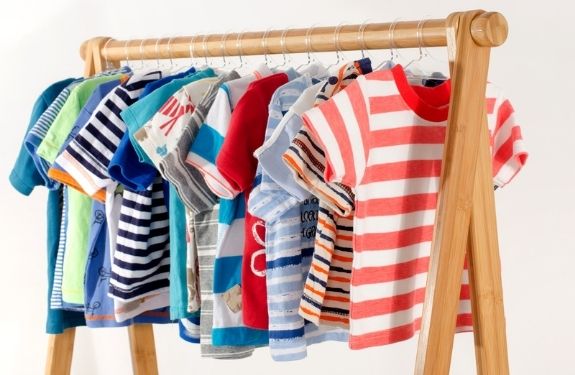
Babies grow so fast, it's hard to keep them in clothes that fit! Don't miss these great places to find discount baby clothes that are of great quality and fit easily into your lifestyle if you're on a limited budget!
6 Places To Find Discount Baby Clothes
eBay
A huge powerhouse in the discount baby clothes industry is actually eBay. This online auction site is a great place to buy gently used and brand new items at a fraction of the price you would in a store. Check out various large lots of clothing for the best prices on bulk purchases with discounted shipping. You can also earn money back once those clothes have been outgrown by selling your own items on eBay for credit.
Craigslist/Kijiji
Looking at these popular online classified sites can bring you many opportunities to grab kids clothing and specifically discount baby clothes at great prices. Remember to always arrange to meet in a public place and have someone go along with you for safety.
Local Facebook Buy & Sell groups
There are so many buy & sell groups on Facebook. I happen to think they are a great place to find discount baby clothes. They are similar to a garage sale or yard sale, only online and easy to choose what you want without having to drive all over the place to find it. Much like Craigslist, it is important to arrange to meet in a public place and have someone come along with you for safety.
Thrift or second hand stores
There are tons of great thrift stores and second hand stores all over the place, and they are ideal for finding amazing discount baby clothes that will work into your budget and keep your little one clothed.
Consignment sales
Consignment stores and sales are an amazing place to sell your own gently used items, but also to buy great name brand items for your baby at deep discounts. Watch for pre-sale days, special offers and great name brand quality items for up to 75% off retail prices.
Hand me downs
Take any hand me down items that are offered to you from friends, family and neighbors. You'll be surprised at how many people will offer you items for your baby. Take what's offered and go through items to choose what you can and are able to use. Pass on the the items you aren't able to make use of to others.
These are some great places you can easily find discount baby clothes that are in great condition while staying within your budget. Your baby doesn't need a ton of clothing when they are little, but as they grow you'll find it can be costly to keep them in new sizes all the time. These tips will help you to manage keeping your baby in cute clothing without spending outside your budget.
Okay guys, today I want to know your number one money saving tip. The thing you do that saves you the most. Or some little hack that you do to to avoid spending full price on something. Then once we’re all done sharing our tips and tricks, I thought it would fun if I compiled all your ideas into one printable sheet that we can read again and again. (Don’t worry, this will be a free printable for everyone to enjoy!)
Let’s get on with it shall we?
I’m Wondering: What is Your #1 Money Saving Tip?
Do you have something you’re wondering about that you would love Simply Frugal readers to answer? Send me your questions, here.
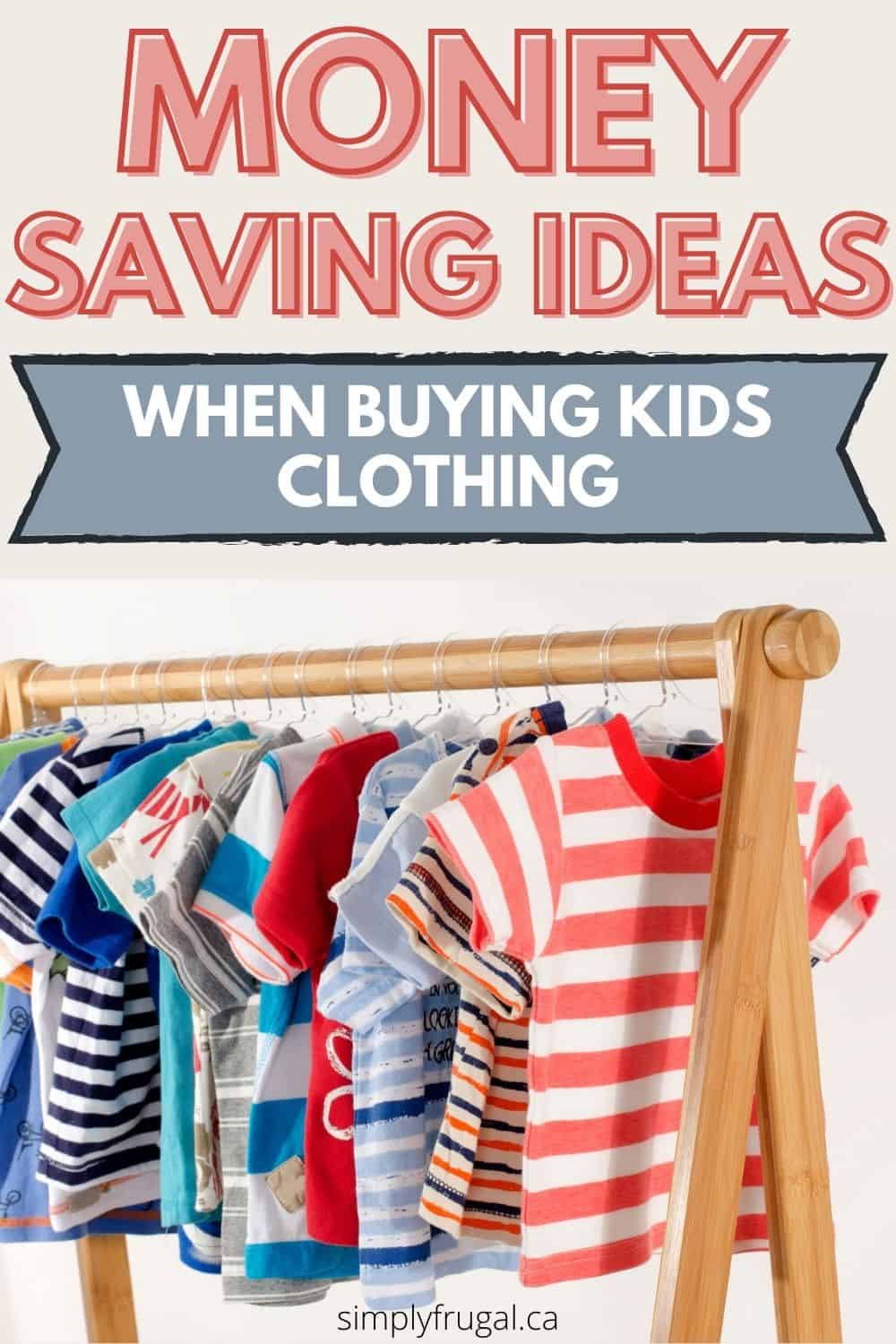
Parents are always looking for money saving ideas when it comes to raising their kids. Some of our best tips are about how to save money on those necessities like kids clothing. We are going to share our best tips for how to save a significant amount of money on your kids wardrobe. These tips are easy, useful and work no matter where you live.
Shop second hand.
Whether you choose to look at local yard sales, thrift shops or consignment sales, shopping second hand is one of the best money saving ideas when it comes to buying your kids clothing.
Most second-hand purchases are up to 75% off the original price. This makes those clothes they are only in for a few months, much easier to afford.
Babies tend to grow so fast they don't stay in the same size for long, and buying second-hand is a great way to save tons of money.
This is also a great way to find name brand pieces for your tween or teenage children at a much lower price.
You may even be able to set up a clothing swap with your friends or neighbors who have kids of similar ages and sizes. Swapping back and forth can save everyone a lot of money and give kids a fun new wardrobe.
Shop online.
While you may want to go to a local store to try on some pieces, shopping online can often make it much easier. You can find exactly what you are looking for, eliminate the arguments with your kids in store and utilize great online coupons, deals, free shipping and more that are offered by many popular brands.
Get to know your store sales and clearance procedures.
One way to save is to actually figure out how your local stores do sales and clearance. You can ask the sales staff, or watch sale cycles to get an idea about when the best deals will happen.
You can easily figure out when clearance happens so you can stock up ahead of seasons by buying the end of season products at discounts.
Ask about any special customer sales, coupons or email newsletters that will alert you to sales earlier. Many large retailers offer great promotions to what they consider their VIP members who sign up for their newsletter.
Make your own.
This is one of the classic money saving ideas when it comes to buying kids clothing. However, with the time involved, the price of material and changing seasons it can sometimes be more expensive.
There are a few fun things you can do, however, to make your own clothing. Upcycle items like your own worn out shirts, dresses or pants to create items for your kids. Perhaps you can make fun pillowcase dresses for little girls, or just use t-shirts to create fun tote bags for your teen to carry. There are always options for making your own or upcycling an existing item to revamp and give it a new look.
With this list of money saving ideas you can easily stay in budget while buying clothes for your kids, no matter the season!
How do you save money on kids clothing? Let us know in the comments below!
It can be a challenge to begin living on a budget, but there are definitely some great ways that it can improve your health in the process. As we continue to change our view of money, we can quickly learn that we are making choices that also make us healthier. This result is unexpected but very much welcomed!
You will be eating more healthy food.
When you're living on a budget, you are most likely not going to be eating out very often. This means your fast food habit that's bad for your health won't be a problem anymore. In fact, cooking more meals at home for your family almost always ends up with healthier eating habits. You may still have some not so great foods in your menu on occasion, but the bulk of your meals can easily be nutrient-dense healthy foods.
Budget friendly entertainment often brings you more exercise.
Instead of going to amusement parks or movies all the time, you'll be spending more time doing things like playing games, going for hikes or even playing sports as a family. Budget friendly entertainment often takes you and your family outdoors to explore, walk and play. Family exercise is a great way to spend time together and improve your health in the process.
When your budget is in place and you aren't creating more debt you have less stress.
One of the biggest causes of stress in most families and relationships is due to financial strain. When you are living on a budget, you are able to pay off debt, stay out of debt and possibly even have an emergency savings fund. This is a huge stress reliever. Added stress really can lead to anxiety issues, depression and even physical challenges like high blood pressure or chest pains.
You have more money to spend toward a gym membership or equipment.
Living on a budget can help you to save for that gym membership, or even the walking treadmill desk you've always wanted in your home office. A budget isn't just for paying off debt or managing on one income. It can also be all about saving money to invest in things you really want to improve your life in all areas.
You become more aware of how your poor spending habits hurt relationships.
Did you realize that your family relationships are affected greatly by your financial situation? How does this change your health? More stress between yourself, your spouse and your children can easily lead to poor relationship health, and even physical health as mentioned above. Living on a budget improves the health of your relationships as you see your need to change spending habits, focus more on family time and less on outside splurges. Paying down debtcan also make a huge difference in your marriage relationship as there is less stress for both of you to deal with.
Living on a budget can help you to improve your health and is great for any family to work toward. Your health is more important than any fancy car, designer hand bag or special meal out at a restaurant. Just by making a few financial changes, you can easily improve both your physical and mental health.
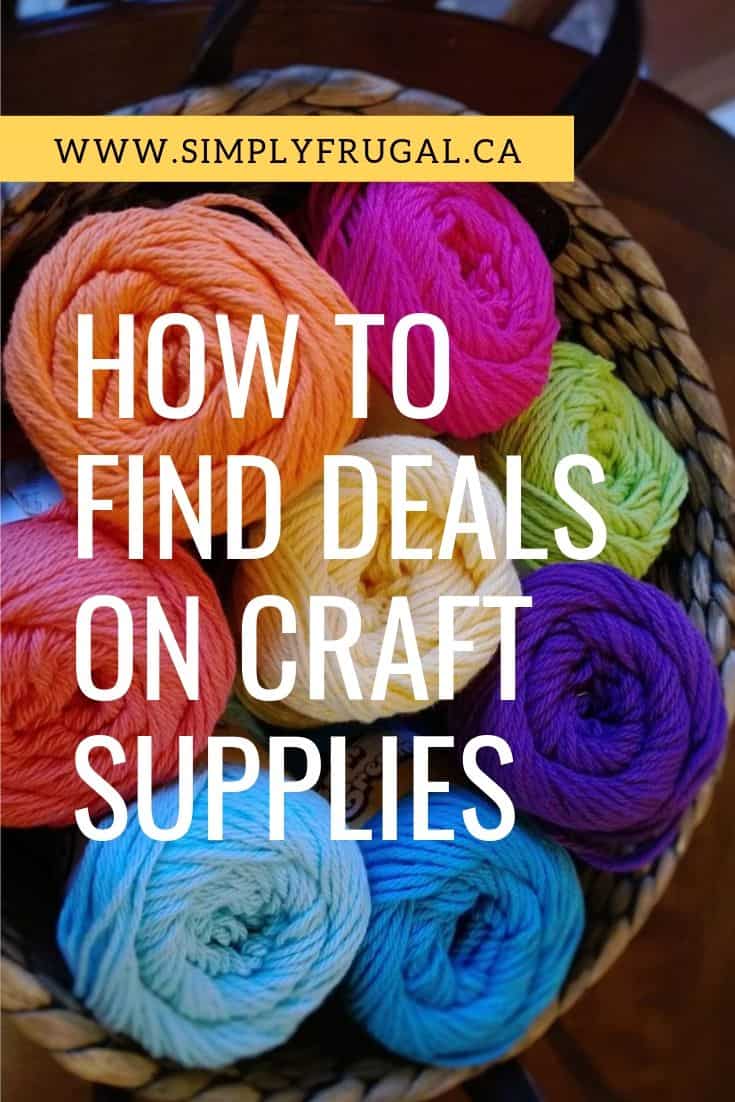
Do you love to craft and get creative? Then chances are you have a whole craft room worth of supplies. And even if you do have a whole room dedicated to these supplies, you might be wondering how you can add to that craft stash for less. Take a look below at how to find deals on craft supplies so you can continue to let your creativity flourish. 😉
How to Find Deals on Craft Supplies
1. Download store apps/look for coupons.
Did you know Michael’s Craft stores have a free app that gives you easy access to coupons and savings? Their coupons can also be found on their website or in their weekly flyer.
2. Check out Kijiji/Craigslist/Facebook.
I've seen many craft supplies for sale on second hand sites like Kijiji, Craigslist and even Facebook buy & sell groups. In fact, I just sold some old sewing patterns and fabric the other day so I know others are looking and selling!
3. Know where the clearance aisle is.
Most craft stores have a whole aisle dedicated to clearance items. Ask an employee where you can find these deals if you aren’t sure where they are. Chances are, you can find some items at deep, deep discounts! Especially after a holiday is over, like Christmas or Valentine's Day.
4. Browse Amazon.
Amazonhas TONS of crafting supply items at excellent prices. Find yarn, fabric, embellishments, soap supplies, candle supplies, and so much more. The market is vast and you can search for prices that fit your budget. Plus, your purchase might qualify for free shipping!
5. Check out Etsy.
Etsyis a crafter’s paradise! Many sellers offer crafting supplies both new or leftover from their own projects for a great price. Like Amazon, you can browse by price so you can be sure to find something in your budget.
6. Visit local thrift stores.
I am amazed at how often I find leftover crafting supplies at thrift stores. I also find fabric, yarn, knitting needles, and items I can re-purpose like picture frames and pottery. It is always worth browsing your local thrift shop to see what they might offer. Selections are always changing!
7. Dollar stores.
Dollar stores are still one of the best places to find budget friendly craft supplies! Search for wood craft sticks, pom poms, pipe cleaners, glue sticks, googly eyes, craft foam, stickers, mason jars, and everything in between. Your selection may also include holiday themed items. For just a buck, you can’t beat the price.
If you are itching to get crafty, keep these tips for how to find deals on craft supplies in mind!