It's no secret that I'm a huge fan of meal planning (and think you should be too 😉 ). It puts deciding what to cook on autopilot all week long. No more last minute trips through the drive thru or slapping together a so-so meal that everyone will complain about anyways.
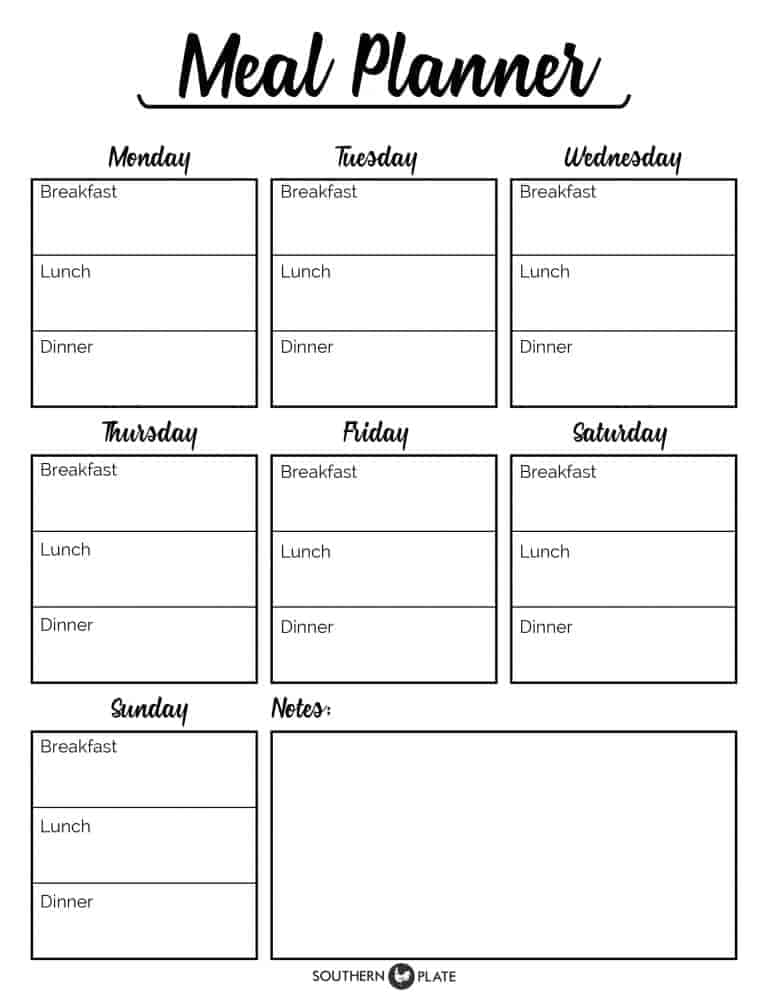
Jotting down your list of meals in a plain notebook or a scrap of paper is great, but did you know you can totally up your meal planning game? How? Well, with these 7 free printable weekly meal planners that will knock your socks off. I found some pretty amazing printables! All different kinds so there should be something to suit your specific needs.
Check them out and let me know which one is your favourite.
Now, this is a great idea! Use a dry erase marker to write out your menu for the whole week with this planner. Then, once the week is over, wipe it clear and start fresh for next week.
This one is from yours truly! I think it's fun and I love that there is space to jot down meals, your shopping list AND any prep work that needs to be completed! (Like remembering to take meat out of the freezer to thaw!)
Whether you’re new to meal planning or you’re just wanting to liven up the way you’re doing it, any one of these free printable meal planners will do the job perfectly.
Let me know what you think of these great free printable weekly meal planners!
PS: Looking for even more meal planning help? Check out this gorgeous printable MEAL PLANNERSET– with monthly, weekly + daily meal planning worksheets, brainstorming sheets, food inventory sheets, grocery lists, price matching sheets and more!
Nothing can make a room look messier than piles of paper. Somehow dining room tables, desks, kitchen counter tops, and dressers become magnets to all things paper in a family’s home! Bills, magazines, children’s artwork, and product manuals just pile up, creating “organized confusion” even for those of us who swear we have a system. It’s not only messy-looking; paper collects dust and can attract bugs. It’s not exactly environmentally friendly, either. So what’s the solution? Here are a few tips for how to organize paper clutter.
Create paper-free zones.
Regardless of what fantastic method you put into place, you’re bound to drop a piece of paper somewhere when you’re in a hurry. Tell yourself right off the bat that there are certain areas this is simply not allowed to happen. In the past, my dining room table often became a drop zone, making my otherwise (semi) clean home look disheveled. My new rule is no paper clutter on the table or in the living room. At least this way, I always feel ready for company and always have room to eat and play with my kids.
Deal with it right away.
Put paper clutter in its proper place as soon as it enters your home. Open the mail, recycle what you can, shred what you can’t, and file bills, receipts and children’s paperwork away immediately. Rip out the articles or recipes from magazines you are saving and put them into plastic sleeves in a binder. Drop your collection of magazines and catalogues off at the hair salon, gym, doctor’s office or schools. Whether you hang it on the fridge, utilize an inbox, or stick it in your planner, get into the habit of sorting incoming paper right away.
Go digital.
Opt for e-billing statements and invoices when you can. Minimize the flow of paper that comes in to begin with by opting out of all mailings you have control over. Save documents as PDF’s instead of printing them. Take digital photos of your children’s two-dimensional art projects, and recycle the originals. (Admit it: not everything is worth saving, and no, they will not want it when they’re adults…unless it’s hilarious!)
Make a filing box or cabinet your best friend.
For the remaining paper you absolutely have to keep, purchase a filing cabinet or box, depending on how much you have. A single person can often get away with a simple, file box. These days, you can find a lot of Pinterest tutorials on how to give the larger, metal, filing cabinets some personality. You can even get colorful folders for inside. (Do whatever you have to do to encourage yourself to use this thing once you’ve got it!) Create specific categories for the folders, such as yearly tax folders versus a single folder, overflowing with general tax documents. Designate a folder for each child and pet in your home. Separate everyone’s medical records and school papers. Don’t forget to go through periodically and shred outdated documents. Toss product warranties and instruction manuals for items you no longer have.
I’d love to know, how do you keep your paper clutter under control? Let us know in the comments below!
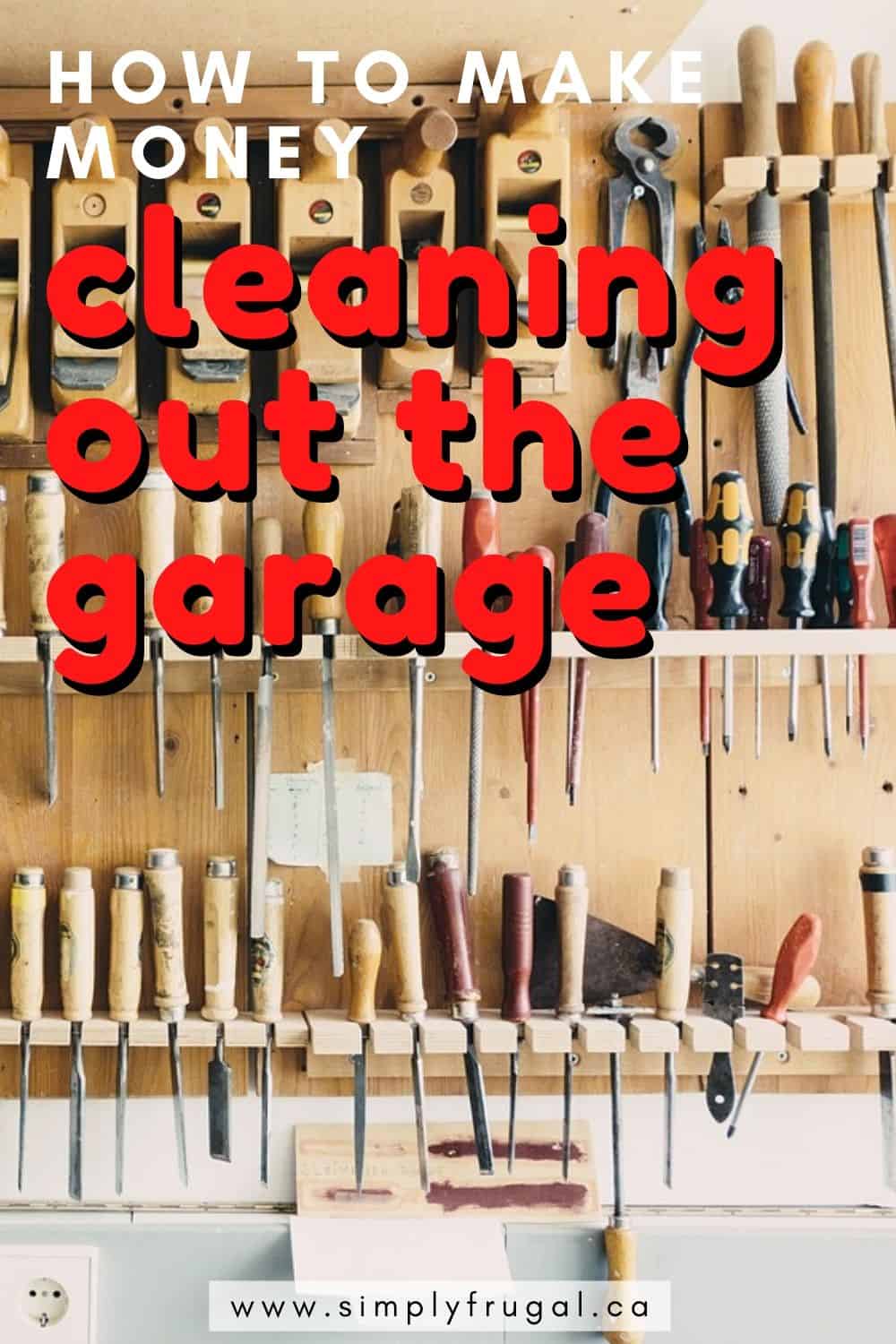
Is your garage stacked to the ceiling with stuff? If so, it might be time to give it a good cleaning. Cleaning out your garage can not only give you more space in your home, but can also net you some cash in your pocket! Want to know more? Take a look below at these 5 ways to make money by cleaning out your garage, I’m sure you’ll find something you can sell!
5 Ways to Make Money By Cleaning Out Your Garage:
1. Sell your old/unused tools.
Are you a tool hoarder? Tools have excellent resale value. Sell your usable power tools Kijiji, Craigslist, Facebook Buy & Sell groups or place an ad in the local paper. Older tools might be valuable to collectors, so do your research on them and see if they might be worth anything. You typically need just one of each tool, so part with any extras to make some quick cash.
2. Scrap that metal.
Is your garage full of metal pieces? If so, you can scrap them for cash. Old appliances, fencing, old copper, brass, or even aluminum are all worth cash at a local metal recycling center. You don’t even need to clean the pieces, just haul them to the center, have them weighed, and collect your cash.
3. Sell your old bikes.
Bikes both old and new can find a new home on Kijiji, Craigslist, ebay, or your local paper/garage sale site. Collectors are always looking for bike parts and will be willing to take the old bikes off your hands, while college students are always looking for used bikes they can snag for a song. If you have any bikes either old or new, broken or functional, sell them for cash.
4. Hold an odds and ends garage sale.
Get rid of the random clutter with a garage or yard sale. Advertise your sale for free in Facebook Buy & Sell groups as well as sites like Kijiji or Craigslist. Price your items to sell, create a neat and organized display, and you are sure to not only pull in some cash but create some extra space in your garage as well. Just haul out those items, give them a good dusting, and stick a tag on them. It’s that easy!
5. Donate for a tax write off.
Remember, you can get a tax deduction for any donations you make to not for profit agencies. If you have functional items such as toys, hoses, lawn tools, appliances, bikes, wagons, etc. then why not donate them? You will get a receipt for your donation and you will be able to write the amount off on next year’s taxes. That’s like cash in the pocket!
Don’t deal with that cluttered garage any longer. Instead, give these tips for finding money in your own garage a try and you will not only make space, but make some money as well.
Have you found any treasures hidden in your garage lately? Let me know in the comments.
The life of a minimalist is inspiring to me. While I don’t think I could go “all the way minimalist”, the thought of less stuff, less stress and other such benefits is very appealing to me. How many of you are aspiring to become a bit more minimalist, but are not sure where to start? Becoming a minimalist is sure to be good for the soul, but you may need some resources to get you there first. For the aspiring minimalists out there, here are 7 resources to get you started.
When you’re first starting off as a minimalist, or at least curious about it, you need to check out the documentary on Netflix. It’s quite simple as it follows the story of several minimalists. Two men who have impacted the world by living on less.
Yes, there are blogs out there dedicated to the minimalist journey and this is one of them. In my opinion, one of the best resources for living this lifestyle!
There are a lot of resources out there for people who are working hard to become minimalists. One of the best books is called Minimalism. If you want to know firsthand what it’s like to live this lifestyle, then the book is a must read. Grab this book if you’re thinking of becoming a minimalist.
One of the best reasons for YouTube is that you actually get a firsthand visual account at what some minimalists are doing. You don’t always know what minimalism looks like, until you see others living the lifestyle.
One of the beautiful parts of becoming a minimalist is checking out the journey of others. The Be More with Less Blog focusing on simplifying life a bit. She talks about reducing the amount of items you have, which will also result in less stress in life.
Your own brain
If you’re an aspiring minimalist, you should know something you will hear time and time again. This is your own journey. Sure, the result is to own less of everything. However, only you will know when enough is enough. Maybe you need 3 couches, but other minimalists sit on the floor. This journey will be a lot better for you if you consider your own brain and heart to decide what your minimalist journey looks like.
What resources would you share with someone who is an aspiring minimalist?
When it comes to rooms that can get overwhelming, you will find the kitchen is at the top of the list. With some simple organizing, your kitchen can run smoothly and clutter can be kept to a minimum. As a result, your meal prep and clean up time will drop, making your life easier!
How to have an organized kitchen
Clear the counters.
The counters can easily become a catch-all for everything. This is bad because when germs spread in the kitchen, the counters get a large chunk of them. The less stuff on the counter, the less you have to clean to get rid of the germs and keep your family healthy. Often the counter makes the kitchen look worse than it is, so removing everything but vital items will make a huge difference.
Cut down on small appliances.
How many do you really need? So often we buy things thinking they will make our lives easier only to discover we do not really need them. In fact, these items that we thought we HAD to have ended up wasting space and frustrating us when we try to find what we really need. Keep track of what you use and sell the rest. For any of the small appliances you do keep, try to store them in a cupboard when not in use.
Organize the drawers.
We all have that one drawer in the kitchen that seems to be nothing but a mess. The odds and ends that have no real home. From buttons to batteries you never know what you will find. Simple organizers like this or dividers like this can fix the disorganized mess that makes finding anything nearly impossible.
Clean up the Tupperware mess.
For many of us, food storage containers are the biggest mess we face in our kitchen. Clean them out by tossing any without a matching lid or base. If it’s in your budget, a new setwould be a great investment if yours are a bit rough. Sometimes it helps to start fresh.
Organize the freezer with boxes or baskets.
This will allow you to store more and find what you need when it is meal time. Put like items with like items. For example, frozen fruit in one basket, meats in another.
Use baskets to organize your fridge.
Small baskets and even serving trays can make getting what you need out of the back of the fridge easy. As an added bonus, they’ll catch spills making cleanup a breeze! The same system will work wonders in your pantry as well.
Get creative with storing plastic wrap, foil, and other tubes.
Paper towel holders can be placed inside cabinets to hold these items out of the way but always ready to use. Another great option is to store all of these items with plastic storage bags in a single drawer. Pinteresthas tons of great ideas for storing plastic wrap, foil and other tubes.
Use a Lazy Susan.
Use a Lazy Susan to store spices and condiments. Simply spin it to find what you need. A small lazy Susan is a great addition for the fridge and/or cabinets. A Lazy Susan of any size is a great tool for organizing your kitchen.
Install a shelf to hold your cookbooks.
Free up valuable cupboard space by putting up a shelf on one of your kitchen walls to keep cookbooks in one place where they won’t get damaged from being in the way. Place pegs or hooks under the shelf for a great place to store aprons, oven mitts, or even pots and pans.
Find a home for your pots and pans.
Place them on hooks, or stack by size in the bottom cabinets. When organizing your kitchen, giving pots and pans a home makes them easy to get to as needed.
Having an organized kitchen can make meal preparation so much more enjoyable. Being able to find everything you need in seconds? That’s priceless!
What room in your home do you find to be the most disorganized? I’d love to hear your fabulous tips for having an organized kitchen in the comments below!
It’s official. We’re moving in a month’s time. I just can’t believe it. While a month still seems so far away (I’m just so gosh darn excited!), I’m sure it will zip by!
Anyways, as we’ve discovered, moving can be an expensive adventure especially if you are moving to a new province, town, or even another country. However, there are ways you can save while moving. Check out these 25 ways to save money while moving!
25 Ways to Save Money While Moving
Sell anything and everything. If you haven’t used or worn something in the last 6 months, sell it.
Utilize Facebook. Facebook is a great way to post your items you are trying to sell quickly without hosting a garage sale. Do a search on Facebook for local Buy & Sell groups.
Avoid hiring movers. It is much more cost effective to slowly get your items packed and loaded than it is to hire movers.
Don’t buy boxes. Retailers that get products shipped in, throw out and get rid of their boxes all the time. Head out to local stores asking when their shipments come in and if you can have their broken-down boxes. We’ve gotten all our boxes from some friends who own an auto body shop.
Borrow a truck. If you can, borrow a truck or trailer from someone. When you rent a truck, you not only pay for renting, but you pay mileage and gas.
Move slowly. If you aren’t moving far from your old house, move your belongings slowly, if possible.
Shop around for new services. When you move, you can either transfer your old internet services, or you can shop around for a better deal.
Use old newspapers. Instead of buying moving supplies to keep your glassware safe, use old newspapers to cushion your fragile items.
Shop around for insurance. Whether you are moving into an apartment or a new house, it is always wise to shop around for insurance on your things.
Use coupons. When you need something like a carpet cleaning service, for example, look online or in your newspapers for coupons that will save you money.
Ask for discounts. It never hurts to ask! While we weren’t moving, just replacing our broken dishwasher, we asked for a discount on the floor model dishwasher that we liked, and they gave us one! Look every which way to find a discount.
Don’t use credit. You may end up paying much more in the long run, putting things on credit than you would if you pay in cash. Avoid those late fees!
Start saving ahead of time. If you know you are moving, start a savings account just for moving expenses. Not only will you earn interest, but you won’t have to put any expenses on credit.
Pump gas when it’s cheap. If you get gas to move, look to fill up on the days its cheapest.
Fix up before you move. Before you move into your new home, do all the repairs that need to be done before moving in.
Use a notary instead of a lawyer. For the legal aspect of moving, looking into using a notary instead of a lawyer. You may save yourself a bundle!
Get furniture second hand. If you need new furniture, buy furniture at second-hand shops or online.
Go to the dollar store. For last minute items, cleaning supplies, and snacks, head to the dollar store to save some money.
Talk to your neighbors. Your new neighbors will be the best resource in helping you find whatever you need inexpensively.
Shop for deals. The internet is full of ways for you to save money. Look for online deals before purchasing anything.
Have a garage sale. If you are really short on cash, a garage sale can help you get that extra money you need.
Talk to the real estate agent. Some real estate agents will have moving trucks you can borrow.
Don’t forget to check Craigslist. Craigslist has some really great deals on moving supplies.
Borrow a dolly from a friend. Instead of renting or buying a dolly, you can borrow one to help move big items.
Keep everything organized. Keeping everything organized and marked helps prevent things from getting broken or lost, costing you more money to replace it.
What other ways have you found to save money when you move? Share your tips and tricks in the comments below!