Do you want to know my secret for a stress-free Thanksgiving? (or any big family meal for that matter…) Yeah? Okay. Just have your Dad, who loves to cook, prepare all the main dishes and Turkey, then all you have to do is bring along the dessert. 😉
While this is a realistic scenario for our Thanksgiving and special occasions, (my dad is the best!) I’m sure it’s not for most families. We can get away with this because we usually have a maximum of 8 people to serve.
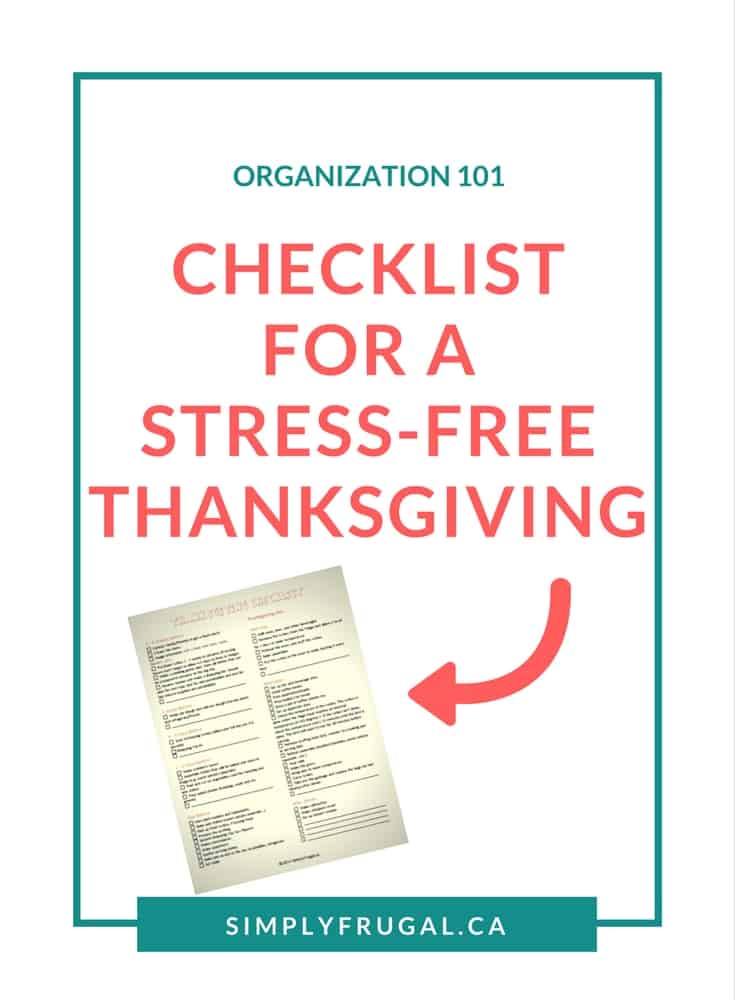
Since I know big family meals can be hectic (I’ve experienced many of my husband’s extended family get-togethers), I thought creating a checklist would be really helpful to those of you that want to cut back on some chaos.
This checklist doesn’t tell you what to cook (I trust you have your family favourites) but I’m hoping it will give you a guideline for when things can be completed. While I called this a Thanksgiving checklist, I think this checklist can be used for any holiday dinner.
How to Get a More Organized Kitchen in Just 15 Minutes
The kitchen is one of the easiest spaces to allow clutter to pile up. Since it is one of the busiest rooms in the house and there’s lots of counter space for stuff, it can quickly become overrun. So how do you enjoy a more organized kitchen without investing a ton of time? Luckily, there are a few tasks you can do each day in 15 minutes or less to help you keep a clutter free kitchen. Look at these tips on how to get a more organized kitchen in just 15 minutes and see what a difference they can make.
1. Assemble baskets for mail and paper work.
Kitchen counters can be a catch all for mail and school papers. Instead, place basketson the counter for these items to go in. Then, check in with these baskets daily so you can read letters, discard junk mail, and sort through papers as needed.
2. Remove all non-kitchen essentials.
So many non kitchen items end up in the kitchen throughout the day. Take a few minutes each day to remove these items that have crept in. Have everyone in the household help you return these items to where they belong. Toys, clothing, books, and other items that aren’t used in the kitchen can all be removed.
3. Choose one drawer a day and organize it.
Trying to tackle every drawer at once can be exhausting. Instead, choose one drawer a day and go through it, tossing what you no longer use or need. Use simple drawer baskets to keep the remaining items organized and easy to grab. Once you make your way through the drawers, take on one cabinet at a time and do the same thing.
4. Comb through Tupperware and organize tops and bottoms.
Storage containers tend to make a mess of kitchen cabinets. Take a few minutes to go through the storage containers and match up the tops and bottoms. Discard any pieces that don’t have a match or have been overused and showing a great deal of wear.
5. Arrange spices and cooking ingredients by alphabet.
Make your cooking ingredients easier to navigate when you organize them alphabetically. Organize your spices and dry goods by alphabet and line them up neatly so the next time you need them, you aren’t playing a game of hide and seek. I use a spice organizer like this in one of my cupboards and I love that it’s expandable.
6. Clear counters as much as possible, utilizing drawers and cabinets.
Remove all non essentials from the counter and place these items in drawers and cabinets. Keep your counters as open and clear as possible. Any item that isn’t used daily can be stashed away where it is out of sight and won’t take up a ton of room.
Are you ready for a more organized space? Consider these tips on how to get a more organized kitchen in just 15 minutes and see how simple getting organized can be!
What’s one area of your kitchen that drives you nuts? What are you going to tackle first?
Our summer should really start to get busy now! We have had family (cousins!!) arrive for almost the whole month. We’ve got a family reunion planned as well as other fun days for the kids. Us parents are pretty excited too because we like to think we’re still kids at heart ;).
On the home front, I’ve finally started to paint the walls in our new home! I’m literally working on one wall at a time so it’s going to be a very slow process. But you gotta do what you gotta do with young kids underfoot. The one wall I have completed makes me think I’m going to love the colour I chose. Speaking of paint, I bought the paint a month or so before we even moved because The Home Depot had a great rebate promotion going on that I didn’t want to miss. They run these rebates somewhat regularly, but this particular offer seemed to be of higher value than I remember. I couldn’t pass up those savings!
I’d love to hear how your summer is going so far. Any exciting things still to come? Let me know!
Here are the interesting links I came across on my travels around the web this week! Enjoy and have a great weekend!
It's no secret that I'm a huge fan of meal planning (and think you should be too 😉 ). It puts deciding what to cook on autopilot all week long. No more last minute trips through the drive thru or slapping together a so-so meal that everyone will complain about anyways.
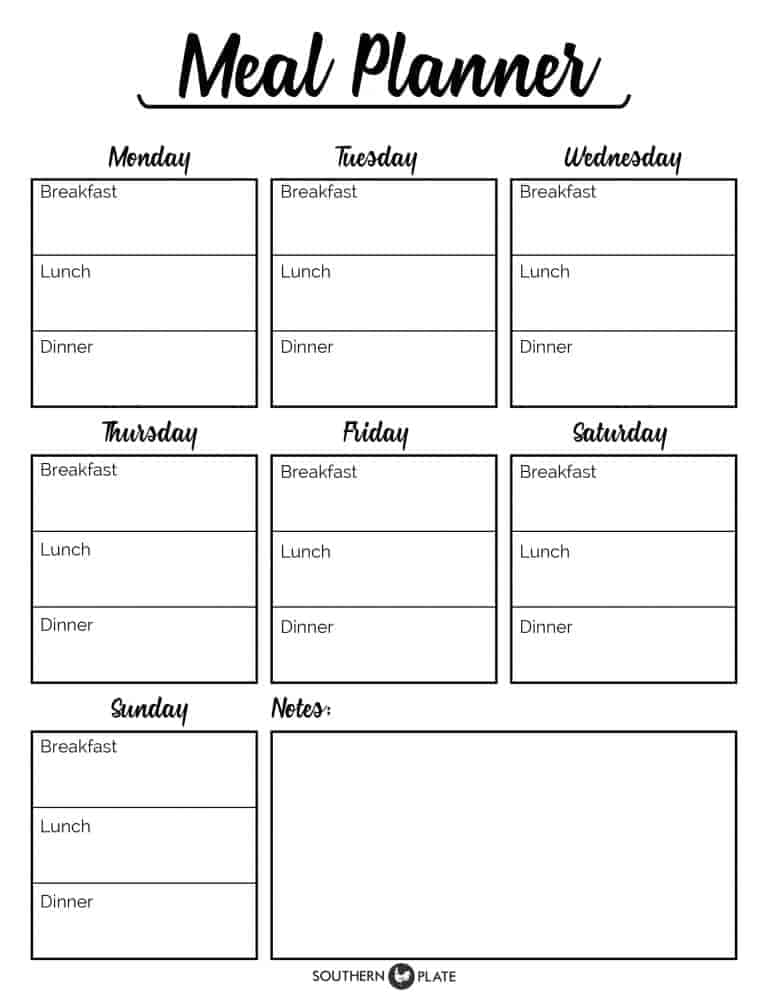
Jotting down your list of meals in a plain notebook or a scrap of paper is great, but did you know you can totally up your meal planning game? How? Well, with these 7 free printable weekly meal planners that will knock your socks off. I found some pretty amazing printables! All different kinds so there should be something to suit your specific needs.
Check them out and let me know which one is your favourite.
Now, this is a great idea! Use a dry erase marker to write out your menu for the whole week with this planner. Then, once the week is over, wipe it clear and start fresh for next week.
This one is from yours truly! I think it's fun and I love that there is space to jot down meals, your shopping list AND any prep work that needs to be completed! (Like remembering to take meat out of the freezer to thaw!)
Whether you’re new to meal planning or you’re just wanting to liven up the way you’re doing it, any one of these free printable meal planners will do the job perfectly.
Let me know what you think of these great free printable weekly meal planners!
PS: Looking for even more meal planning help? Check out this gorgeous printable MEAL PLANNERSET– with monthly, weekly + daily meal planning worksheets, brainstorming sheets, food inventory sheets, grocery lists, price matching sheets and more!
When you put all that hard work into your garden it can be really depressing to watch the fruits of your labor rot away. With some planning and a bit of work, you can preserve your garden harvest and have fresh from your garden fruits and veggies all year long. These three easy ways to preserve the food in your garden will do the trick.
Three Easy Ways to Preserve the Food From Your Garden
Freezing to preserve your garden
Freezing the produce from your garden is the easiest way to preserve your harvest. Wash your fresh produce and lay it out in a single layer on a cookie sheet in your freezer. This will allow each piece to freeze individually making it easier to get the produce from the freezer bags that you will place them in after the initial cookie sheet freeze. A great way to save time later is to prep your fruits for your favorite smoothies and freeze in single serving packs. Chop your veggies for soups and stews, freezing them together and label well so you can grab and go for a meal on a busy weekday. A food saver is a great way to prevent freezer burn and make your frozen produce last longer.
Drying to preserve your garden
Drying produce takes up less space than the other popular preserving options. when drying your fruits and veggies you are taking out the water and much of the bulk of the food. A good dehydrator is a great way to make your food last longer, make treats for your family, and prep for long term storage. Fruits make a great snack dehydrated while veggies reconstruct better for soups and stews than eating as a side dish. It is vital you are sure all water is out before storing. To check this, place in a plastic baggy and let it cool. If there is condensation in the bag, your food is not ready to store.
Canning to preserve your garden
Canning is one of the most traditional ways to preserve food from your garden. While it takes up more space than drying, canned foods have a longer shelf life than frozen foods. Many of us have fond childhood memories of watching our grandmothers can produce from the garden but never really thought about doing it ourselves. The good news is, canning is easy to start, inexpensive and costs less with each round you do when you reuse the glass jars over and over. Quality jars are a great investment.
Which method should I use to preserve my garden?
When choosing which preservation method you must consider:
Space you have for storage.
What the end use of the food will be.
How long you need to store the food.
Supplies you have on hand.
Protecting your food storage from pests and environmental issues is vital to make preserving your garden worth your time and money. Make sure all stored food is air tight and sealed in rodent-proof containers. For most families, combining these methods of food storage gets the best results across the board and leads to more stability. Canning fruits and veggies so they are ready to go, freezing produce prepped for meals, and drying fruits and meats for snacking is a great way to balance it out.