You may not have a great deal of land to plant on, or perhaps you don’t have the best soil conditions on the land you have. No worries. Did you know that you can still grow herbs indoors and enjoy the fresh taste and health benefits all year long? Growing your own herbs indoors is easy. Just take a look below at some helpful tips to get you started. In no time, you will have fresh and tasty herbs right at your fingertips.
Tips for Growing Herbs Indoors
Find a sunny spot.
You will want to place your herbs in a spot that gets a good 6 hours of sunlight a day. Take a few days to observe where the sun likes to settle in your home. That way, when your pots are ready you will have the perfect home for them. You also want to be sure the spot is away from heavy traffic or heat vents that can cause drying and damage.
Pick the perfect pots.
You can use various sized pots for your herbs, but your best bet is to keep one plant per pot. A 6-8 inch pot for each herb is perfect. Put some pebbles at the bottom of the pot for drainage and be sure your pots are placed on a saucer so catch any water drips.
Choose hardy plants.
Find plants that have strong stems, bright greenery, and are not withered or yellow. You also want to pick plants that have a moist yet tough root base. By choosing strong plants, you can make sure they are off to a strong start.
Pick easy to grow varieties.
If you are new to growing herbs indoors, try easy to grow varieties such as oregano, basil, and rosemary. All of these are quite hardy, don’t take up a great deal of space, and are easy to tend to. Chances are, they are also ones that you will use in your cooking most often!
Tend to your plants properly.
Always remove dried or spent foliage so the plant can use its energy elsewhere. Water as needed, keeping the soil moist at all times. Chances are you won’t need to weed your pots, but if you notice any weeds sprouting up be sure to grab them. You can add a few fertilizer pellets if you wish, being sure to follow package directions. To use your herbs, always take the foliage from the bottom of the plant, leaving the newer, younger greenery at the top to keep growing.
See how simple it can be to grow your own herbs indoors? Give these tips a try and you are sure to have herbs at your fingertips all year long.
If you have children, or just want to live a more natural lifestyle, you may not be interested in using chemical filled pest repellents. Instead, why not give herbs a try? Herbs pack some serious pest repelling power and can do the job without the risk of chemicals. Take a look below at how to get started using your own herbs to keep those pests at bay.
Herbs to Use for Pest Repellent:
1. Lemon Balm
Lemon balm smells great and it is perfect for keeping bugs at bay. Plant it around your patio or keep a pot of it on your picnic table. Mosquitoes will stay clear of it and you will be protected. You can also rub the lemon balm directly onto your wrists for extra protection.
2. Basil
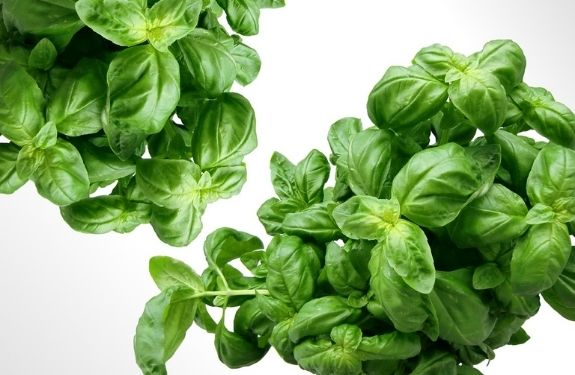
Flies hate basil! Plant a little basil in your flowerpots that decorate your patio or other social areas of your yard. This way, the flies will go elsewhere and let you entertain in peace.
3. Chives
Chives are not only tasty, but they repel a great deal of pests as well. Japanese beetles and aphids won’t come near them, so plant a plug or two of chives near the flowers you wish to protect from these pests.
4. Fennel
Fennel is tasty in your salads, but slugs and snails hate it. Plant a little fennel around blooms that these critters would otherwise devour. They won’t come near. It seems as though few plants repel slugs and snails, so this is one to try if these critters pose a problem in your yard.
5. Dill
You might plant some dill for your pickling needs, but it is great for pests too. Aphids and spider mites don’t stand a chance when dill is around. Tuck a plant or two in your potted plants and flower beds and never worry about them wreaking havoc on your yard.
Stop losing the battle with pests in your yard. Give these plants a try and enjoy a pest free yard the natural way!
Have you ever wondered how much money you can save when you grow your own herbs? The truth is, you can save a significant amount by growing your own as opposed to buying them at your local grocery store. And just think, with all of that money you save, you can buy that new patio chair you wanted, or perhaps some more flowers to beautify the yard. Take a look below at how the savings can break down for you and how much you can pocket after just one growing season.
First, let’s look at the cost of fresh herbs via your grocery store:
At my local grocery store, a small package of fresh basil is about $3. The cost of a basil plant at my local farmer’s market or greenhouse is $2. As it grows throughout the season, I can easily pick off three times that amount of leaves. So to buy 30 leaves fresh at my grocer it would be $9. Growing it on my own it costs $2.
Now, let’s look at the costs associated with growing your herbs:
To grow your herbs you will need some pots or land, soil, and fertilizer if you desire. You will also need to water regularly. While these supplies do cost money, they are not necessarily expensive and a little goes a long way. You can rest assured that growing your own herbs is inexpensive and does not take any real chunk of money out of your budget.
And remember, you only pick what you need:
When you grow your own herbs, you don’t pick them until you need them and you only pick what you need. This way, you avoid waste. If you bought a package of fresh herbs at your grocery store, you may not get to them all at once and some will certainly end up in the garbage. That’s like throwing money away! When you grow your own, you avoid this and only pick and use what you need for a particular recipe.
Over the course of a growing season, suppose you planted five herb plants at $2 each. For about $10, those five plants can easily grow $30 or more of fresh herbs. That is a wonderful investment and return on your money.
Try growing your own herbs and you will not only eat fresher, you will save money in the process.
Making your own marinara sauce for lasagna using fresh herbs and vegetables straight from the garden is a staple of authentic Italian cooking. The secret to a rich, flavourful red sauce is using ingredients picked at their peak ripeness. A “Lasagna Garden” in a container is a smart way to make the most of your space, letting you grow everything you need, even without a large backyard!
The star ingredient, the Roma tomato, thrives in container gardens. Known for its thick flesh and bold flavour, it cooks down beautifully into a rich sauce. Classic marinara also relies on fresh herbs like basil, thyme, oregano, parsley, along with garlic to bring everything together.
Use a large container
Plant your tomato in the center of a large container. The bigger, the better. Aim for a pot that’s at least 18 inches wide or holds a minimum of 10 gallons, since both tomatoes and basil grow quite large and need plenty of nutrients. Place thyme and oregano around the edges, where they can trail over the sides without taking up too much root space. Parsley benefits from a bit more room, so plant it between the thyme and oregano to give it space to grow.
Use quality potting soil
The secret to a thriving lasagna garden starts with high-quality potting soil and the right added nutrients. Mix in a fertilizer, such as Miracle-Gro, to give your plants the boost they need to grow strong and healthy. Reapply the fertilizer about every three weeks by adding it to your watering can.
When you first plant your garden, water deeply until you see it draining from the bottom of the container. To make sure the moisture is reaching the roots, insert a stick into the soil and check how far down it’s wet. You’ll want the moisture to reach at least 6 inches deep. If it doesn’t, keep watering until it does.
Plant garlic chives
Growing garlic can be a bit tricky, especially depending on your climate. If it doesn’t thrive in your area, garlic chives are a great alternative. They offer a mild garlic flavour and their bright green stems add a fresh pop of colour to your sauce. Even better, they grow easily along the edges of a container.
Find sunlight
Make sure your lasagna garden gets at least six hours of sunlight each day. During especially hot summers, you may need to move your container into partial shade. Using planter wheels can make this easy, allowing you to shift your garden around to follow (or avoid) the sun as needed.
Enjoy your lasagna garden and happy container gardening!
Time for another container garden update! I have some successes and some “failures” to share this time.
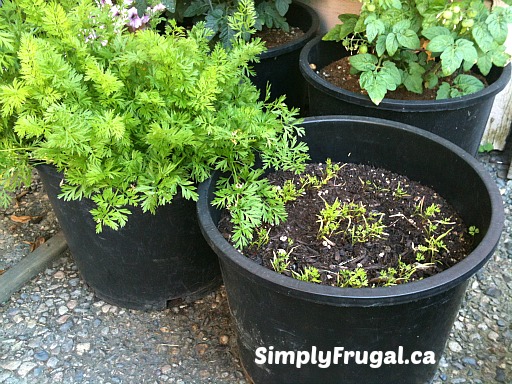
Half success and half failure are my carrots. One container is doing wonderfully, while the other has looked this way since the beginning. I’m not quite sure what to do. Should I pull them or wait it out? Maybe I’ll replant, but I’m not sure there’s enough growing season left.
Both tomato plants are doing really well! Lots of little green tomatoes and one red one waiting to be picked!
My potatoes are growing like crazy! Just after I took this picture, I added some much needed soil. I’m so curious to know what’s going on under the soil. Will I see potatoes when I harvest??
The beans are doing well and look sort of pretty with the orange flowers! But, unfortunately, I had to pull the peas that were sharing the container. They just weren’t doing well at all. Most likely because I neglected watering them for a couple of days. I should really take my own advice that I shared in this post: 5 Container Gardening Mistakes to Avoid.
Uh yeah, my lettuce looks pretty sad doesn’t it? I let the lettuce grow too much before I picked them so I decided to cut it all down with my kitchen shears to get them to grow again. We’ll see!
How is your garden growing? What are your successes and failures?