Organizing all the closets in your home can seem daunting, but I'm here to tell you that it is possible to whip them into shape in one weekend. Dedicate one weekend to closet organization and you will be so pleased with yourself come Monday morning! There's also no need to order fancy and expensive closet organization systems. It's totally doable to organize closets on a budget, in a weekend! While you may need to enlist a friend to be the objective voice of reason (as to whether to keep or toss something), it can be done!
Start with the clothes closets.
In each clothes closet (bedrooms, entry coat closet etc.), you’ll need to go through the contents and sort each into like piles (clothes, shoes, accessories, etc.). You’ll also want to make a few other piles for items to donate, return to original owner, or toss. Deciding what gets the axe can be hard, and is the most time-consuming part of the whole process. If you just can’t do it, this post I wrote might really help you out!
Next, you’ll want to hang everything by category (tops, bottoms, dresses, etc.). Keep in mind that if you hang everything on the same style of hanger, the clothes will line up evenly, which matters aesthetically, but also keeps clothes wrinkle-free.
Keep all of your shoes in one place, whether that’s a hanging organizeror a shoe rack. Some people use a cubby system, while others use clear plastic boxes. Whatever floats your boat!
Be sure to save room for accessories, hats, gloves, scarves and even jewelry. Use containers to keep them wrangled in one place, or hang hooks on the wall, if room allows. Your perfect solution to organize closets on a budget might be found at the dollar store!
Move onto the bathroom linen closet.
This is a closet that I highly recommend you take the time to sort, toss and donate from. It’s typically a tight space, so why waste precious real estate on expired medicines and cosmetics, or threadbare linens?
Once you have the items you are going to keep, designate a first aid container and label it so that anyone visiting your home can access these items if needed.
Keep cosmetics together and group them into containers based on what they are (This includes bath, body, and hair products.) Purchase an over cabinet door hair dryer & styling tools organizer to keep your tools off the counter.
Fold all of your linens as similarly as possible and as compactly as possible. I like to roll our towels.
Next, tackle the kids’ closets.
You’ll handle these the way you handled the other clothes closets with a few additions.
Stack any games or puzzles that live in the closet by size and put any other toys that would normally end up in there inside of containers on the top shelf.
Depending on the size of the closet, you can put a large, plastic tote on the bottom for outgrown items that you plan to hand down to another child, or you could set up a cubby shelf for toy, book, shoe or accessory storage.
Finally, organize that pantry!
Sort the items into categories and set aside foods you intend to donate. Check the dates on everything. You have to make sure all food, including spices, are still good. To really get on top of your pantry organization game, use matching containers (either labeled or clear) to house cereal, pasta, rice, flour, sugar, coffee and other items of this nature. If you have workout supplements, baby items or pet supplies, be sure to separate them into different spaces.
Now exhale! While your house may still have clutter to handle, you can focus on those areas another weekend. It's totally possible to organize closets on a budget in a weekend! The main take aways are: declutter first, then group like items together. There may not even be a need to purchase any supplies to organize! You've got this!
What to do when you're overwhelmed by your messy house
At this moment, my house is not in tip top shape. In fact it feels quite chaotic to me. In some sense, I've come to terms with the state of my home because of the season I'm in with young kids at home. However, there are days when I find my home quite overwhelming and something needs to be done before my sanity is jeopardized. 🙂 A clean and tidy space makes for a happier mom.
So today I give you four QUICK things that you can do when you're overwhelmed by your messy house:
Make the beds
Fluff the pillows, throw the covers back on. Doesn't have to be perfect, but having the beds made makes me breathe easier. Even when there are piles of laundry on the floor! The bed is the biggest visual surface in a bedroom, so having the bed made creates calm for your eyes.
Clear off the outside of the fridge
Art work, shopping lists and magnets galore. I love displaying my daughters' art work from school and the fridge is just so convenient for having my grocery list. But once in a while, a good wipe down is necessary and I don't bother to put anything back up for a while afterwards.
Sweep the floors
One word. Crumbs. Everywhere! Nothing irritates me quite as much as stepping on some crumbs and having them stick to my bare feet. Ewww! Because of this, I try to sweep the floor every day and vacuum at least once a week. I'm amazed at how much better I feel after the floors have been swept.
Clear the kitchen counters
This is a constant battle of mine. Our kitchen doesn't have a lot of counter space so anything extra on it makes it more difficult to do every day tasks. Needless to say, our kitchen counters are a drop zone for school papers, mail and dirty dishes. While it's a never ending battle, I try to clear off as much "extras" as I can on a daily basis. Getting the dishes done (with my favourite dish soap) is also key!
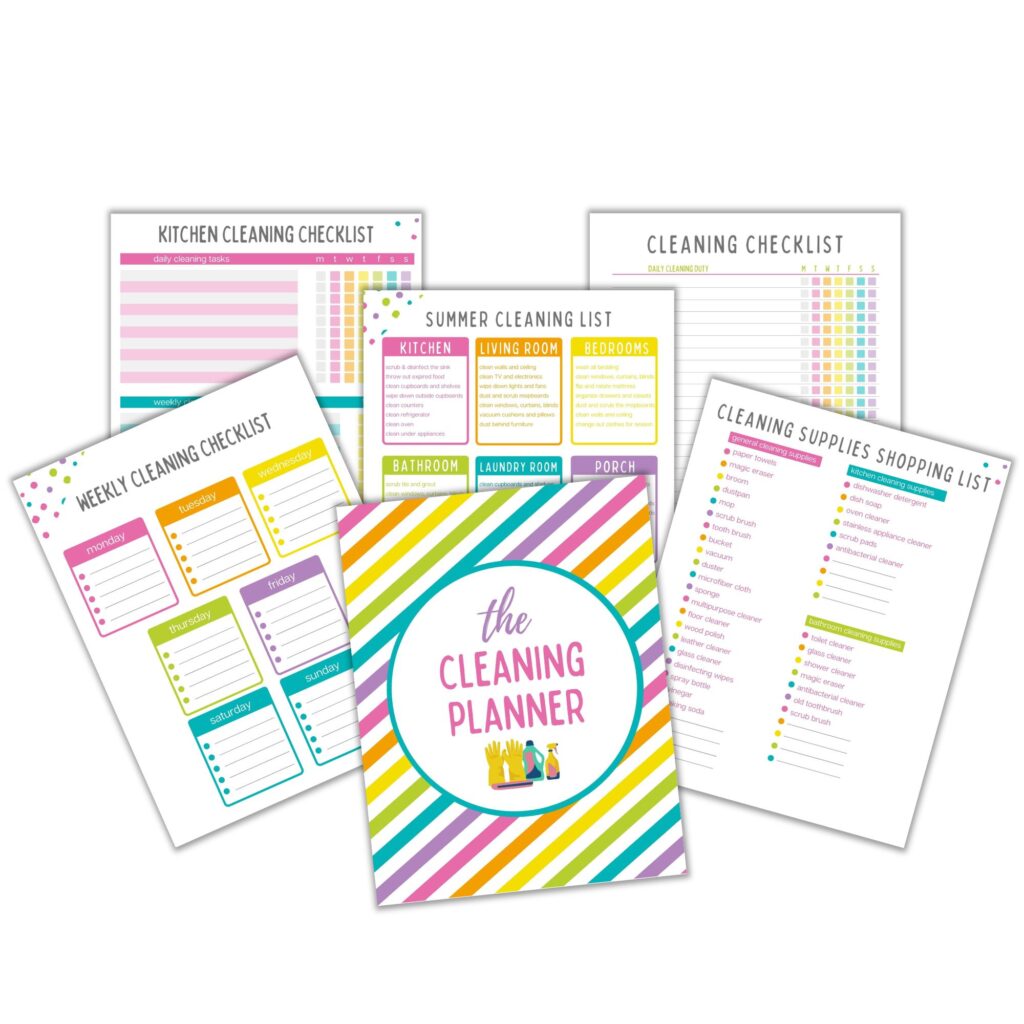
Another thing that really helps me when I'm overwhelmed or paralyzed by my messy house? I create a plan to stay focused! Check out this fun HOME CLEANING PLANNER – with room by room checklists, daily + weekly task lists, and seasonal cleaning checklists to make sure it all gets DONE in a systematic way!
What sort of things do you like to do when you're overwhelmed by your messy house?
Are you hoping to add some new vegetable gardening books to your library this year? If you are, I've rounded up a great selection of the best vegetable gardening books for those of us in Canada! These are must-haves if you are looking for inspiration for growing the best vegetable garden, no matter what size of space you are working with!
10 of the Best Vegetable Gardening Books
This book by veteran Canadian garden writer Doug Green is full of information that will educate Canadian gardeners in all aspects of planning, installing, planting, and caring for their new garden. Gardeners will learn how to ensure their garden is eco-friendly and how to save money by storing, canning, or freezing the bounty of the garden. With hundreds of full colour pictures, Guide to Canadian Vegetable Gardening is sure to be the standard for Canadian gardeners for years to come.
When he created the "square foot gardening" method, Mel Bartholomew, a retired engineer and efficiency expert, found the solution to the frustrations of most gardeners. His revolutionary system is simple: it's an ingenious planting method based on using square foot blocks of garden space instead of rows. Gardeners build up, not down, so there's no digging and no tilling after the first year. And the method requires less thinning, less weeding, and less watering.
The first frost used to be the end of the vegetable gardening season — but not anymore! In The Year-Round Vegetable Gardener, Nova Scotia–based gardener and writer Niki Jabbour shares her secrets for growing food during every month of the year. Her season-defying techniques, developed in her own home garden where short summers and low levels of winter sunlight create the ultimate challenge, are doable, affordable, and rewarding for gardeners in any location where frost has traditionally ended the growing season.
Smith’s legendary high-yield gardening method emphasizes wide rows, organic methods, raised beds, and deep soil. Succeed with fussy plants, try new and unusual varieties, and learn how to innovatively extend your growing season. With thorough profiles of hundreds of popular varieties, The Vegetable Gardener’s Bible provides expert information and an inspiring roadmap for gardeners of all skill levels to enjoy abundant homegrown vegetables.
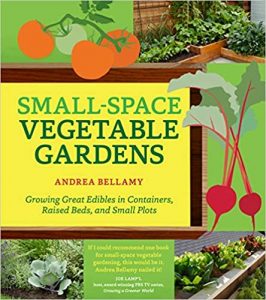
Small-Space Vegetable Gardens explains the basics of growing a bounty of edibles in a minimal amount of space. Andrea Bellamy shares all the knowledge she’s gained from years of gardening small. You’ll learn how to find and assess a space, how to plan and build a garden, and how to sow, grow, and harvest the 60 best edible plants. This hardworking and enthusiastic guide will help you take advantage of the space you have—whether it’s a balcony, a patio, a plot in a community garden, or even a small yard—to create the food garden of your dreams.
Vertical solutions deliver more yield in fewer square feet, especially perfect for the urban gardener. They're less work, too, so you can forget all-day weeding and watering. Some vegetables, such as tomatoes and pole beans, have been grown vertically for a very long time, but those who need to maximize space can grow almost any type of plant vertically—from melons and squash to carrots, peppers, and pears. Vertical Vegetable Gardening is your thorough guide for growing all types of leafy, root, and other vegetables vertically.
Your patio, balcony, rooftop, front stoop, boulevard, windowsill, planter box, or fire escape is a potential fresh food garden waiting to happen. In Grow Great Grub, Gayla Trail, the founder of the leading online gardening community (YouGrowGirl.com), shows you how to grow your own delicious, affordable, organic edibles virtually anywhere. Whether you’re looking to eat on a budget or simply experience the pleasure of picking tonight’s meal from right outside your door, this is the must-have book for small-space gardeners—no backyard required.
Savor your best tomato harvest ever! Craig LeHoullier provides everything a tomato enthusiast needs to know about growing more than 200 varieties of tomatoes, from planting to cultivating and collecting seeds at the end of the season. He also offers a comprehensive guide to various pests and tomato diseases, explaining how best to avoid them. With beautiful photographs and intriguing tomato profiles throughout, Epic Tomatoes celebrates one of the most versatile and delicious crops in your garden.
With Lasagna Gardening for Small Spaces - you can create the garden of your dreams, no matter how limited your growing space is. Pat Lanza's proven lasagna gardening method produces amazing results in pots and small plots. Even in beds just 4 inches wide, you can grow bountiful, beautiful gardens with no digging, no weeding-- no kidding!
Homegrown Pantry picks up where beginning gardening books leave off, with in-depth profiles of the 55 most popular crops — including beans, beets, squash, tomatoes, and much more — to keep your pantry stocked throughout the year. Each vegetable profile highlights how many plants to grow for a year’s worth of eating, and which storage methods work best for specific varieties. Author Barbara Pleasant culls tips from decades of her own gardening experience and from growers across North America to offer planting, care, and harvesting refreshers for every region and each vegetable.
What are the best vegetable gardening books that you can recommend?
Here's a GREAT printable planner from The Confident Mom! It's a printable 2024 weekly household planner! If you are looking for help with getting household tasks completed, check out this planner and support a Mom working from home!
The Confident Mom Weekly Household Planner breaks down household tasks into manageable daily and weekly bite-size pieces, utilizing smaller increments of time to keep the tasks from becoming too large and overwhelming. Most of the items can be easily completed in 3 to 30 minutes, and you can select appropriate items to delegate to family members (after all, even with the household planner, you still can’t be “super mom”).
No stone is left unturned because the household planner has a variety of suggested tasks staggered at appropriate intervals and includes everything from meal planning to items often forgotten such as checking your credit report to school shopping. Taking care of yourself should also be a priority, so there’s even “you” time on the list! You’ll be able to efficiently keep up with the tasks that can often be forgotten and feel prepared each morning with a realistic “to-do” list.
Don’t like one of the suggested tasks already filled out for you? Then simply digitally edit the file to remove or add your own task to create your own completely customized list.
Stain Removal Guide: 7 Common Stains and How to Remove Them
The threat of stains is everywhere. Every time we eat, go outdoors, do a DIY project, or even do office work we encounter things that can ruin our clothing in a flash.
Because money can be tight and no one wants to have to toss away clothing, it's important to know how to approach these stains and effectively treat them.
Take a look below at 7 common stains and how to remove them so you'll be ready to tackle stains in the future and make sure they don’t get the chance to set in!
Use this stain removal guide to learn how to treat common stains:
1. Grass.
Pretreat the stain using an oxygenated cleaner. (I love Baby OxiClean. It seems to work better than the regular OxiClean!) It will help cut through the grass stain immediately. You'll then want to use a color safe bleach to wash the stain away, using the hottest water setting in the process. For grass stains, you may need to treat the stain twice to fully remove it.
2. Blood.
One of the best ways to treat blood stains is to pre-treat it with cold water. Soak the garment in cold water to help release the stain. You can then treat with a color safe bleach to help remove what remains of the stain.
3. Grease.
A tried and true way to treat grease stains is the use a grease fighting soap such as Dawn as a pre-treatment. Fill the sink with warm water and grease fighting dish soap and allow for the garment to soak. When you launder, use hot water and an oxygenating cleaner.
4. Chocolate.
Did you get melted chocolate on your clothing? No problem. For chocolate stains you will use a hot/cold method. First you can harden the chocolate with ice, then scrape off what you can. Soak the garment in cold water, but wash the item in hot water using an oxygenated cleanser.
5. Wine.
Immediately blot the stain with a soft cloth soaked in club soda. You want to then soak the garment in cold water. Pretreat the stain with an oxygenated cleaner and then use a color safe bleach when you launder the item. Bleach based stain sticks can help treat the item a second time if the stain persists.
6. Ink.
Have you ever heard that hair spray can help release ink from your clothing? It’s true! Take basic hair spray and spray it onto the ink stain. It will help release the ink. Blot the ink with a paper towel and launder as usual. If you don’t have hair spray, you can use rubbing alcohol.
7. Gum.
When gum becomes stuck to clothing it can become a gooey and sticky mess quickly. The best way to remove gum from clothing is to hold an ice cube to it. The ice will harden the gum, making it easier to pull away from the clothing. Hold an ice cube for a few minutes to the gum, peel it off, and wash as usual.
The next time you encounter a stain, you'll be prepared when you use this stain removal guide! Keep these tips in mind for removing common stains so when a stain hits, you don’t need to worry about throwing that clothing item into the trash.
Do you have any secrets to share for this stain removal guide? Let us know in the comments below!
I'm a weirdo, but I actually enjoy cleaning. It's a nice way to "take a break" from working or loud kids. Now, this doesn't mean I have a perfectly clean house. Not at all. I did mention I have kids... Regardless, a clean home makes me feel happier when our family can make it happen.
Perhaps you're like me. You enjoy a clean house, but maybe you struggle with knowing how to get it done. Luckily, there’s an easy way to keep your home neat and tidy without cleaning all day long.
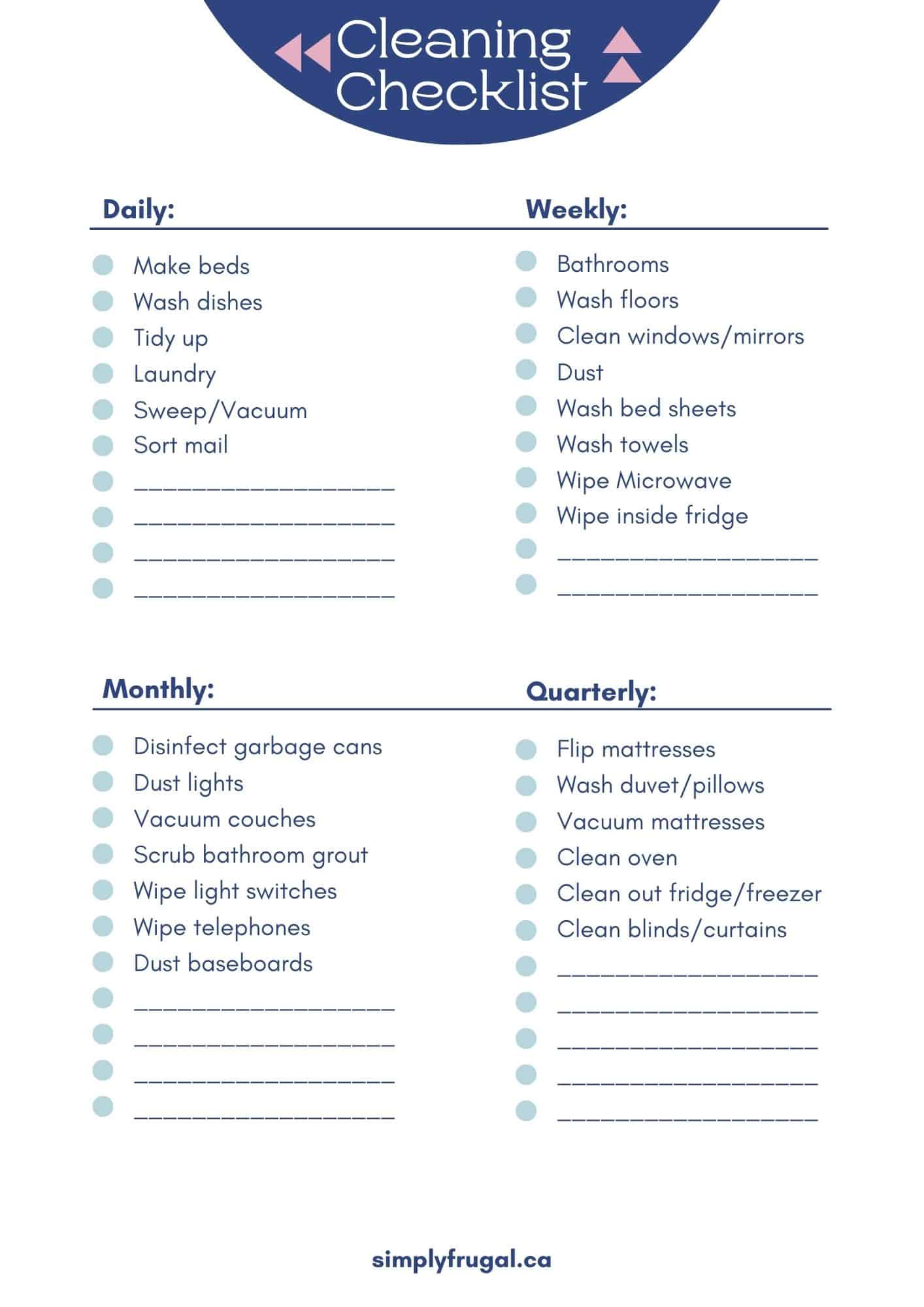
I had fun creating a Printable House Cleaning Checklist that I thought you might enjoy! The printable house cleaning checklist includes daily, weekly, monthly and quarterly cleaning suggestions to help you take the guess work out of keeping your home clean.
Looking for even more help especially as life gets busy? Check out this gorgeous HOME CLEANING PLANNER – with room by room checklists, daily + weekly task lists, and seasonal cleaning checklists to make sure it all gets DONE!