Sometimes, the secret to saving money is actually spending a little more money in the first place.
As long as you spend it on the right things, that is.
That might sound illogical, but in reality, it can make a lot of sense when you start thinking about long-term savings.
This is where thoughtful, intentional spending comes in to play.
In this article, I'm not going to be talking about gadgets that you will only use once, like a Cake Pop Maker for example. I am going to list out products that you will use time and time again, allowing you to see financial savings in the long run. Smart purchases that will save money in the long run!
On that note, to help you save cash and satisfy your gadget purchasing desire, I've rounded up 22 smart purchases that will end up saving you tons of cash in the long run. The best part? They don’t require you to change any of your everyday habits.
Smart purchases that save money:
Low flow shower head - Why not have a great shower and save water at the same time? A low flow shower head doesn't cost a lot to replace, but the savings on your water bill will really pay off in the long run!
LED light bulbs - While they cost more upfront, LED lightbulbs are a smart choice in your home. they save money on your energy bill and last way longer than incandescent light bulbs. There are many different options to get just the right color warmth that you like.
Solar powered outdoor lights - Light up your yard to add safety and ambiance by using solar powered outdoor lights. Once purchased, these won't cost a cent on your energy bill!
Drying rack- Do we always need to use the dryer? You can save a lot of electricity by using a drying rack instead! You will also find your clothes last longer too. If you have yard space outside to have a drying line, this is a fantastic way to dry stuff
Smart thermostat - Monitor your energy usage easily with a smart thermostat in your home! This will adjust heating/cooling according to your schedule. You can even control it from anywhere using your Android or iOS device. No more heating and cooling an empty house when you’re gone!
Reusable food storage bags - Stop throwing plastic bags (and money) in the trash. These reusable storage bags are easy to clean and ready to use for a long, long time. I especially like that these ones are self-standing...makes it easy to fill!
Brita water jug - Very, very rarely will we buy bottled water. We do, however, use our Brita every single day. We fill up glasses at home or fill our reusable water bottles for adventure days.
Reusable water bottle - Speaking of reusable water bottles, never buy bottled water again! I really like this Simple Modern one. My daughter uses it for school and dance and it never leaks! Even when it's on its side.
Air fryer - Hear me out on this one. It might seem like a gadget, but our air fryer has really made my life better. It has made lunch making and heating up leftovers a breeze. Let's not forget to mention that it saves so much money because I'm not getting takeout as often!
Wool Dryer balls - These don't seem like anything special, but this is one of those purchases that save money like crazy. They save money on fabric softeners and dryer sheets because they soften naturally. They also lessen the drying time needed so they will save you money on your energy bill.
Rechargeable batteries - If you find yourself going through batteries often, investing in rechargeable batteries is a smart idea!
Fire TV Stick has been a TOTAL game changer for us! We bought one when we decided to eliminate cable tv. It plugs into the back of your tv and has a homepage for all your streaming services. Save a TON of money with the free tv apps it offers.
Hair clipper kit - This one might not be for everyone, but we have saved a lot of money by cutting my husband's hair at home. I give him a very basic hair cut every 6 weeks or so and he's always pleased as punch.
Vacuum Sealer - How many times have you thrown away foods that are so badly freezer burned? Well, say goodbye to freezer burnt food by investing in a vacuum sealer. Once you've sealed your food, toss it in the freezer and you'll find it stays fresher for so much longer.
Reusable K Cup Coffee Filter - Those little K-Cups can really add up after awhile! If you own a Keurig machine, think about buying a reusable k-cup coffee filter so you can buy your favourite grounds to use in the filter. You'll have delicious coffee and save money!
TubShroom - I don't even remember how I came across this in the first place, but I purchased a TubShroom and LOVE it! It's been years since we've been using one and I will never go back to an ordinary drain protector. It catches so much hair. I'm convinced that this is one of those purchases that save money in the long run.
Makeup remover cloths - I really like those disposable, pre-moistened face towels so I really think these makeup remover cloths would be just as convenient. Plus, they're reusable of course!
Personal finance books - I've got a list of highly rated personal finance books right here. First though, why don't you see if your library has any copies available?
Memberships - Do you find yourself often visiting the same places and paying the daily rate? It might be time to purchase the membership! Buying a membership to places that you frequent often can save you so much money in the long run. Think swimming pools, science centers, amusement parks and more!
Drain snake - Having a drain snake on hand will without a doubt save you money on expensive drain cleaners that don't necessarily work. Not to mention, a drain snake could save you having to hire a plumber too!
Bamboo towels - These bamboo towels are such a great idea. Especially if you think it will be hard to get away from using regular paper towels. These bamboo towels are washable and can be used just like how you use regular paper towels.
Fabric Defuzzer - Before you discard of any pilled sweaters or even furniture, try a fabric defuzzer! For less than $15, you can save your favorite things and make them look brand new again with this simple tool!
In conclusion, making smart purchases that prioritize quality and durability is not just a matter of saving money in the short term; it is a strategy for long-term financial well-being. By choosing products that stand the test of time and offer lasting value, you can enjoy the satisfaction of smart purchasing decisions that will contribute to your financial stability. As well as taking steps to be a more intentional consumer.
What are some smart purchases that you would add to the list?
Living frugally is really just about making small, smart choices throughout the day. From morning to night, those little habits can add up to big savings over time. Curious what that actually looks like? Let’s walk through a typical day in the life of a frugal person and the simple things they do to save money without overthinking it.
Our frugal person skips the $5 coffee shop run and makes their coffee at home instead, saving a ton over time. When they want something a little more fun, they’ll whip up their own homemade coffee creamer. Of course, they’ve also got a reusable mug they use again and again, whether they’re at home or heading out.
2. Looks at the Meal Plan.
This frugal person creates a meal plan every week with their Meal Planner Kit. So every morning they double check the plan to see what they might have to pull out of the freezer or pick up at the grocery store in order to stay on track. The meal plan saves them hundreds of dollars each month and keeps them sane at the dinner time hour.
3. Check the Gas Buddy app.
Before heading out to run errands, our frugal person does a quick check on the free GasBuddy app to see where gas is cheapest. When they spot a good price in their vicinity, that’s where they fill up. Simple as that!
4. Turn on the slow cooker.
There won’t be any take out traps for this frugal person tonight thanks to their meal plan. Instead, they toss some chicken, fresh vegetables, and broth into the slow cooker for dinner. She uses canned broth from the stockpile, veggies from the garden, and chicken she bought on sale.
5. Scour the sales.
Our frugal person checks the weekly grocery store flyers to see what's on sale that week. They then match the sale prices with the coupons they have on hand. This helps them to make their shopping list for the week while keeping the budget in check. They love the Budget Planner for keeping track of their budget categories and savings goals.
Afternoon:
6. Enjoys a homemade lunch.
Whether they’re at work or out and about, our frugal person brings a homemade lunch. Today it’s a taco salad made with leftover ground beef from last night’s burgers. They also stick to a refillable water bottle, skipping pricey sugary drinks and saving money without even thinking about it.
7. Swing into the local thrift store.
Frugal people love thrift stores to look for gently used items at a fraction of the price of new. Today, our frugal person finds some frames that can be spray painted to match their décor as well as a table lamp they can use on the night stand. For about $7 total they walk out the door so happy!
8. Give the house a quick clean.
Our frugal person keeps cleaning simple and budget-friendly. They use a few affordable staples like vinegar for windows and baking soda for sinks and drains. Rather than buying a bunch of specialty cleaners. A quick wipe keeps faucets looking shiny, and a little attention to the drain helps prevent odors before they start.
9. Snag some free reads.
Our frugal person loves looking on Amazon for free eBook downloads. They also love to swing into the library to borrow free movies, CD’s, magazines, books, and so much more.
Evening:
10. Dinner is served.
Our frugal person serves their thrifty dinner. They use cloth napkins instead of buying disposable paper. They serve lemon water or powdered drink mixes which cost less than pop or premade juices. When done, they will load the dishes into the dishwasher but wait until it's full before running it.
11. Inexpensive entertainment.
Our frugal person loves finding free things to do, so they always check local listings for ideas. They spot a free outdoor concert and a movie downtown that night. They also keep an eye out for discount days at the theatre. Of course, local parks are always a go-to for easy, no-cost fun.
12. Cheap dessert.
No day in the life of a frugal person is complete without a sweet treat. That's why our frugal person signs up for the email lists of all her favorite brands and local restaurants. This way, they get all sorts of coupons and special offers sent to them. Tonight they have a B1G1 FREE coupon to their favorite ice cream parlour. So tonight, they get to enjoy dessert for less!
13. Lights out!
Now that it is time for bed, our frugal person turns down the thermostat so it won’t work as hard at night while they are sleeping. They take a warm shower before bed, using a shower timer and a low flow shower head so they don't waste as much water.
Our frugal person is off to sleep, probably pretty happy thinking about all the money saved that day. Could this lifestyle be for you? Try a day in the life of a frugal person and see how it feels for yourself.
I'd love to know what a day in your life as a frugal person looks like. Let me know in the comments below!
"Why can’t I save money? I should be able to do it…”
Do you find yourself asking that question a lot?
You make a decent salary, many others would be happy getting paid as much as you. Maybe you have a few debts, but nothing that's not manageable.
So why can't you seem to put any amount into savings? You know something needs to change.
But don't be discouraged! Many people are in your situation. Whatever your salary, you can save some of it.
Let's take a look at some reasons why you can't save money along with solutions:
1. You were never taught how to save money
We're not generally born with good money sense. This is something that has to be taught and practiced. If you were never taught how to save money beginning at a young age, it's quite possible you still don't know how to save money as an adult.
Solution: The good news is that you can still learn how to save money! You can do this by reading helpful articles, tracking your spending, and implementing smart money habits with the tips you learn.
2. You are an impulse spender
Spending money is fun. I get that, I really get that. There are studies out there that prove that shopping can be therapeutic. But did you know that dopamine (the feel-good hormone), is actually released before you make a purchase? It begins before the purchase happens. You don't even have to make a purchase to get that good feeling. If you find yourself making impulse purchases to make yourself feel better, this could be a reason why you can't save money.
Solution: Just browsing or window shopping can positively impact your mood and release dopamine. If you find yourself making many impulse purchases, take 48 hours, a week or even 30 days to think about a non-essential purchase. You might be surprised to discover that you don't actually need that item and feel content leaving it at the store.
3. You don't track your spending
A big reason why you can't save money might be because you aren't tracking what you spend. When you track your spending, you can track overspending and you can eliminate wasteful spending habits. This is also a great way to discover you are paying for a subscription that you no longer use.
Solution: Use a notebook or a simple app to write down your expenditures. You might also find the idea of a Spending Journal perfect.
4. You don't use cash
One possible reason why you can't save money might be because you aren't using enough cash. You mostly swipe that credit or debit card. I know when I have cash in my wallet, I think harder about any purchases I want to make. I often decide I don't need something when I think of the bills leaving my wallet.
Solution: Start using cash. This doesn't mean you need to use cash for every single thing. (there can be benefits to using credit cards.) But perhaps you can try using cash for your clothing or entertainment budget. I have a set of printable cash envelopes and spending trackers that might be useful too.
5. You are dealing with lifestyle inflation
Lifestyle inflation or lifestyle creep is when your expenses increase along with any increase to your income. Maybe you think every time you get a raise or receive a promotion, you deserve to treat yourself with something new. For example, with your increase in income, you might think a new car is a good idea. But really, this just means the more you earn, the more you spend.
Solution: Take the time to learn contentment. If all of your basic necessities and bills are taken care of, with any increase to your income set up automatic deposits to your savings account with the difference. You should start seeing a healthy savings account grow!
6. You think you need something you want
A house is something you need and a car is something you need to get to work. (Although, we often overspend on this necessity because we want a certain vehicle, when we can simply focus on one that we need. Which is any reliable vehicle, really.) A fridge is something you need but a 65′ TV is something you want. Not knowing the difference between and need and a want can be the reason why you can't save money.
Solution: Take a hard look at your thought process when it comes to purchases. Is it something you need or is it something that you want? If it's something you want, start saving your dollars so you can purchase it guilt free.
7. Everyday expenses are rising (inflation)
As I'm sure you are aware, we are seeing big price inflations on pretty much everything these days. Housing, groceries, gas... While you can't stop it, there are things you can do to alleviate the pressure on our wallets. (I like this article on the causes of inflation, if you're interested to read more.)
Solution: Think of this as an opportunity to be creative. Think about ways you can create more income. Or trade your garden vegetables for fresh eggs from your neighbor. Go through your expenses with a fine tooth comb to weed out the expenses that are not 100% necessary in this season. Consider eating more vegetarian meals. Brainstorm to get your creative ideas going.
8. You don't have a savings goal
Having a savings goal in place for something specific can be a great motivator. When you are just putting money into the bank for the sake of putting money into the bank on a regular basis, it can be easier to withdraw for unimportant reasons. When you implement a savings goal, you are more likely to save more money. It helps to create healthy and productive money habits.
Solution: Implement a savings goal. An emergency fund is a common, but great savings goal to start with. Once you've established your emergency fund, you can move onto paying off a debt. Then you can keep going with something else. Like a vacation fund, or new appliance fund, or a new to you car fund. With a goal in place, you'll start to see how every money decision impacts your greater financial health.
One thing is for sure though, if you’re struggling to save money, you’re not alone. With the help of these 8 solutions, you'll be well on your way to reaching your savings goals. Which of the 8 reasons do you resonate most with?
The biggest shopping day of the year is about to happen in a few weeks. I'm pretty sure it now rivals and perhaps beats out Boxing Day sales in Canada. Black Friday can be a fantastic time to score great deals on Christmas gifts. It can especially be a great time to shop if you know a few tips and tricks to make your shopping successful.
Here are 9 useful Black Friday shopping tips:
Bookmark my giant Black Friday post
Coming up next week, I will have my annual list (it's giant!) of Canadian Black Friday deals. Simply peruse the list to find the stores that interest you, click the links, then start shopping from the comfort of your own home!
Buy discounted cards for the stores you will be shopping at.
Go shopping with discounted gift cards instead of cash to save yourself some moolah! There are many stores like Real Canadian Superstore/Loblaws, Rexall and Shoppers Drug Mart that offer discounts on gift cards for stores such as Old Navy and Gap during their weekly sales. You might also want to take a look at CardSwap.ca for discounted gift cards.
Ditch the big shopping cart if you're shopping in-store.
Just don't even think about getting one of those large cumbersome shopping carts if you plan on shopping in-store. Grab a basket or bring a large reusable shopping bag (IKEA bag anyone?) to avoid collisions or getting stuck in an aisle when you just want to get in and out of the store as quickly as possible.
Make your shopping list in order of importance.
Is Santa promising to bring a Lego set this year? You better put that first on your shopping list! By making your shopping list in order of importance, you're really helping yourself to not forget that all important gift.
Sign up for emails for the stores you will be shopping at.
Whether you're shopping in-store or online it can be extremely valuable to sign up for the email list of the stores you will be shopping at. Almost certainly, they will include coupon codes or coupons you can print/show on your phone for an extra discount. Often times email subscribers can also start shopping the sales earlier online.
Shop online.
The same sales are typically available online too, save for the extreme doorbusters. Save yourself some time and energy by shopping from the comfort of your own home. (This is my preferred method ;))
Join loyalty programs
Might as well join the loyalty programs for the stores you will be shopping at if you haven't already! Collect points that can translate into free items or even extend certain perks. (I'm thinking the TJX card from Winners.)
Shop online at Amazon.
Because I'm such a fan of online shopping, I usually check Amazonfirst. Black Friday will be no different because I find that they usually have some great one day deals. Another Amazon tip: Use Honeyto track Amazon prices so you can see how today’s Amazon price compares to the last 30 days. You can even use the Droplist feature which allows you to save items you're interested in and once Honeydetects a lower price, they'll let you know.
Set a budget and stick to it.
You're really not getting any deals per say, if you put yourself into debt trying to get the latest and greatest thing. If you've created a shopping list, it should be easy to stay within budget because you have an idea of the price of each item. Don't ruin your holidays worrying about debt! There's rarely any deal that is worth that amount of stress.
Do you shop on Black Friday? I'd love to hear your Black Friday Shopping tips in the comments below.
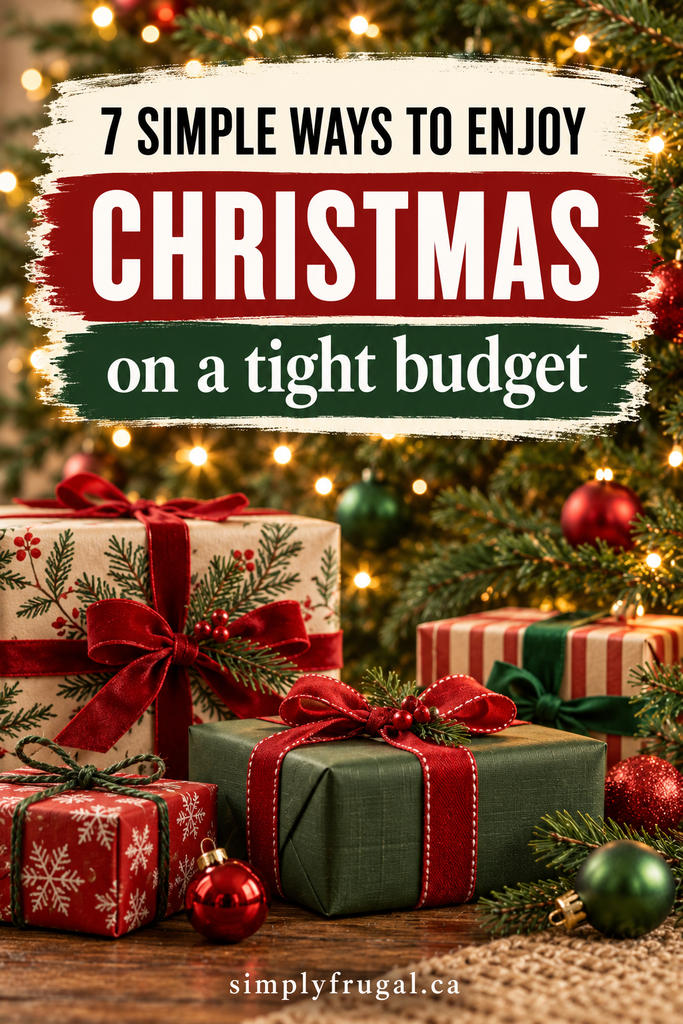
7 Simple Ways to Enjoy Christmas on a Tight Budget
Christmas has a way of arriving when your money is already spoken for. Between groceries, bills and all the usual family expenses, finding extra room for gifts and celebrations can feel like a lot.
If you’re facing Christmas on a tight budget this year, you can still make it a season worth looking forward to. You don’t need matching everything, a pile of presents or a calendar full of paid activities to make it special.
A few favourite traditions, thoughtful gifts and time together can go a long way. Here are some simple ways to enjoy Christmas while keeping your spending manageable.
1. Decide What You Can Afford First
Before you start shopping or making plans, take a look at what you can comfortably spend.
Cover your regular expenses first, then work out what’s available for Christmas. Include gifts, food, wrapping supplies, travel and any activities you’re considering. Those smaller costs can add up quickly!
Creating a holiday budget gives you a starting point and makes it easier to decide where your money will go.
If the numbers are tight, give yourself permission to scale back. A smaller Christmas is a perfectly good Christmas.
2. Choose What Matters Most to Your Family
Think about the parts of Christmas your family looks forward to most. You could even ask everyone to name one favourite thing.
Maybe it’s decorating the tree, baking a particular cookie or watching the same movie every Christmas Eve. You might find that some of the things you’ve been spending money on aren’t anyone’s favourite.
Put your time and budget toward the traditions you actually enjoy. Let the rest be optional.
3. Start a Few Simple Christmas Traditions
Traditions don’t have to cost much to become something your family looks forward to every year. Often, it’s the familiar little things that stick.
Here are a few ideas:
Have a decorating day. Growing up, we waited until December 1st to decorate. That was also our cue to turn up the Christmas music!
Make Christmas cards. Use paper, colouring supplies and craft materials you already have.
Bake together. Pick one favourite cookie recipe instead of buying ingredients for several different kinds.
Decorate cookies. Homemade cookies and a little icing can make a fun afternoon activity.
Write letters to Santa. Younger kids can draw pictures or tell you what they’d like you to write.
Read Christmas books. Borrow a stack from the library and read together throughout December.
Plan a Christmas movie night. Add popcorn, blankets and everyone’s comfiest pajamas.
Look at Christmas lights. Walk around your neighbourhood or take a short drive and vote for your favourite display.
Make a small holiday bucket list. Choose a few things you’ll enjoy using these holiday calendar ideas.
Give Christmas PJ's on Christmas eve: For the last few years, I have been wrapping up a pair of Christmas pajamas for both girls that I got on sale and giving it to them on Christmas eve. They love to wake up Christmas morning in their new Christmas pajamas!
One of my favourite childhood traditions was searching for our Christmas tree. The outing was a big part of what made it special.
You don’t need to try everything on this list. Pick a couple that fit your family, your energy and your budget.
4. Keep Gift Giving Manageable
When you’re celebrating Christmas on a tight budget, it helps to set gift expectations early.
That might mean drawing names with extended family, setting a lower spending limit or agreeing to buy only for the kids. Having the conversation before everyone starts shopping makes things easier.
Homemade Christmas gifts can also be a thoughtful option. A batch of someone’s favourite cookies, a printed photo with a handwritten note or an offer to babysit can all make lovely gifts.
Check the cost of supplies before committing to a project, though. Homemade gifts save the most when you can use ingredients and materials you already have.
5. Enjoy Free Christmas Activities
You don’t need a ticketed event every weekend to enjoy the season.
Check your library, community centre and local event listings for free activities. You might find a Christmas storytime, a community light display or a holiday concert.
There’s plenty to enjoy at home, too. Put on Christmas music while you make dinner, work on a puzzle together or let the kids help decorate with things you already own.
Leave some space in your calendar for these quieter moments. They count just as much.
6. Add Extra Cash If You Have the Time
If there’s a gap between your Christmas plans and your budget, earning a little extra money may help.
Start with what feels manageable. You could sell unused toys, clothing or household items, offer snow shovelling or cleaning, or look into seasonal work if your schedule allows.
Be realistic about the time and costs involved. An already busy season doesn’t need to become exhausting, and scaling back your plans is an option too.
7. Give in Ways That Fit Your Budget
Giving can be a meaningful part of Christmas without adding another expense.
You could check in on a neighbour, help someone shovel their walkway or volunteer with a local organization that needs a hand. Kids can make cards for someone who could use a little encouragement.
And if your own family needs support this year, it’s okay to receive it. You don’t have to stretch an already tight budget to prove you’re generous.
Make Room for a Christmas You Can Enjoy
You don’t have to do everything to make Christmas special. Choose a few things your family loves, spend what you can afford and leave room to enjoy the season together.
Years from now, the cookies you baked or the funny thing that happened while decorating the tree may be what everyone remembers most.
What’s one free or inexpensive Christmas tradition your family looks forward to every year? What are your favourite ways to celebrate Christmas on a tight budget?
Many years ago I embarked on my very first no spend challenge. This is when I spent zero dollars for a whole 30 days. That’s right…zero spending for an entire month! (except for bills and a few groceries.)
When I embarked on my first no spend challenge, I just jumped right in without a plan. I will tell you that I was successful in completing the challenge, however, it could have been so much smoother if I had a plan in place!
“If you fail to plan, you are planning to fail,” quoted by Benjamin Franklin, is excellent advice to put in place when you are embarking on a challenge of not spending a dime for 30 days.
The thought of no spending for a month is downright daunting… but then to face the challenge without any plan in place?! We all know that we can pretty much expect defeat.
That is not what we want.
So, today, I'm going to outline several ways to plan for a successful no spend challenge.
But first...
Why do a No Spend Challenge?
Not spending any extra money for 30 days can sound crazy, I know. However, a successful No Spend Challenge is a great way to reset our spending habits.
The end goal for me personally, is not to deprive myself, but to reframe how I spend money. Completing a No Spend Challenge helps me to make more intentional purchases that align more with my true financial goals.
Speaking of goals, a no spend challenge is also a great way to kickstart your financial goals.
Once you reset or reframe your spending habits to serve you, you will be well on your way to completing those goals you never thought possible!
Let's plan shall we?
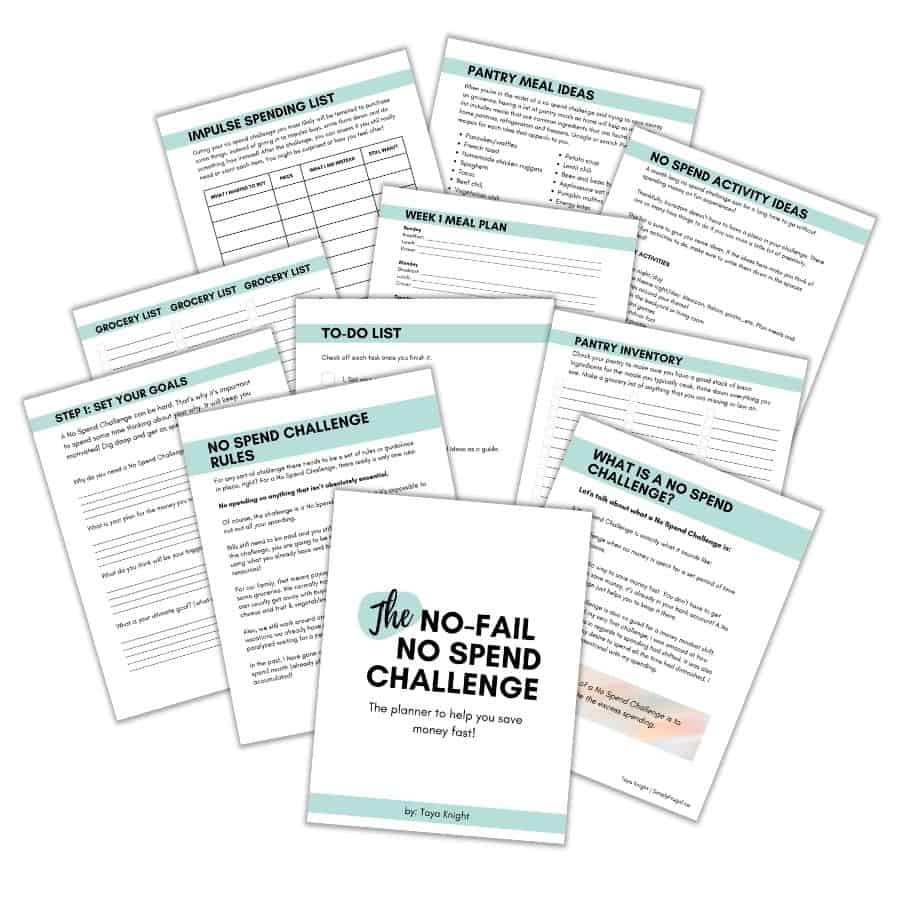
If you're really looking for an in-depth system for a successful no spend challenge, I recommend my No Spend Challenge Planner! It's 45 pages of instructions, no spend activity ideas, pantry meal ideas, before and after challenge questions, food inventory sheets, gratitude sheets and so much more! Take a look here!
Step 1: Determine the length
The first step is to determine the length that your no spend challenge will last. If this is your first no spend challenge, I suggest starting small. Maybe a weekend, a work week or 7 days. Starting small will pretty much ensure a successful no spend challenge.
As you start to see the fruits of your no spend challenge, you can increase the frequency of your weekend/work week/7 day challenges. Or you can jump into a 30 day challenge to see the greatest increase in your savings account.
Step 2: Look ahead to what's coming
Grab your calendar and take note of any events, birthdays or vacations you have coming up. You can either pick a period of time that avoids those events, or work around them.
I personally like to work around any events, birthdays, anniversaries, or family vacations we already have planned. This is so we don't become paralyzed waiting for a perfect month. After all, any month or day is a great day to save money!
I should note that it's possible to use creativity with planned events. In the past, I have gone on a quick vacation to Vancouver during a no spend month (already planned) and used only gift cards that I had accumulated!
Step 3: Take Inventory
This is a crucial step to having a successful no spend challenge.
Before I embark on a no spend challenge, I take inventory of my fridge, pantry, freezer and anywhere I keep household supplies.
I mark down everything I find. I'm often surprised at what I do find. Lol. Sometimes I have no idea that there are two pork tenderloins frozen in the freezer, for example.
During a typical month, food can be a huge area of the budget. By taking inventory for a no spend challenge, you will greatly reduce the amount of money you need to spend on food because you can use what you already have on hand.
This is a great time to quickly jot down some meals that you can make with the ingredients that you find.
Step 4: Use creativity
One of the hardest parts of a no spend challenge can be figuring out how to use what you have or learning to go without. This is where a bit of creativity can really pay off!
Here are some ideas to get your creativity flowing:
Trade your abundance with friends (have a lot of zucchini but need toiletries?).
Take to Pinterest to be inspired with meal ideas or simple DIY projects to create things with stuff you already have.
Save money by buying just one of something instead of 10.
Shop only where you have gift cards.
Order any groceries you need online so you aren't tempted to impulse buy.
Borrow a book, audiobook or video from your library.
Take advantage of free community events.
Carpool to work.
Declutter and sell items to make some cash.
Go on a walk with a friends instead of going for coffee.
A no spend challenge can be a real eye opener on how you really spend your money on a normal basis.
During a challenge, this is a great time to assess where you really value spending money. On the other hand, you can also assess what you are wasting money on without even realizing it.
Instead of spending money all the time as a solution, a no spend challenge will help you to work with what you already have. So needs may become wants as you work through creative solutions.
I have no doubt that a successful no spend challenge will teach you lessons that will last a lifetime.
How to do life after your challenge
Immediately after a successful no spend challenge is an important period.
You don’t want to fall back into any bad spending habitsor go on a shopping spree to make up for days without spending anything.
This is a good time to look at how much money you saved during your no spend period as well.
What do you plan to do with your savings? Are you going to transfer it to your savings account or use the extra money to pay some bills or debt?
After you decide what you’re going to do, take action immediately. Put the money to use right away, or you might be tempted to use it for the wrong thing.
One last thing. Remind yourself constantly of what you really want your money to do for you. Do you want to pay off your mortgage as quickly as possible? Do you want to spend a month traveling Europe? What ever your true financial goals are, write them down and keep them in a visible spot so you're constantly reminded. Don't shortchange yourself. You are worth it.